South Korea saw a record number of new PhD graduates in 2025, with over 19,830 individuals earning doctorates. This figure marks a 51.6% increase compared to a decade prior and is the highest recorded since the Korea Educational Development Institute (KEDI) began collecting data in 1999. KEDI released these findings in mid-march.
Despite this surge, a growing number of PhD holders are working for unusually low incomes, defined as less than 20 million won (approximately 350 million VND) per year. Among the over 7,000 new PhDs who secured employment last year, 10.4% reported earning below this threshold. Actual compensation is even lower when accounting for inflation.
This issue of low wages is more prevalent in fields outside of science and technology, according to KEDI. The following table illustrates the percentage of low-income PhDs across various disciplines:
| Field | Percentage of low-income PhDs |
| Arts and humanities | 26.8% |
| Education | 19% |
| Social sciences, journalism, and information | 14.9% |
| Agriculture, forestry, and fisheries | 11.1% |
| Services | 10.6% |
Labor experts attribute this trend primarily to a structural imbalance between academic training and labor market demand. University degrees in South Korea no longer guarantee employment, notes Professor Kwon Sang-uk of Kyungpook National University. Candidates increasingly pursue advanced degrees to boost their competitiveness, a strategy that has inadvertently led to a "degree surplus".
Song Chang-yong, a senior researcher at the Korea Research Institute for Vocational Education and Training (KRIVET), estimates that the domestic market can only absorb approximately 2,000 to 3,000 PhD-level positions annually, with the majority concentrated in science and engineering fields. He added, "many pursue PhD programs primarily for the academic title. Therefore, the issue of low income for PhDs needs to be viewed through multiple complex factors".
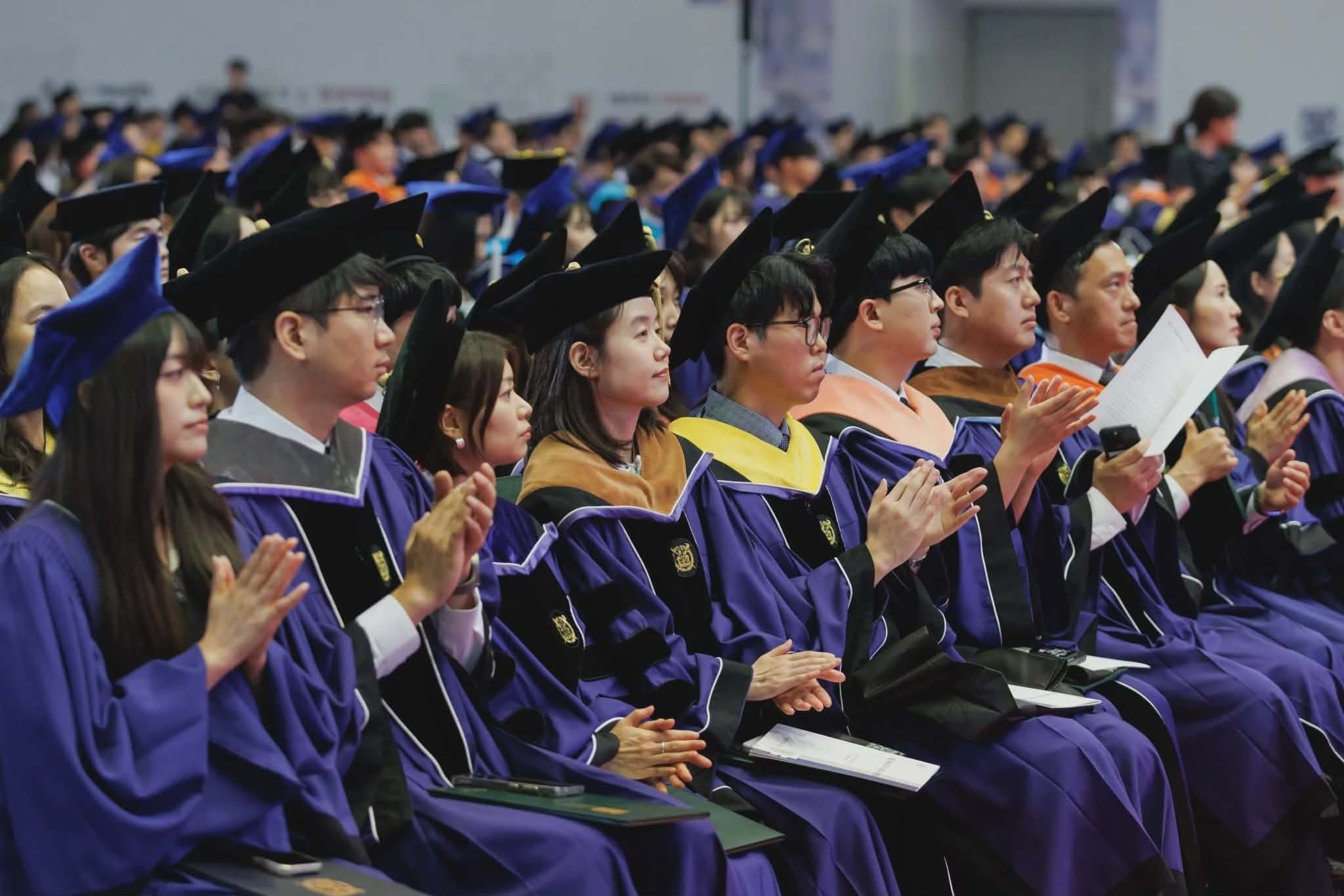 |
Graduates of Seoul National University, august 2025. Photo: Seoul National University Fanpage |
Huyen Trang (according to The Korea Times, Nate)