The Chevening scholarship, a highly prestigious award from the British government, fully covers tuition and living expenses for master's students. Approximately 1,500 individuals worldwide receive this scholarship annually. According to the latest data, in 2024, 16 scholarships were awarded to students from Sudan, 13 from Afghanistan, and 8 to 19 from Cameroon and Myanmar.
However, according to The Guardian, visa applications from the four aforementioned countries this year have been rejected, despite recommendations from the Foreign Office. A solution for those applicants who have already received the scholarship has not yet been announced.
According to the Home Office, the halt in granting visas to Chevening scholars is not based on the scholarship's merit, but on the risk of illegal asylum. Previously, the agency published data for the 2021-2025 period, showing that the UK received over 133,700 asylum seekers from these four countries. Although the number of international students only accounts for 13%, it has increased by 470%. Specifically, the rate from Myanmar increased 16-fold, Cameroon and Sudan more than three-fold, and Afghanistan by 95%.
A spokesperson for the Home Office stated that study programs are being widely abused, creating a "backdoor" for asylum applications. "We are making no exceptions for study programs to prevent increasing abuse within the immigration system", the spokesperson said, affirming that the UK remains open to welcoming exceptional talent fairly and rigorously.
 |
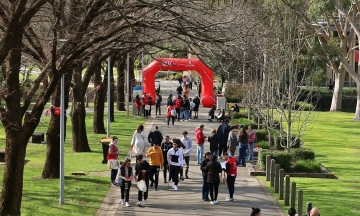
A corner of the University of Edinburgh campus, UK. *Photo: The University of Edinburgh Fanpage* |
The UK's study visa policy has become increasingly stringent over the past two years. Last october, the country increased the financial requirement for study visa applications. Depending on the location, international students must demonstrate access to more than 1,170 to 1,500 British pounds (41-54 million dong) per month during their studies. The highest amount applies to students in london.
Since the beginning of this year, dependents of international students, typically spouses, must demonstrate an English language proficiency of A1 for entry, A2 for visa extension, and B2 if they wish to settle.
The government also tightly regulates universities through the Basic Compliance Assessment (BCA). Universities must have a minimum enrollment rate of 95% and over 90% of students completing their courses to be eligible to recruit international students. A new three-tier rating system has been introduced for classification, comprising: red, amber, and green. Underperforming institutions (red) will face recruitment restrictions.
Foreign nationals living in the UK must now reside for at least 10 years before applying for settlement, up from the previous 5 years. This is unless they can demonstrate significant contributions to the economy and society. Highly skilled groups with practical contributions, such as doctors, engineers, and AI specialists, receive priority.
The UK hosts over 700,000 international students. The decision to tighten visa rules presents a difficult financial challenge for UK universities. According to the Higher Education Policy Institute (HEPI), international students contribute approximately 42 billion British pounds to the UK economy annually.
While tuition fees for domestic students are capped at 9,250 British pounds, non-EU international students must pay between 20,000 and 68,000 British pounds annually. Many surveys indicate that this group accounts for up to one-fifth of universities' revenue.
By Doan Hung (According to The Guardian, The Pie News)