The government's higher education development strategy for the 2026-2035 period, with a vision to 2045, was announced on September 21. This strategy serves as a "development roadmap" for Vietnam's higher education, providing the basis for network organization, task assignment, and resource investment. Its core principle is to transition from development primarily driven by scale to one focused on quality, efficiency, and contribution.
The Ministry of Education and Training (MOET) states that the paramount goal is to establish higher education as a "national strategic knowledge infrastructure." It will play a central role in developing high-level human resources, fostering talent, advancing scientific research, and enhancing the nation's competitiveness.
By 2035, specific targets will directly relate to the training outcomes, research, and social impact achieved by higher education institutions.
A key objective is for 90% of graduates to find suitable employment within one year of graduation. Currently, universities conduct their own surveys, with most reporting employment rates between 80% and 100%. However, these reports often omit the number of students who respond or the degree to which employment aligns with their field of study.
In April, MOET leaders acknowledged that existing graduate employment statistics from universities are incomplete and do not fully capture the issue. Consequently, the education sector will collaborate with the Ministry of Public Security (MPS) to synchronize data. This initiative will track student information from enrollment through graduation and social insurance contributions, providing comprehensive data.
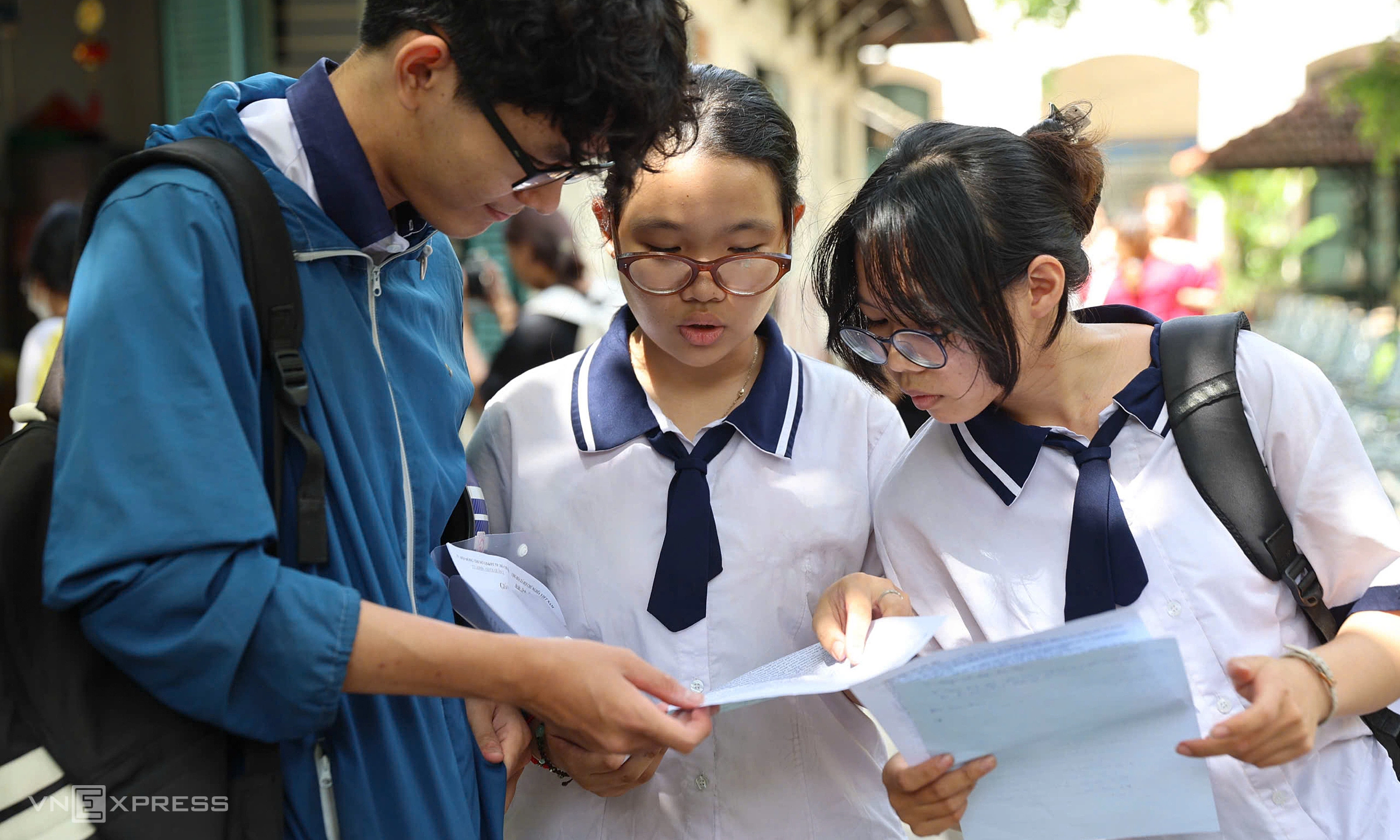
The MOET views the new strategy as requiring a higher education system rooted in "authentic learning, practical experience, and genuine quality." This means promoting honest learning, fair examinations, accurate competence assessment, and graduates possessing real work skills. Data on human resource needs, employment, income, and employer feedback will guide decisions on opening new programs, adjusting curricula, and determining training scale. Admissions will shift from merely "filling quotas" to "recruiting the right fit," ensuring suitable learners.
Additionally, the government aims to expand access to higher education, significantly increasing the number of students in science, engineering, and technology fields. By 2035, approximately 45% of the population aged 18-22 will pursue university education (up from the current 36%), while postgraduate enrollment will reach 15%. Students in science, technology, engineering, and mathematics (STEM) fields will constitute 40% of the total training enrollment.
Other objectives include:
- Achieving a 50% doctoral degree rate among lecturers (currently 36%).
- Generating 15% of university revenue from science, technology, innovation, and knowledge transfer.
- Attracting 5,000 international scientists, experts, and overseas Vietnamese intellectuals for teaching and research roles.
The government will also select approximately 30 key universities for focused resource investment. Three to five of these institutions are earmarked for development into elite universities. This initiative aims to enhance Vietnam's higher education competitiveness and standing, with a goal of 10 universities ranking among Asia's top 200 and two universities entering the world's top 100 in their respective fields of training.
For the 2025-2026 academic year, the country has nearly 2.6 million university students and 144,000 postgraduate students.
 |
Students at National Economics University, March 2026. Photo: Hoang Giang
Le Nguyen