On 5/9, RMIT Vietnam, in collaboration with Inclusive Solutions, organized an "AI in Storytelling" training program in Hanoi. The initiative brought together people with mobility, visual, and hearing impairments in an inclusive learning environment. The course aimed to empower individuals interested in creating videos, writing social media content, or engaging in communication for disability groups. Instead of focusing solely on AI tools, the program prioritized developing a storytelling mindset, helping participants define their messages and structure content before utilizing AI as a language assistant.
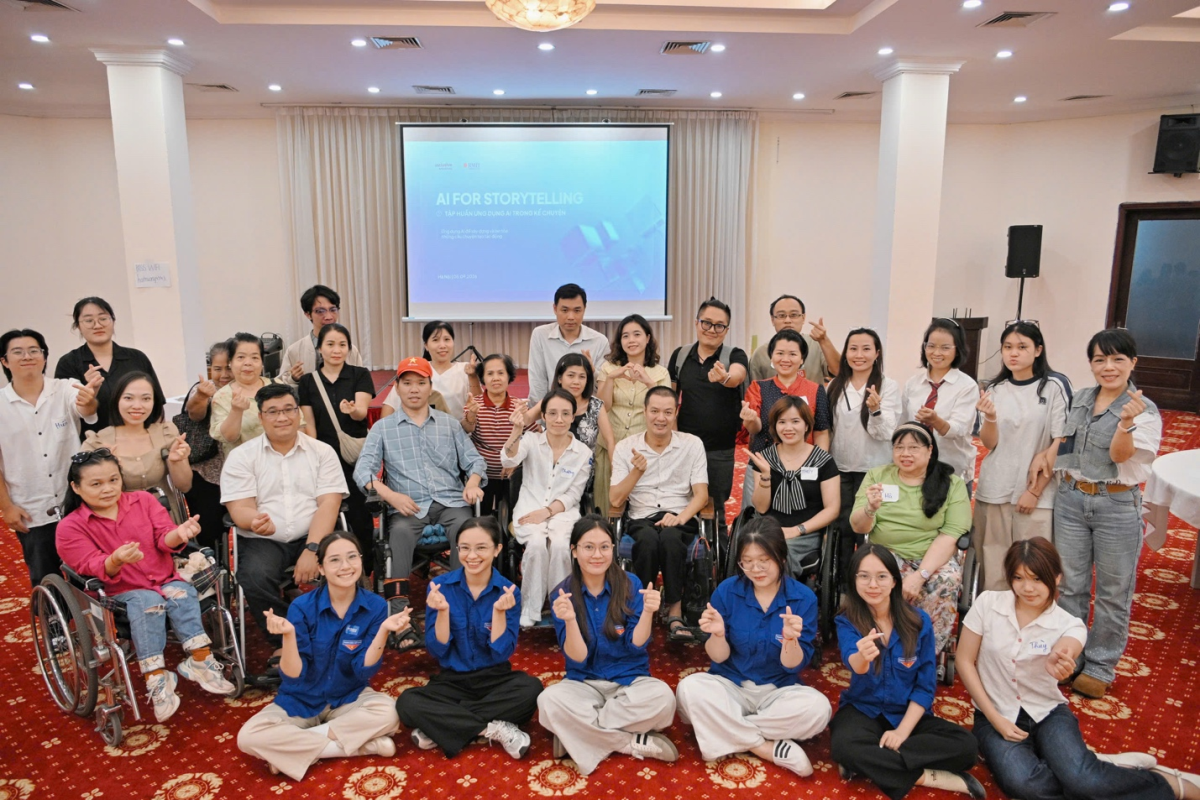 |
Organizers and participants smiling brightly at the AI in storytelling training for people with disabilities in Hanoi. *Photo: Inclusive Solutions*
The organizers highlighted that each group of people with disabilities has distinct AI access needs. For visually impaired participants, the workshop focused on building commands based on sound, sensation, and experience, rather than visual descriptions. Participants were also encouraged to collectively refine commands to achieve more suitable results.
Phuong Nguyen, founder of Inclusive Solutions, emphasized, "People with disabilities already possess experiences and stories that deserve to be heard. What many need are appropriate methods, accessible tools, and practical opportunities to tell their stories authentically."
Dr. Vo Thi Diem Trang, a lecturer at RMIT University, explained that AI tools act as a language assistant, helping to clarify and refine the ideas of people with disabilities before they reach readers. She stressed that the content remains the students' own; AI merely facilitates the writing process.
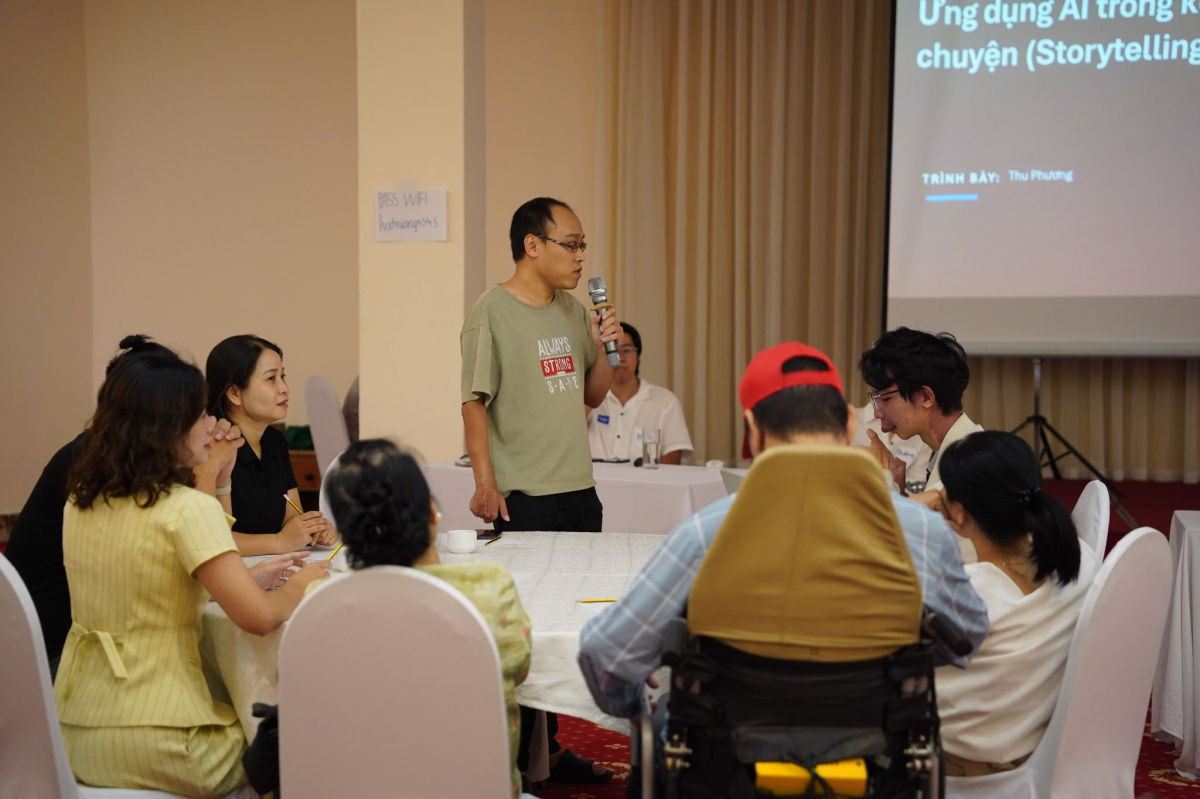 |
A participant shares their experience during the AI application training session. *Photo: Inclusive Solutions*
Through training in AI application for storytelling, participants significantly reduced time spent on data entry and text formatting. AI served as an assistant, suggesting script structures, refining vocabulary, and offering new perspectives, allowing learners to concentrate entirely on their core message.
Following the workshop, many participants reported gaining skills in organizing ideas, developing coherent scripts, and creating more engaging content for digital platforms. Chung, a participant, shared that his previous scriptwriting relied on intuition or copied online commands, often resulting in disjointed, illogical, and inconsistent narratives. Since attending the AI in storytelling workshop in Hanoi, he has learned to arrange ideas and build more compelling scripts, which has helped retain viewers longer and positively impacted his personal channel.
Beyond individual benefits, AI storytelling skills are expected to enhance the communication effectiveness of disability organizations. A representative from the Giang Vo Ward Disability Association noted that shifting from simply reporting activities to telling emotionally resonant stories with clear messages has improved community outreach for their posts.
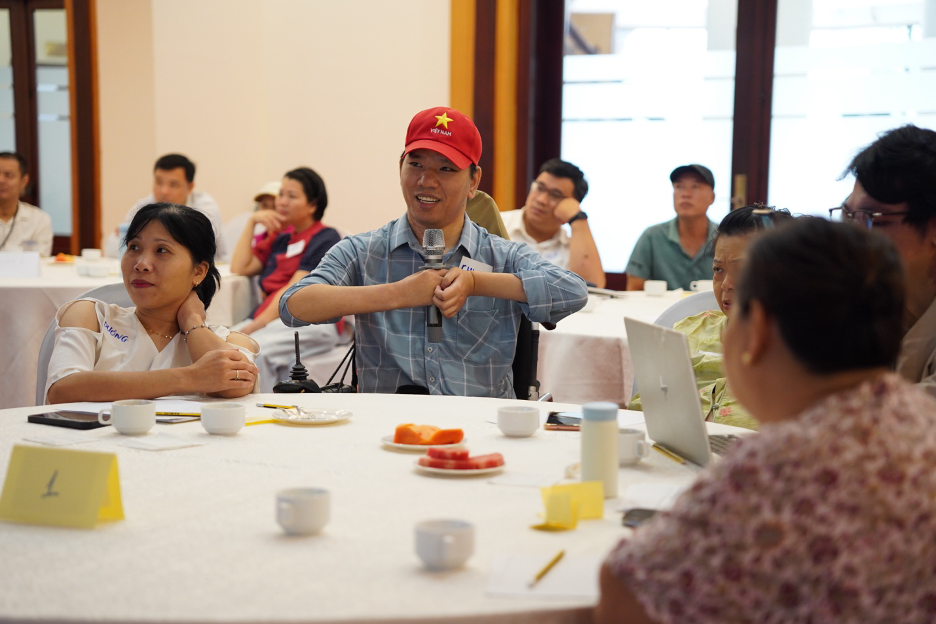 |
Participants actively engage in activities during the training session. *Photo: Inclusive Solutions*
In addition to applications in daily life and community activities, AI storytelling skills can contribute to expanding career development opportunities for people with disabilities, particularly in the field of digital content creation.
However, the organizers cautioned that learning to use AI is just an initial step. In reality, people with disabilities still face numerous barriers in accessing new technology skills, encountering work environments that are not truly accessible, and having limited career opportunities. Without ongoing support from businesses and relevant stakeholders, these new skills may struggle to be effectively and sustainably applied in the workplace.
The "AI in Storytelling" training is part of RMIT Vietnam's E-Prodigy project, which researches and develops technology solutions for vulnerable groups. The research team highlighted that merely providing equipment is insufficient for the sustainable participation of people with disabilities in the digital environment. Crucially, accessible training programs tailored to practical needs, along with support from businesses and social organizations in expanding employment opportunities, are essential.
Yen Chi