The book, compiling 32 studies from a scientific conference in Can Tho in 2006, offers in-depth analyses of Vietnam's context more than a century ago. This collection brings together many researchers and scholars in history and social sciences, presenting a system of documents that shed light on a pivotal era.
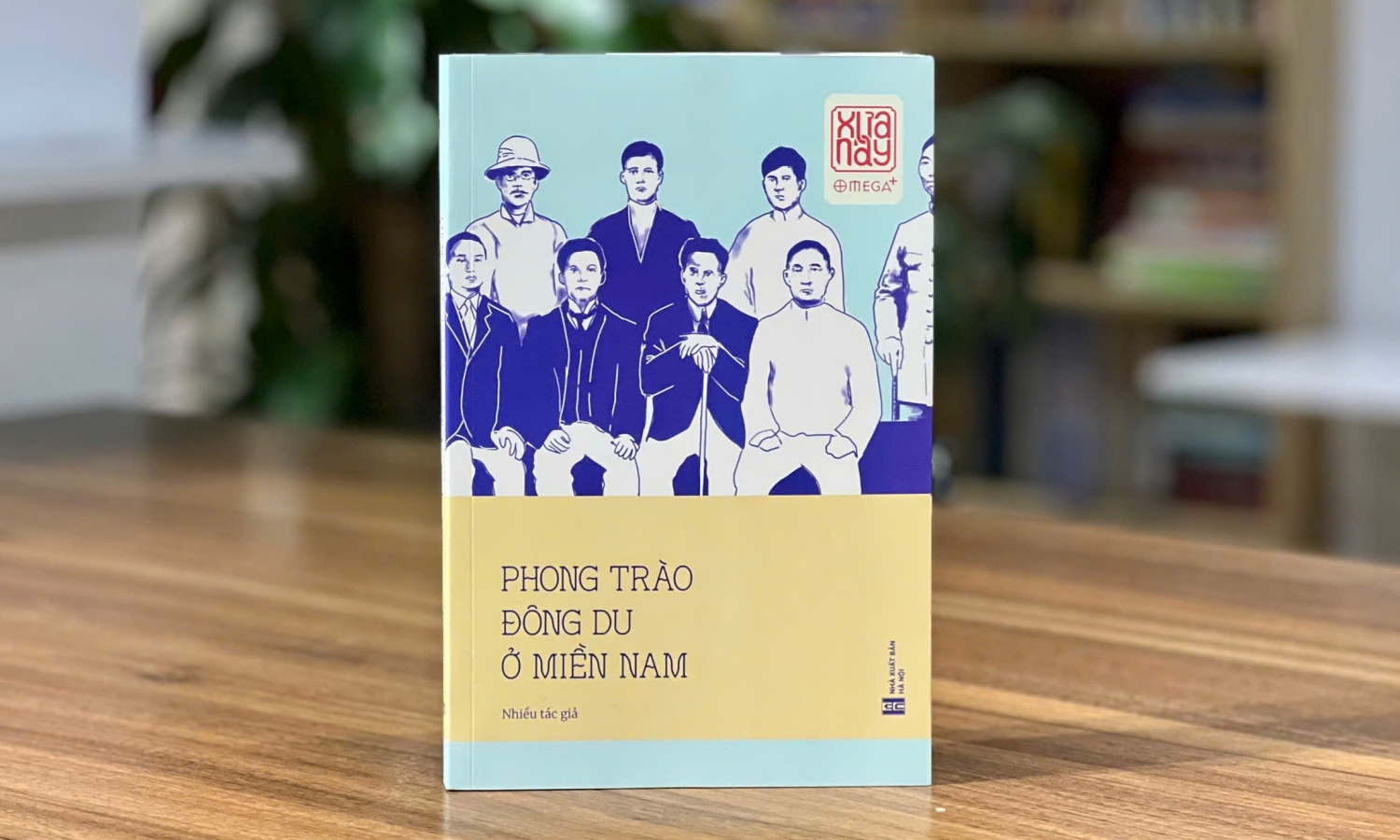 |
Cover of the book "The Dong Du Movement in the South". Photo: Omega Plus |
According to the publisher, the Dong Du movement has long been recognized as a crucial turning point in the nation's quest for national salvation. While many studies focus on the general national context, the unique contributions and characteristics of colonial Cochinchina (Nam ky) have not been fully explored. The authors assert that this movement, particularly in the South, possessed distinct qualities: dynamic, practical, and rich in self-reliance. This publication helps illuminate the Southern region's role in the broader historical narrative.
The authors clarify the contributions of various social forces in the South, from scholars and intellectuals to entrepreneurs, in initiating and sustaining the movement. Beyond mobilizing youth to study in Japan, the research highlights efforts to build economic financial resources, develop journalism, and expand networks. This included selecting "intelligent, studious youths, capable of enduring hardship, accustomed to difficulties, determined and steadfast, never changing their aspirations" to send to Japan for study, training them as future revolutionaries. These individuals were primarily descendants of *van than* (Confucian intellectual class) who opposed the French, often from families with animosity towards French colonialists, known as "cuu gia tu de" (families with a long-standing grudge). The name Dong Du – meaning "travel to the East" – reflects Japan's geographical location to the east of Vietnam, towards the rising sun.
A significant highlight of the book is its in-depth interpretation of the Dong Du movement, particularly its focus on the flexible adaptability of Cochinchina's social forces to specific political and social conditions. The articles analyze the shift in mindset from "seeking aid" to "seeking knowledge," demonstrating a clear recognition of knowledge, education, and reform as essential paths to national salvation. As affirmed by Phan Boi Chau, the Dong Du movement in the South was the most vigorous activity of the Duy Tan movement in Cochinchina, and also the strongest Dong Du movement nationwide. The number of students studying abroad in the 1907-1908 academic year reached 200, with students from the South accounting for 50%, and the rest from the North and Center.
The book also points out the historical limitations of the movement: colonial repression, international fluctuations, and internal divisions that led to the rapid collapse of Dong Du in 1908. This multi-faceted approach, incorporating dialogue and debate, constitutes the academic value of the work.
The book is being re-published to commemorate the movement's 120th anniversary (1905-2025). A representative from the publisher states that the work is not merely a reference material but also an invitation: to re-examine history with a critical and dialogical spirit, for those wishing to understand more deeply a significant transitional period for the nation. The book is part of Omega Plus's Vietnam History Collection, published in cooperation with Xua & Nay magazine.
Mai Nhat