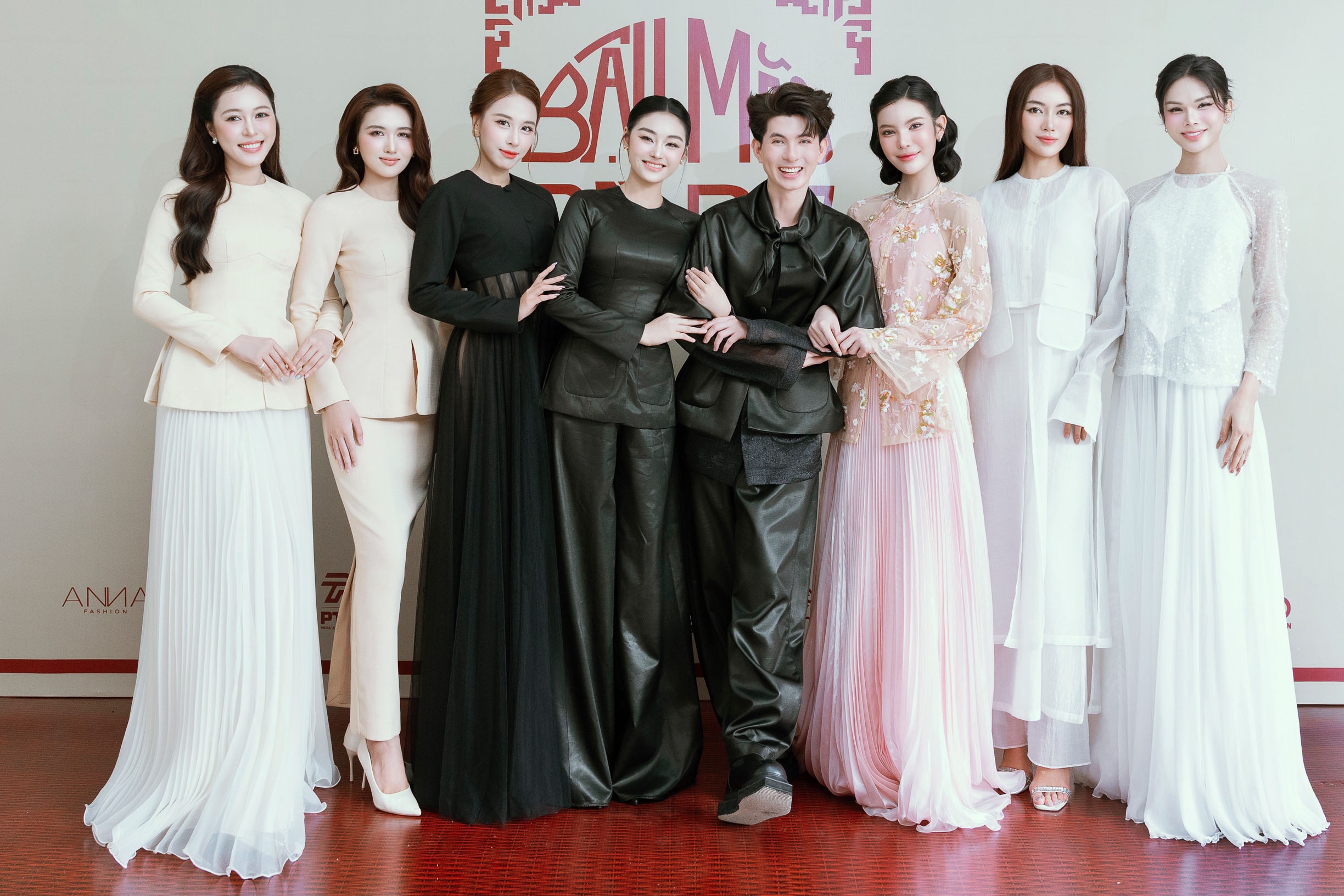
Khuong Ngoc's film, Len Huong, has grossed nearly 95 billion VND after one month of release. On this occasion, he discussed the challenges and lessons learned after many years in filmmaking.
"How do you feel about Len Huong being your third consecutive hit film as a director?"
"I feel like I've just completed a graduation exam. Compared to my previous films, for this one, I replaced most of the crew, keeping only a few key members. I see this as a personal challenge, like a farmer who must be able to cultivate the land and grow vegetables no matter what tools they are given."
"Initially, I only served as a producer, observing from the sidelines. During the pre-production phase, things did not go as expected. I realized the core issue was that most of my collaborators were young, new professionals. I began to worry that the quality of the work would affect my reputation, so I decided to step in and co-direct."
 |
Director Khuong Ngoc. Photo: Provided by character |
"Why did you choose to explore a story about people running a coffin business?"
"The idea came to me serendipitously, stemming from the custom of 'lying in a coffin for luck' – a tradition based on the belief that it can help one's business prosper. My three most recent films all share the theme of departure. I am a Buddhist, and having experienced and witnessed much loss, I recognize the impermanence of life. Some things happen in an instant, and by the time people realize it, everything is already over. The film features a narration: 'You always think you have time for loved ones, but what if life doesn't give you the chance?'"
"In the film, I embedded many allegorical scenes. In one segment, seven people gather in a hospital room with four beds, symbolizing birth, aging, sickness, and death. A character says his relative has recovered and will go home tomorrow, but just seconds later, the situation reverses as the patient suddenly becomes critical. At that moment, for the three mothers in the film, all past resentments lose their meaning; only one thought haunts them: 'What will happen to my child if I die?'"
"With such a sensitive subject, how do you manage to address the revenue challenge?"
"I lowered my ego to connect more with the audience. If I had followed my personal style, I would have had the character Tam (played by Vo Tan Phat) die immediately after the car accident at the beginning of the film, and everything that followed would have been a fantasy. However, I considered the audience's feelings; they might not accept such a development. A director can create whatever they love, but when it comes to business, it is a different story."
"I chose a happier ending, leaning towards a commercial-entertainment tone. In Chi Dau (2024) and Cuc Vang Cua Ngoai (2025), the characters' endings were not entirely satisfying. After Cuc Vang Cua Ngoai was released, I read many audience comments expressing frustration about why the grandmother, who had done everything for her children and grandchildren, still suffered a sad end."
"I just want to strive for survival in a tough market. On average, new films are released every week, and the time films spend in theaters is getting shorter. Each project only has about 7-10 days to sell tickets, except for those that become major hits."
"What challenges did you face with the 'black comedy' genre still being new to many domestic audiences?"
"Initially, I worried that the public was unfamiliar with this film genre. Some might wonder: 'If it's comedy, just call it comedy; what's with black or white?' (He laughs). Therefore, I instructed the media team to limit mentioning this term and instead introduce the film as humorous and popular. The comedic elements arise in unexpected contexts, and if the audience laughs, we have succeeded."
"My biggest challenge was to skillfully construct situations. Funerals and matters of life and death are sacred; if not handled carefully, it could easily upset viewers, making them question how the crew dared to make a comedy about such a topic. Every day, we refined the script and gathered ideas. Once we identified the comedic angle of the story, we began production."
 |
Khuong Ngoc (left) with Vo Tan Phat, the lead actor in Len Huong, on set. Photo: Provided by film crew |
"Your films are often criticized for excessive, noisy dialogue. What are your thoughts on this?"
"In my films, characters tend to express things they have suppressed for a long time. When they meet someone, they unload all the hidden grievances they are enduring, inadvertently hurting that person. I use dialogue with the implication that words are the origin of suffering. I am not bothered by comments that my films are 'noisy,' as I believe some noise is still necessary in this life. Sometimes, if a film is too quiet, the audience might feel sleepy (he laughs). I still try to balance these two states."
"In fact, my previous films are not dialogue comedies but lean more towards situational comedy. For example, in Len Huong, the mother character (Hong Van) accidentally discovers her son playing the trumpet at a funeral after learning the instrument; even without dialogue, it is still a humorous detail."
"Why did you choose the mother as the central image in all three of your works?"
"I live close to my mother, and I am where I am today because she raised me throughout my childhood. For a time, I feared crowds, so I often returned home to Nha Trang. Every morning, I would wake early to read, watch my mother carry a basket to collect chicken eggs from the coop, and eat the meals she cooked. My positive energy was restored, and I gradually regained the motivation to pursue my profession. I chose the theme I empathize with most – the mother – as a consistent source of inspiration across these three projects."
"More broadly, I enjoy making films about women of all ages. I often joke that I have a rich 'feminine side' – something I inherited from my mother, such as my ability to observe or pay attention to the feelings of the person opposite me."
"What ideas are you nurturing for your next project?"
"For the upcoming film, I am choosing a simpler, brighter story that does not require viewers to ponder multiple layers of meaning but simply to enjoy, be entertained, and leave the cinema. I want to build my own audience, people who become familiar with Khuong Ngoc's filmmaking style through each work. They will recognize my use of camera angles, image processing, and colors. I feel fortunate that many people watch my films, understand what I embed, and I will try to maintain that resonance long-term."
The director's real name is Huynh Quang Ngoc, 42 years old, born in Nha Trang, Khanh Hoa. He studied at the College of Stage and Cinema (now the University of Stage and Cinema TP HCM) after being encouraged by an acquaintance. After graduating with honors, he participated in the television series Hoa Da Quy (2007), becoming known for his role as Set, a gangster.
He gained recognition with films such as Taxi, Chang Trai Khong Biet Ghen, and Su That Vo Hinh. Khuong Ngoc was invited by many directors to act in cinematic projects like Thien Menh Anh Hung (2012) and Scandal (2013). In 2018, he played a villain in the feature film Ong Kinh Sat Nhan. In 2024, Chi Dau, a film he directed starring Viet Huong, Hong Dao, and Ngoc Trinh, surprisingly grossed 113 billion VND.
Mai Nhat