Produced by Bona Film, "Sanxingdui: The future and the past" received its screening license on 23/10, with a runtime of 100 minutes. The film centers on the Sanxingdui ruins, originating from the Ancient Shu civilization, which flourished in the Sichuan basin and Chengdu plains around 3,000 BCE.
The narrative of "Sanxingdui: The future and the past" unfolds across space and time, beginning with the ancient site. Modern archaeologists discover that characters carved on antique bronze artifacts are a binary code from another era. Three millennia later, the world faces a crisis as a super artificial intelligence sweeps across the globe, leading humanity to entrust everything to algorithms. Amidst this, an archaeologist uncovers that the key to resolving the crisis lies in 7 characters found on the Sanxingdui bronze artifacts.
Distinctive images of Sanxingdui artifacts and the mysteries surrounding the Ancient Shu civilization serve as cultural material for the film. The production team integrates these elements into a modern story, guiding the audience and characters to seek answers to profound mysteries.
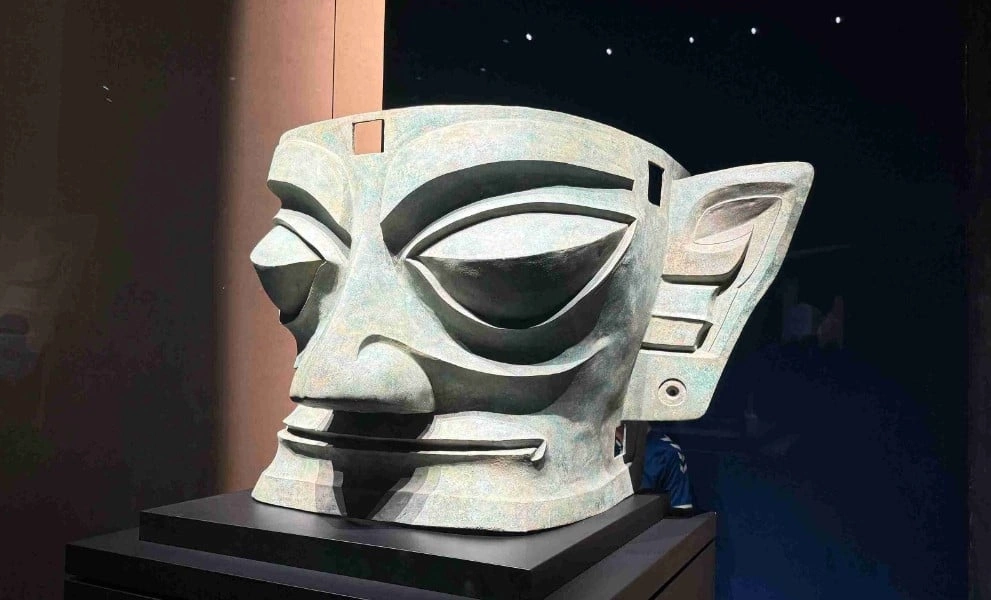 |
Artifacts at the Sanxingdui museum in Sichuan serve as cultural material for the artificial intelligence film. Photo: Sina |
Peng Yueming, a 35-year-old entrepreneur with a passion for science fiction, serves as the film's screenwriter and director. He is also the chairman of a commercial management consulting firm based in Guangzhou. Peng Yueming is noted as the first screenwriter to combine Sanxingdui culture with artificial intelligence technology, bringing this unique story to the big screen.
All characters in the film are generated by artificial intelligence; no digital versions of real actors were used. The production team spent two years researching and developing the technology and production processes. According to Beijing News, while artificial intelligence is deeply involved in production, it also prompts a crucial question for humanity: as we increasingly rely on algorithms, how can we retain our own judgment and make independent choices?
Chinese companies are actively developing artificial intelligence TV series and films. Earlier this year, Sun Zhonghuai, the chief executive officer of Tencent Video, predicted that 2026 would be a pivotal year, ushering in an era of booming artificial intelligence feature films. Similarly, Gong Yu, chief executive officer of Iqiyi, stated that by autumn this year at the latest, the market would see a hit artificial intelligence feature film.
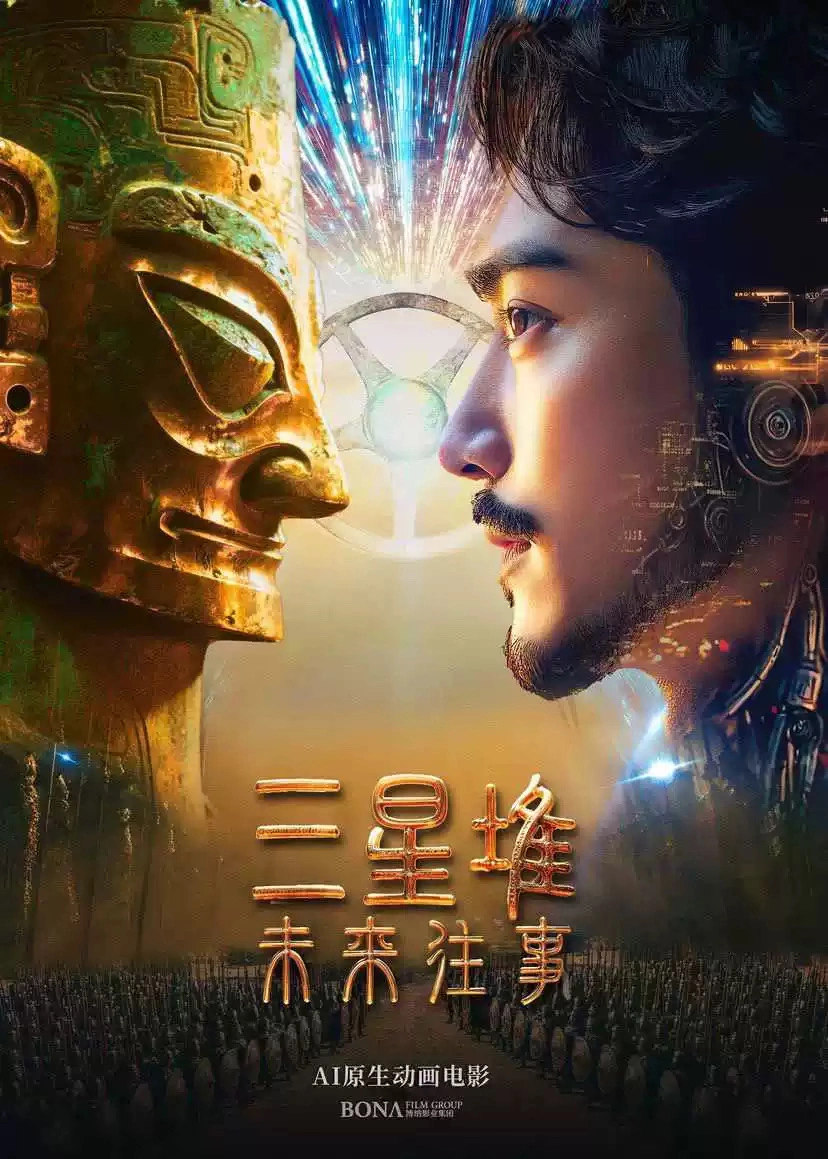 |
Poster for "Sanxingdui: The future and the past". Photo: Bona Film |
In late August, the artificial intelligence series "Journey to the West Sequel" received a license for primetime broadcast on Chinese television and simultaneous streaming. The series is produced and broadcast in an episodic, "rolling release" format, where episodes are aired as they are completed. It is currently updated to episode 5 out of a total of 30 episodes. The first episode is available for free, while subsequent episodes require a platform membership. The series has attracted over 300 million views, with the remaining episodes expected to air during the winter holiday.
Li Dongkun, the director of "Journey to the West Sequel", predicts that in the next three years, 99% of content will utilize artificial intelligence generative content (AIGC) technology, with only 1% produced using traditional methods. He suggests that actors will not completely "disappear", but live-action video may become a less common aesthetic choice, similar to the niche appeal of stage drama.
"The traditional film and television industry has become too expensive, making change inevitable," Li Dongkun said. "Many video platforms cannot afford to produce or acquire content due to prohibitive costs; AIGC offers a viable solution."
Nhu Anh