


Korean cinema has drawn audiences with popular disaster films such as "Train to Busan," "Emergency Declaration," and "Ashfall." Consequently, director Kim Byung Woo's "The Great Flood" garnered attention from its initial announcement. The film was promoted as a blockbuster, with trailers depicting a large-scale disaster, flood scenes, and intense survival scenarios.
The film centers on Anna (played by Kim Da Mi), an artificial intelligence researcher, living with her son Jain (Kwon Eun Sung). A global disaster unfolds after a meteor collision melts Antarctic ice, causing record rainfall. Their submerged apartment complex becomes a confined survival space, forcing residents to confront fear, selfishness, and primal instincts.
In addition to its action elements, the film integrates a narrative about an artificial intelligence experiment. The blend of a grand story and social themes generated significant anticipation, propelling it to the top 1 most-watched films on Netflix upon its release in mid-December. FlixPatrol statistics show the film attracted nearly 28 million views in its initial three days.
However, following its conclusion, the film faced widespread controversy both in Korea and internationally. This resulted in average to low ratings from professional reviewers and audiences alike. Many critics even labeled it a "disaster" in Korean cinema history.
Following an opening depicting flood scenes, the film transitions into science fiction with time loops and artificial intelligence elements, blurring the narrative. Koreaboo noted that the film attempts to incorporate too many ideas at once without adequately developing them within its limited runtime. This leads to a prolonged script, losing focus in the latter half. Many viewers found the pacing inconsistent, unsure if it was a disaster film or a science fiction piece.
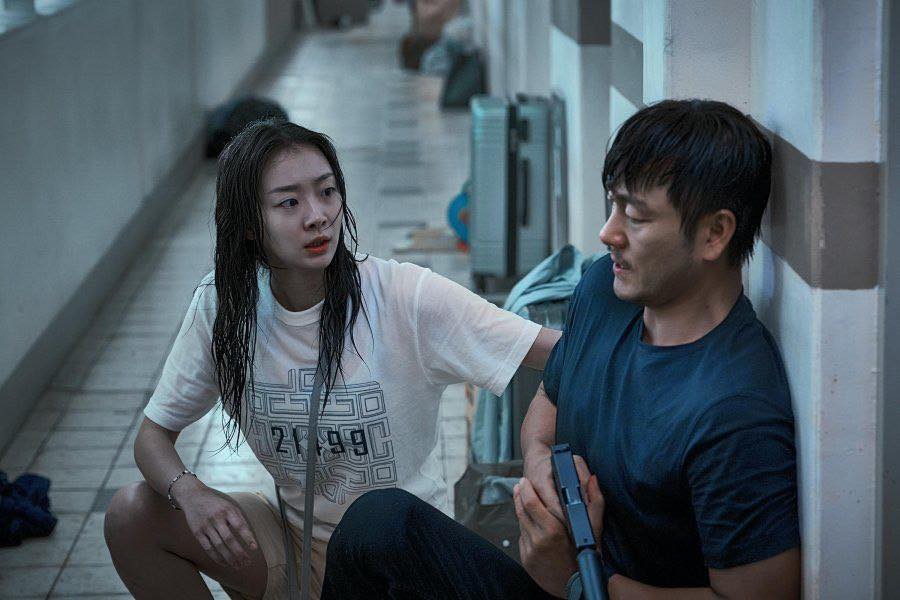 |
Actors Kim Da Mi (left) and Park Hae Soo in the film. Photo: Netflix |
On Rotten Tomatoes, the film garnered a 54% "rotten" score from critics and only 35% positive reviews from audiences. Film forums saw viewers describe the project as an "unfinished version of the blockbuster Interstellar," arguing its depth did not match its ambitious theme. In Korea, the rating on Naver Movies stood at approximately 3,84 out of 10. A portion of the audience expressed disappointment with the shifting pace and the script's overall logic.
On his personal Instagram, writer and film critic Heo Ji Woong wrote, "When a work fails to satisfy the audience's entertainment needs, they will shift from interest to criticism."
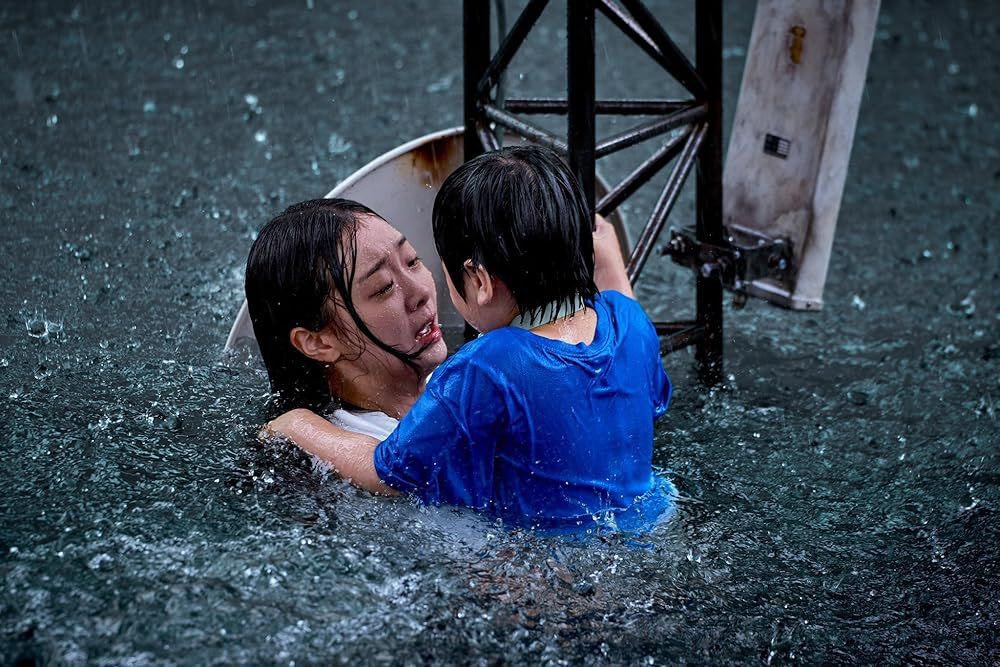 |
Anna (played by Kim Da Mi) and her son in a flood scene. Photo: Netflix |
Despite the script's controversies, the performances by Kim Da Mi and Park Hae Soo emerged as a rare highlight. Kim Da Mi effectively conveyed Anna's emotions, portraying a resolute mother in dire circumstances, which helped audiences connect with her psychological journey. She and Park Hae Soo collaborated well during climactic scenes, contributing to the emotional pacing. However, their combined efforts were ultimately insufficient to salvage the film.
The visuals and special effects were well-executed, particularly in the flood sequences. Scenes depicting rising water, lighting, and submerged environments were meticulously crafted, effectively conveying the disaster's immense scale to many viewers. Nevertheless, as the narrative transitioned to abstract science fiction elements, the effects were not seamlessly integrated with the content, rendering these scenes less convincing.
Mai Anh


