* This article contains spoilers
Set in 2029, the sci-fi thriller "Mercy" presents a chilling future where artificial intelligence governs the justice system. The film, directed by Timur Bekmambetov, reunites him with actor Chris Pratt nearly two decades after their collaboration on the 2008 action film "Wanted". Pratt stars as Chris Raven, an investigator with the Los Angeles Police Department (LAPD), who becomes the sole suspect in the murder of his wife, Nicole.
The film's innovative concept immediately captures attention. Its tightly structured plot creates a sustained, tense narrative, immersing viewers in a world where traditional legal procedures are obsolete. In this judicial model, AI Maddox, portrayed by Rebecca Ferguson, assumes the roles of judge, jury, and executioner, wielding absolute authority over life and death.
Defendants in this system, including Raven, are denied legal counsel. However, they are granted access to all digital data, encompassing security camera footage, their own phone records, those of others, social media accounts, and cloud data. Despite Raven's persistent claims of innocence, the system concludes there is a 97,5% probability he is the perpetrator. He is given just 90 minutes to reduce this probability of guilt below 92% to avoid execution.
"Mercy" delves into profound concerns regarding the dark side of technology and ethical blind spots. Raven is compelled to trace fragmented information, from work emails to his wife's phone and his daughter's social media accounts, in a desperate search for clues. This investigation gradually exposes personal issues, such as alcoholism, a violent temperament, and a fractured marriage, placing him at a severe disadvantage. The narrative questions the implications when human behavior and emotions are transformed into data for analysis, and the determination of right or wrong rests solely on algorithmic calculations.
A critical element of the film's premise is the AI's ability to access personal data without human consent. Each layer of clues reveals a new secret, progressively drawing the audience into the story. At New York Comic Con in 10/2025, director Timur Bekmambetov stated that through "Mercy", he questions the fundamental relationship between humans and artificial intelligence, as well as the ethical implications of delegating decision-making power to machine systems. He prompts viewers to consider whether society can truly become more just if legal processes are entirely entrusted to technology.
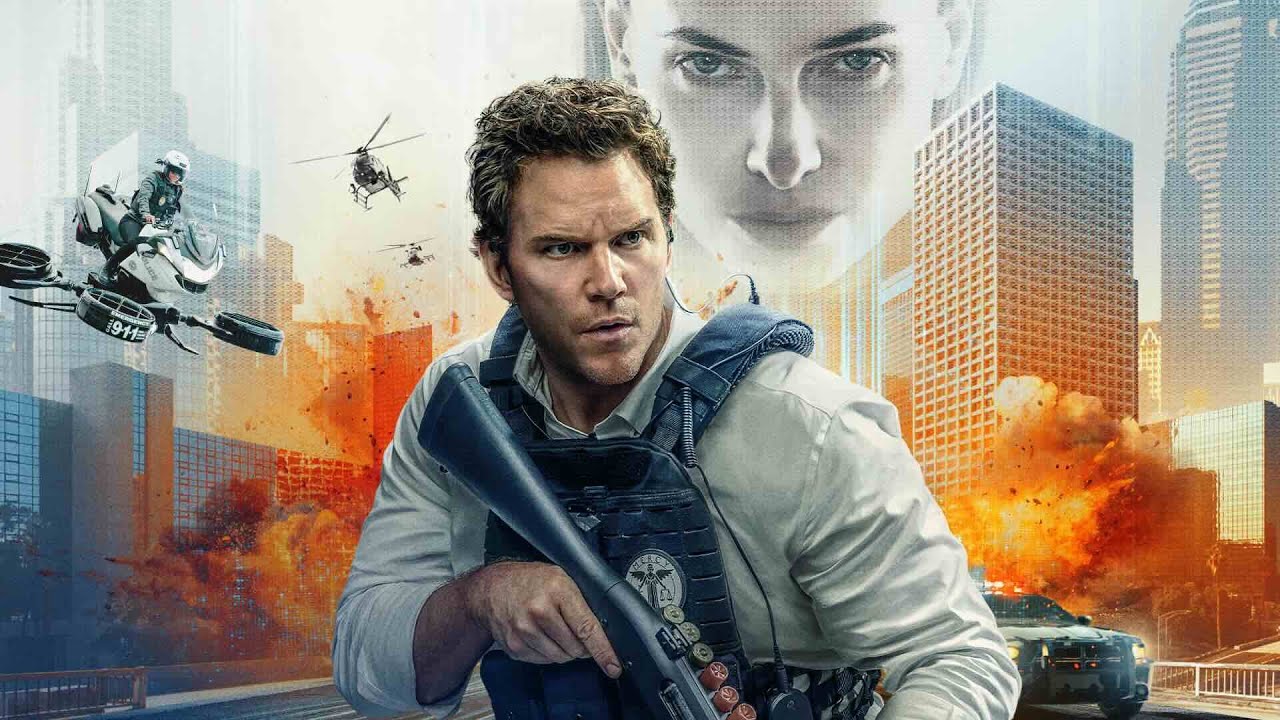 |
Raven's character confronts an AI-operated justice system amidst an unstable futuristic urban setting. *MGM Studios* |
The performances of the two lead actors add significant depth to the film. Chris Pratt delivers a distinct portrayal, departing from his usual action-comedy roles. He conveys Chris Raven as a man physically and mentally exhausted, skillfully transitioning from panic to profound remorse and a fierce determination to clear his name.
In an interview with BBC, Chris Pratt revealed his dedication to the role, explaining that to convey authentic despair, he proactively suggested to director Timur Bekmambetov that he be genuinely restrained in the execution chair for scenes, some of which lasted up to 50 minutes. "I believe this approach would make the acting authentic, creating a true sense of captivity and helplessness. I was sweating, couldn't scratch my itchy face, and absolutely couldn't stand up," he said, describing the immersive experience.
On screen, Pratt's character continuously converses with the AI judge. However, on set, the actor performed alone, as Rebecca Ferguson recorded the voice lines for the AI character separately. According to Pratt, acting without a scene partner demanded that he meticulously maintain psychological reactions to convincingly portray his character's struggle to the audience.
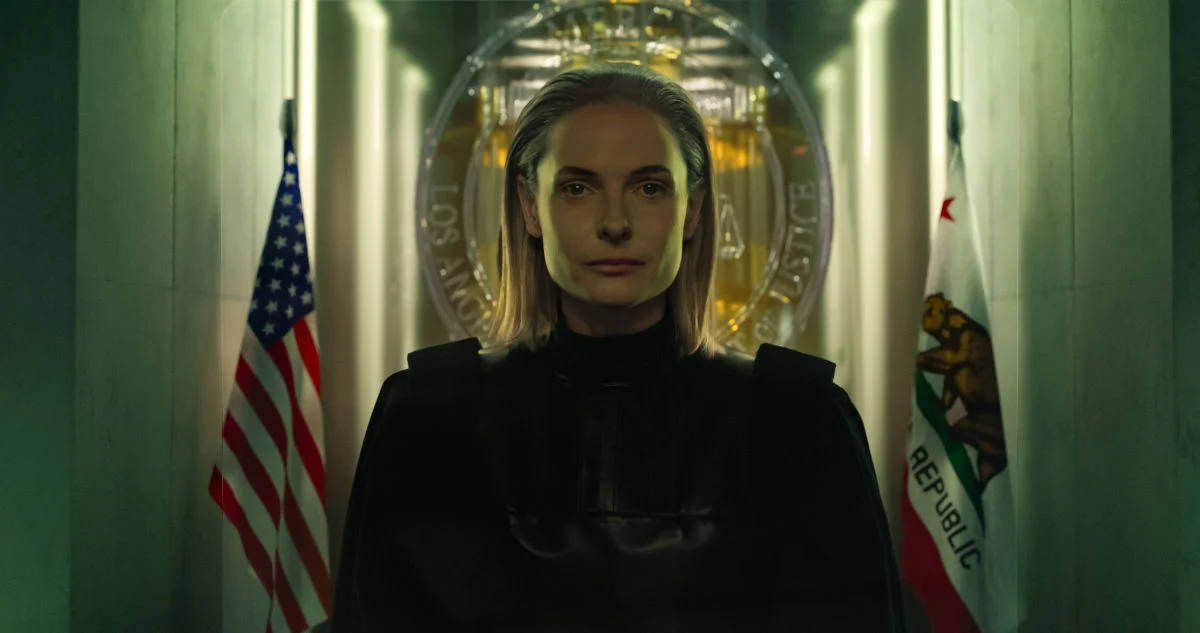 |
The AI character portrayed by Rebecca Ferguson. *MGM Studios* |
Rebecca Ferguson demonstrates good vocal control, lending a formidable presence to the AI. In some segments, her expression and tone convey a cold demeanor, adding dramatic tension to her exchanges with Pratt. However, some viewers have suggested that Maddox is occasionally portrayed with an emotional bias, which makes the artificial intelligence character less convincing in its supposed impartiality.
Ramin Djawadi's music significantly contributes to maintaining the film's relentless pace. The design of the police drones creates a distinctive impression of the futuristic setting, enhancing the world-building. Furthermore, the action sequences are effectively staged, particularly in the film's concluding chase scenes, providing impactful moments.
"Mercy" adopts the "screenlife" genre, where events unfold through computer, phone, or digital device screens. This approach is one Timur Bekmambetov has previously explored in works like "Unfriended" (2015), "Searching" (2018), and "Profile" (2021). However, the narrative's heavy reliance on surveillance camera and phone footage can sometimes feel tedious, potentially impacting viewer engagement over the film's duration.
According to The Guardian, the film effectively develops its plot for most of its runtime, but its climax reveals several limitations. When events are re-examined from the perpetrator's perspective, the script presents illogical details that are not adequately explained, especially regarding the motive for the crime. This drawback diminishes the film's dramatic peak and reduces the story's overall impact. IndieWire further noted: "The project merely raises concerns about technology in law enforcement, without delivering a specific message," suggesting a missed opportunity for a more definitive statement on its core themes.
Cat Tien