A 20th-century spiritual master, author Osho asserted that the purpose of meditation is not to escape reality but to understand one's existence in life. He believed that only by knowing what one is doing, thinking, and feeling can humanity break free from "unconscious sleep" and find freedom. This perspective is articulated in his book, Meditation: The First and Last Freedom, published in the 1990s.
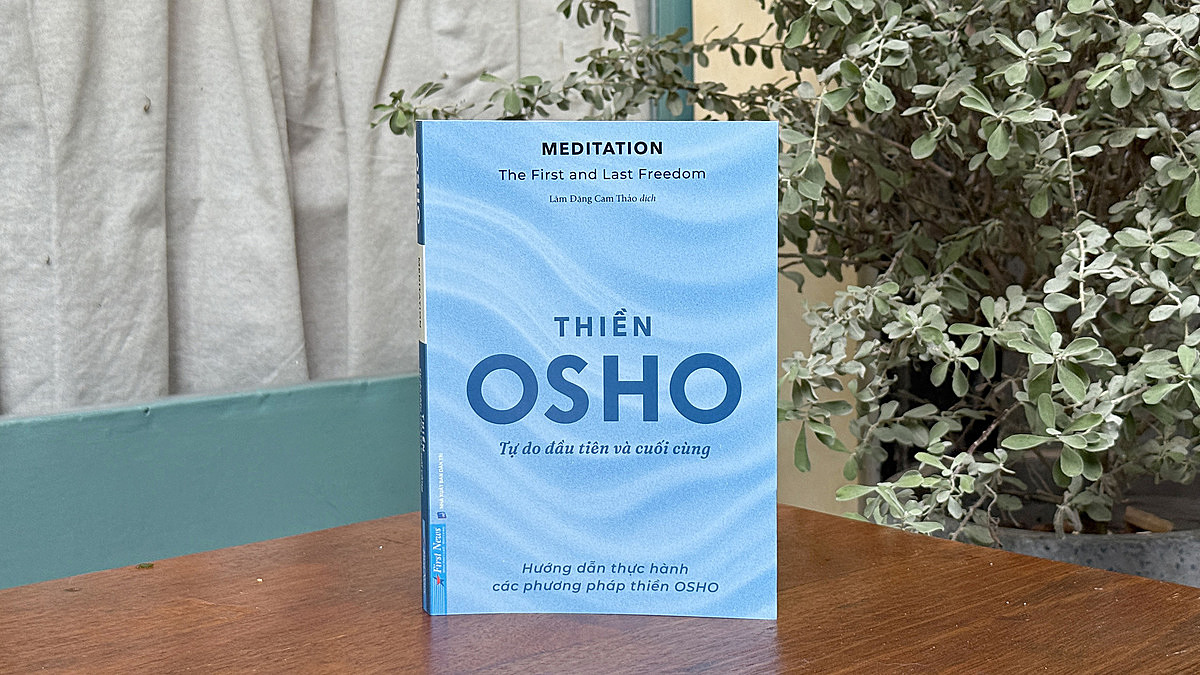 |
The Vietnamese edition of "Meditation - The First and Last Freedom" was translated by Lam Dang Cam Thao and announced for release in october by Dan Tri Publishing House in collaboration with First News. Photo: First News
The book comprises two parts, beginning with Osho's teachings. In it, he explains what meditation is, while also analyzing common misconceptions and the benefits of practicing mindfulness. According to Osho, meditation does not require practitioners to sit still, forcibly clear their minds, or retreat into nature. Instead, many everyday activities such as walking, eating, or listening to birdsong can be considered meditation, provided one remains aware and fully conscious of their actions, diet, or how they perceive each sound.
Thus, Osho posits that meditation teaches people a new way of life: to become the center of a whirlwind. From the eye of the storm, individuals can clearly see everything unfolding around them, no longer living unconsciously. "Your life continues, it actually continues more intensely – with more joy, more awareness, more understanding, more creativity – but you remain separate, merely an observer standing on a hill, simply seeing everything happening around you," he wrote.
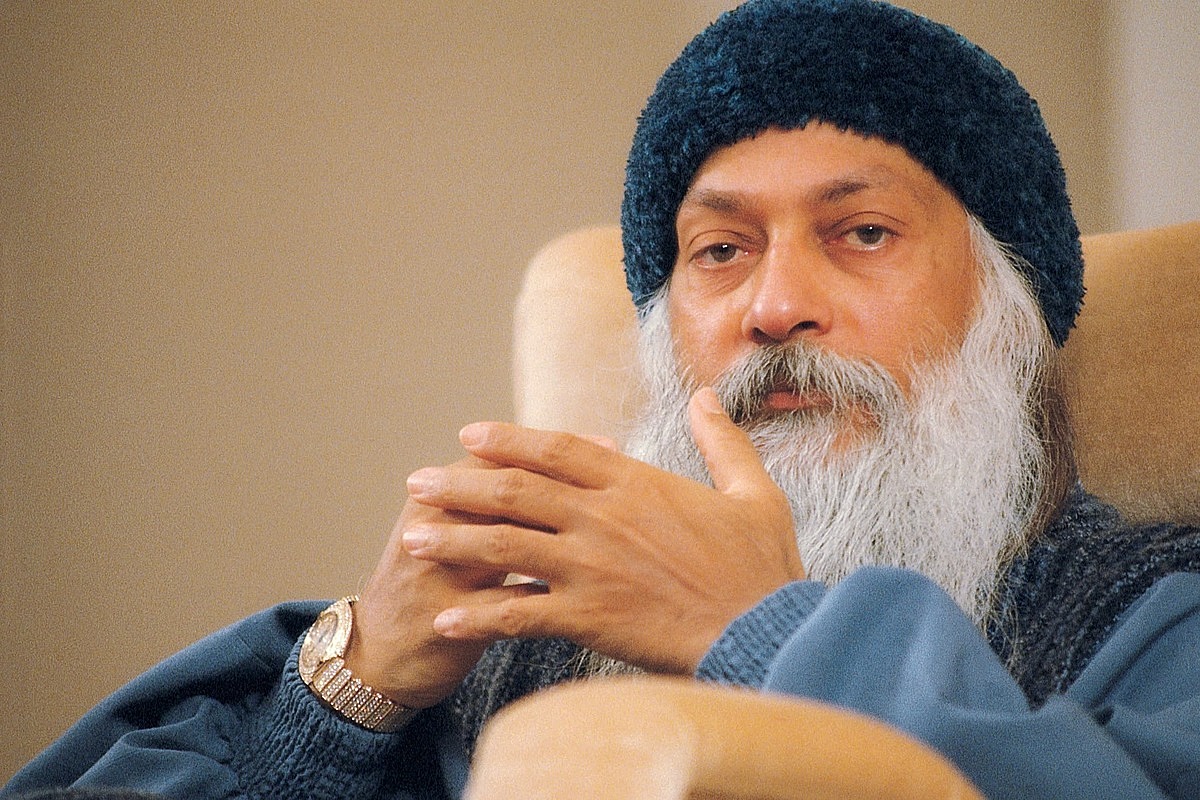 |
Portrait of the thinker Osho. Photo: Osho World
However, Osho also noted that not all methods are effective. He criticized practices that emphasize deep concentration, believing they can cause practitioners to become increasingly withdrawn and less open to the world.
Therefore, in the second part, Osho guides readers through methods he developed, ranging from active meditation and chakra opening to focusing and sound and light meditation. In each practice, he emphasizes deep relaxation to the point of forgetting the body, allowing practitioners to dance, shout, and speak incoherently to release their minds and energy. By shedding internal clutter, he believed individuals begin to sense "a growing silence within."
Nevertheless, Osho reiterated that no single method is absolutely effective. When practitioners reach a new level of awareness, he encouraged them to let go of old methods before they become obstacles. He advised everyone to view meditation as a game, like children building sandcastles, prioritizing the enjoyment of the process above all else.
"Meditation only gives you what you have always had. Meditation simply makes you aware of your reality. It brings nothing new. It simply reveals the treasure that is already there, but ignored and neglected, while you run across the world searching for it. You will not find it anywhere else because it is within you", an excerpt from his book.
 |
Cover of the English edition published in 2004. Photo: St. Martin's Griffin
On Amazon and Goodreads, Meditation - The First and Last Freedom received ratings of 4,5/5 and 4,1/5 stars respectively, with many positive reviews. One Goodreads user commented that the work helped them understand the meaning of introspection. "You don't need any posture to achieve a meditative state, just close your eyes and listen. I am very grateful to Osho for opening my mind, as well as other readers", the comment stated.
Osho (1931-1990), whose real name was Chandra Mohan Jain, was born in India. He is regarded as a 20th-century spiritual master. Throughout his life, he released thousands of audio and video recordings of his philosophy and beliefs, which were later compiled into books and translated into over 60 languages. Despite his prolific output, not all of Osho's ideas and statements left a positive impression. He famously criticized India's mainstream religions as "dead", advocated for sexual openness, and condemned traditional notions of nationalism.
Experts acknowledge that Osho's views resonated with the public but also had drawbacks. For instance, his ideas on seeking pleasure and abandoning reason could negatively impact society, especially the younger generation. On the Quora forum, many readers suggest that Osho's teachings should be approached with knowledge, critical thinking, and discernment.
Phuong Thao