


Le Viet Yen, a close friend, stated the poet passed away peacefully. That morning, Le Viet Yen had fed him bird's nest soup and conversed with him. For the past year, his health declined, preventing him from frequenting the coffee shop near his home to chat with friends and admirers. A week ago, he began eating less and weakening.
The poet's coffin will be placed at Vinh Nghiem Pagoda from 7/5 to 9/5, before cremation at Binh Hung Hoa Center.
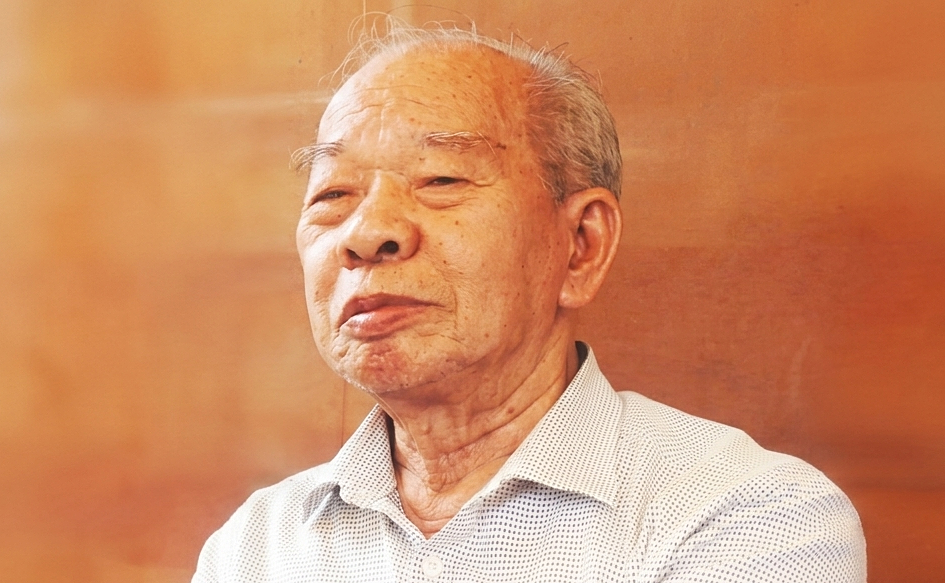 |
Poet Pham Thien Thu. *Photo: Family provided*. |
Born Pham Kim Long in 1940 in Kien Xuong, Thai Binh (now Hung Yen), the poet showed literary talent early, writing poetry at 13. In 1954, he moved to the South. There, he became a monk, studied at Van Hanh Buddhist University, then returned to secular life. In 1968, he debuted on the literary scene with his collection Tho Pham Thien Thu, quickly gaining reader popularity.
His most famous poem, "Ngay Xua Hoang Thi", was written in 1966 as he recalled memories of a school romance. He once shared that the muse of the work was Hoang Thi Ngo, two years his junior, who was his classmate at Van Lang High School. Both their homes were in the Tan Dinh - Saigon area, and they walked the same Tran Quang Khai street lined with oil trees. In the poem, he wrote: "Ten years, Ngo/ I pass by chance today/ The old tree still slender/ Leans its crimson form/ Your dress of that day/ Its colors now faded/ Footsteps seeking each other/ Still echo."
The work became more famous when musician Pham Duy set it to music as a song of the same name, released in 1971, performed by renowned singer Thai Thanh. Besides "Ngay Xua Hoang Thi", Pham Duy also set his poems to music for: Dua em tim dong hoa vang, Em le chua nay, and Goi em la doa hoa sau.
He also wrote "Doan truong vo thanh" as a continuation of Nguyen Du's Truyen Kieu, re-edited Buddhist scriptures into the poetic "Kinh Hien Hoi Hoa Dam", and authored "Tu dien cuoi - Tieu lieu phap", a laughter therapy dictionary in 24,000 quatrains.
He was known for his poems imbued with a Buddhist spirit, influenced by his years of monastic practice. During his lifetime, he stated: "I entered the pagoda due to a personal incident. But later, after spending so many years in monastic life, I understood meditation and decided to return to secular life with the belief that one can find the truth of meditation right within the mundane world."
In the book Hoi hoa dam, Venerable Thich Tam Giac wrote about Pham Thien Thu in the introduction: "He opened a new chapter for Vietnamese Buddhist literature by transforming Buddhist scriptures into poetry and integrating the teachings of liberation into national poetry. Whenever one hears the verses of Dao Ca, recites Doan truong vo thanh, and reads Kinh Ngoc, Kinh Tho, Kinh Hien... by the poet Pham, one feels unable to distinguish the boundary between Dharma and Life, as if drawn into an endless stream of vital energy that harmonizes all human thoughts. Perhaps, this is the unique characteristic of Vietnamese Buddhism, which has shone brightly more than once through the Ly and Tran dynasties."


