A new exhibition, "Summer in the City with Charles Dickens," is currently taking place at the Charles Dickens Museum in London from 26/8 to 27/9. The event showcases the writer's letters detailing his holiday travels, from the Kent coast to the Isle of Wight. These letters were originally housed at 48 Doughty Street, where Dickens lived with his family from 1837 to 1839. During this period, he completed his early novels, including *The Pickwick Papers* (1836), *Oliver Twist* (1838), and *Nicholas Nickleby* (1839). The house opened to the public in 1925 and now serves as the Charles Dickens Museum.
Emma Harper, the museum's deputy director, notes that Dickens habitually wrote everywhere, even bringing his favorite desk and chair on vacation. Among the exhibited letters is one Dickens sent to his brother Alfred in August 1840, just before leaving London for Broadstairs, Kent. In it, he remarks on the capital's pace: "London has no news, everyone is rushing out of the city. The two major theaters have closed and resorts are crowded."
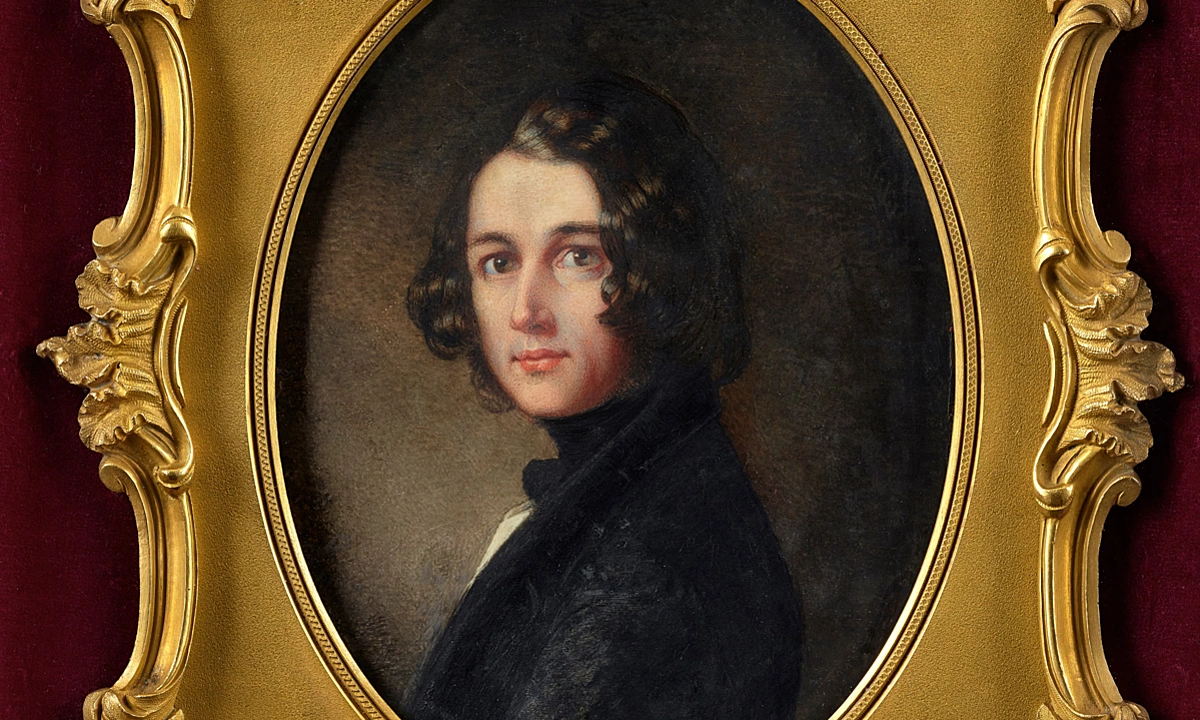 |
Portrait of a young Charles Dickens by artist Margaret Gillies in 1843. *Photo: Philip Mould & Company* |
Charles Dickens (1812-1870) stands as one of the most prominent English novelists of the Victorian literary era (1837-1901). Born into a family where his father worked as a Royal Navy clerk, Dickens left school at 12 after his father's imprisonment in Marshalsea debtors' prison. He then earned a living working at a shoe-polish factory. This formative experience profoundly influenced his writing, particularly his depictions of neglected children, the poor, and the harsh realities of debtors' prisons. His acclaimed works include *The Pickwick Papers* (1836), *Oliver Twist* (1838), and *A Christmas Carol* (1843).
In Vietnam, many of Dickens' books have been translated into Vietnamese, such as *Oliver Twist* (1838), *A Christmas Carol* (1843), *David Copperfield* (1850), *Hard Times* (1854), and *A Tale of Two Cities* (1859). The most recent Vietnamese edition is *Bleak House* (1850), published by Nha Xuat Ban Van Hoc in August.
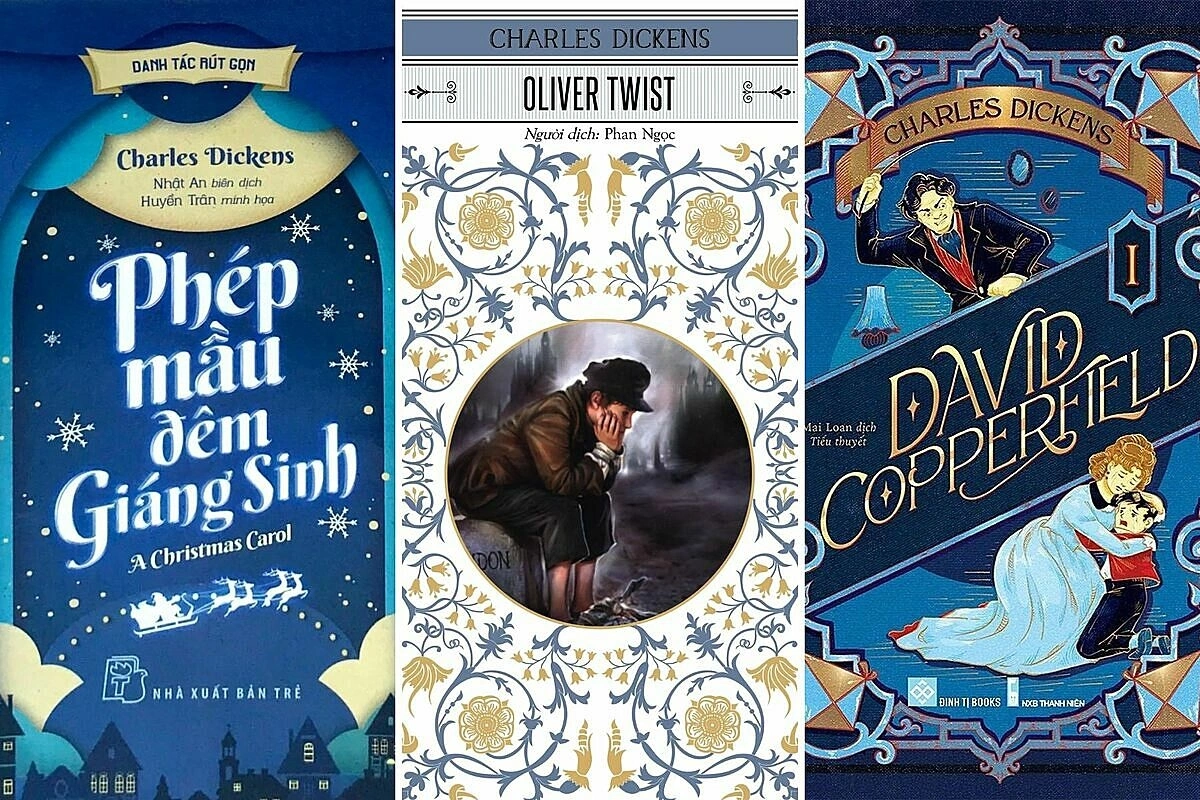 |
Vietnamese editions of Charles Dickens' novels. *Photo: NXB Tre/ NXB Van hoc/ NXB Thanh Nien* |
More than 150 years after his passing, Dickens' novels continue to captivate a wide readership and are constantly adapted into film and television. According to a June 2020 interview from Boston University, Dickens' books have been translated into 150 languages and have inspired over 400 film adaptations.
To understand the writer's enduring appeal, Natalie McKnight, a Boston University professor and Dickens scholar, attributes it to his ability to move readers with both familiar and unfamiliar characters and circumstances. She observes: "Dickens wrote insightful passages capturing the distorted perceptions of changing souls, or dissecting how kindness can cause cruelty to others."
McKnight believes this psychological depth in his prose is why his legacy continues to resonate with readers across generations, extending far beyond the Victorian era. She cites Amy Dorrit from the novel *Little Dorrit* (1857) as a prime example. In the work, Amy dedicates herself to working, caring for, and sacrificing for her family, yet her devotion paradoxically fails to instill a greater sense of responsibility in her relatives.
According to *A Companion to Charles Dickens*, edited by Professor David Paroissien of the University of Massachusetts' English Literature department, Dickens masterfully illustrates a paradox in Amy's sacrifice: her family gradually takes her efforts for granted. McKnight comments that this devotion "unintentionally allowed relatives to sink deeper into selfishness and denial of reality."
* Video introducing scenes from the film "Little Dorrit" (2008)
American novelist and historian Jon Michael Varese describes Charles Dickens' observation and study of human psychology as "deep, accurate, and illuminating." In a literary review published in The Guardian, Varese suggests that Dickens revealed much about his readers by integrating seemingly familiar personalities and habits from real life into his characters.
Varese shares that he recognizes parts of himself in many of Dickens' characters. Reading *Oliver Twist*, he empathized with the eponymous orphan boy's constant yearning for more than he possessed. With *Bleak House*, he felt a connection to the protagonist Esther Summerson through her longing for her estranged mother. Varese concludes that Dickens' appeal stems from his rich cast of characters, universal themes, and conflicts that enable readers to recognize their own experiences within his narratives.
Thao Uyen (according to The Guardian, Boston University, Charles Dickens Museum)