Dr. Nguyen Do Trong, from the Department of Pediatric Surgery at Tam Anh General Hospital TP HCM, stated that inguinal hernia in baby girls causes swelling in the groin or labia. This condition poses a risk of intestines, ovaries, or fallopian tubes moving from the abdominal cavity into the hernia sac. In newborns, organ incarceration can progress rapidly, and initial signs are not always clear. Some infants continue to feed and sleep normally despite a groin bulge.
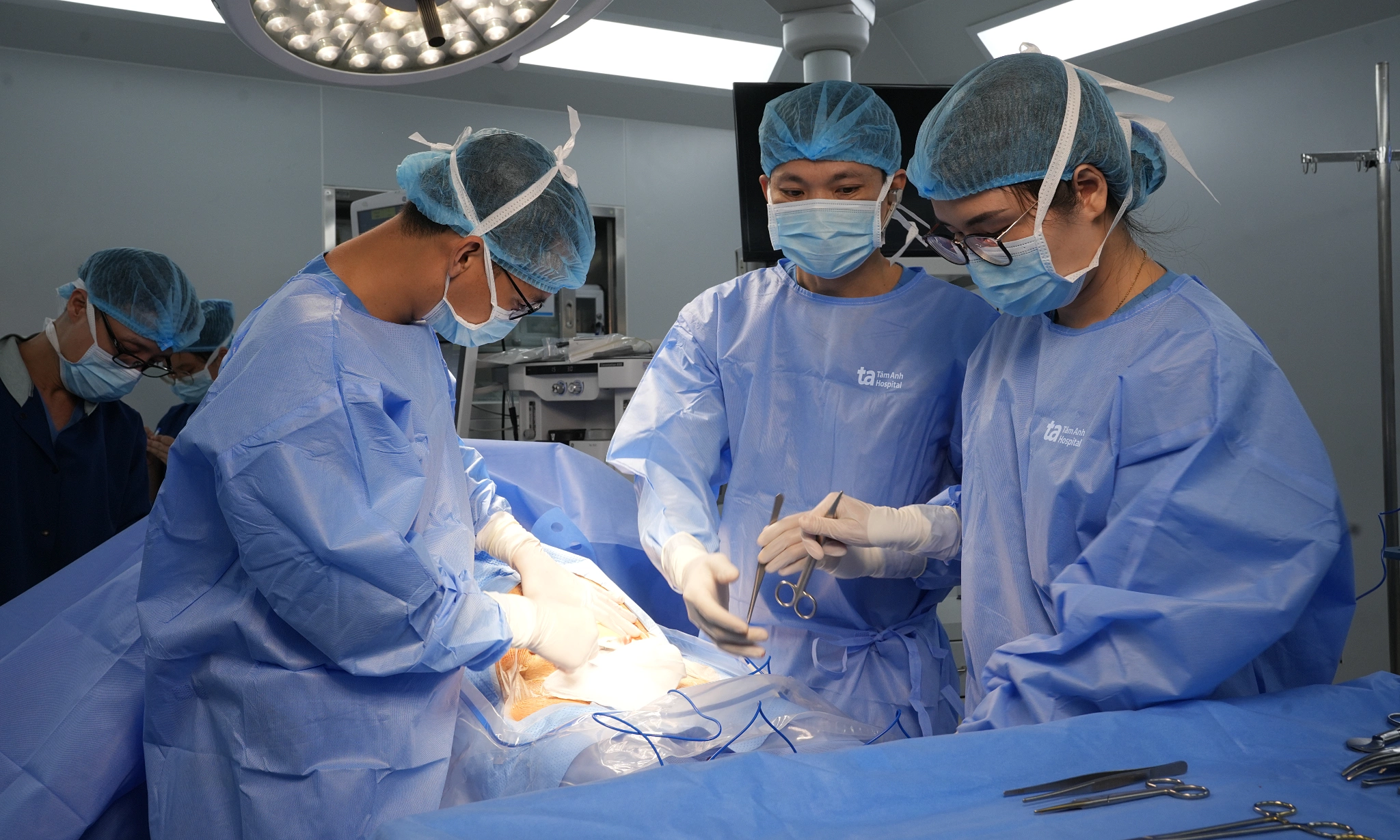
The baby underwent surgery to close the abnormal passage between the abdominal cavity and the groin area, preventing organs from descending and becoming trapped. Dr. Trong noted that the surgical challenge was the baby's small groin size and delicate tissues. This required the team to perform precise dissection and ligation to manage the hernia sac and minimize impact on adjacent structures.
Under anesthesia, the surgeons sequentially dissected and examined the hernia sac, finding no organs inside. The team ligated the hernia sac, closed the abnormal passage between the abdominal cavity and the groin, then sutured the incision.
Post-surgery, the baby breathed independently, vital signs were stable, and she was discharged the same day with a follow-up appointment in one week.
 |
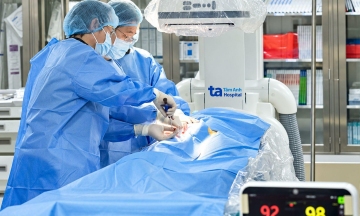
Dr. Trong (left) and the Pediatric Surgery team perform inguinal hernia surgery on the 27-day-old baby girl. *Photo: Tam Anh General Hospital* |
An inguinal hernia occurs when the passage between the abdominal cavity and the groin does not fully close. This condition allows abdominal organs or tissues, such as the intestines or ovaries, to move through an abnormal passage into the groin, forming a bulge.
Dr. Trong advises parents to observe their child's groin and genital area during bathing or diaper changes, and to seek consultation with a pediatric surgeon if any unusual signs are detected. If the bulge suddenly becomes hard, does not reduce, and is accompanied by continuous crying, refusal to feed, vomiting, abdominal distension, or if the swollen skin turns red or purple, parents must take the child to the hospital immediately. Parents should not massage, press forcefully, or attempt to push the swelling back in, as this could damage internal organs.
Phuong Dang
*The patient's name has been changed.
| Readers can submit questions about pediatric illnesses here for doctors to answer. |