Endoscopy at Tam Anh General Hospital Hanoi revealed multiple diverticula in Anh Van's cecum and colon. In the transverse colon, doctors found a large polyp with a thick stalk, measuring about 4x4,5 cm. This polyp nearly filled the entire colon lumen and had a congested, multi-lobed surface.
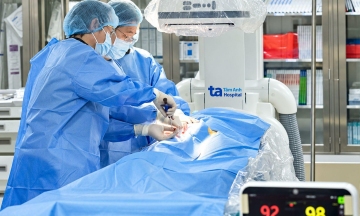
During the endoscopy, Dr. Phan Manh Tung, a specialist from the Department of Gastroenterology, used a ligating loop to tighten the polyp's stalk before resection. This compressed the stalk and internal blood vessels, minimizing bleeding. He then used an electrocautery snare to completely remove the polyp. Afterward, 8 metal clips were placed at the resection site to control bleeding and reduce the risk of post-procedure hemorrhage. Doctors completely removed the polyp and sent it for histopathological examination.
The histopathology result confirmed a tubulovillous adenoma with low-grade dysplasia. No invasive cancer was found, and the resection margins were clear of lesions.
 |
The endoscopic intervention team removing a polyp from the patient. Photo: Tam Anh General Hospital |
Following the polyp removal, Anh Van's health stabilized. He requires follow-up appointments and endoscopy as needed to assess the resection site and detect any new lesions early.
Dr. Tung noted that polyp size is a factor linked to cancer risk. Lesions 2 cm or larger carry a high risk of advanced cancerous histological components. However, a large polyp does not necessarily mean cancer; the lesion's nature must be determined based on endoscopic morphology and histopathological results.
Adenomas can accumulate abnormal cellular changes, progressing through various degrees of dysplasia. Some may develop into colorectal cancer if not detected and removed promptly.
Colon polyps often show no clear symptoms in their early stages, making them easy to miss. Doctors recommend regular check-ups and screening for individuals 40-45 or older. This also applies to those with risk factors, including a family history of colorectal cancer (parents, siblings), multiple polyps, or high-risk polyps, following a doctor's advice.
Maintaining a diet rich in green vegetables, fruits, fish, and beans is advisable. Individuals should also limit red meat and alcohol, avoid smoking, and exercise regularly. Patients should seek medical attention if they experience prolonged changes in bowel habits, bloody stools, persistent abdominal pain, or unexplained weight loss.
Ly Nguyen
*Patient's name has been changed
| Readers can submit questions about digestive diseases here for doctors to answer |