Ms. Thu had a previous preterm birth at 21 weeks. In her current pregnancy, she experienced abnormal bleeding at 14 weeks. Dr. Sao Hieng, from the Obstetrics and Gynecology Center at Tam Anh General Hospital Hanoi, noted the pregnant woman's cervix measured about 25 mm, while the normal range is 30-50 mm.
A normal cervix remains closed to retain the fetus within the uterus. If a pregnant woman's cervix is short or weak, increasing pressure from the fetus and amniotic fluid can cause it to open prematurely, leading to a risk of miscarriage or preterm birth. This condition often presents without symptoms, or with abdominal pain and bleeding. In Ms. Thu's case, Dr. Hieng recommended cervical cerclage to provide support and help keep the fetus safe.
 |
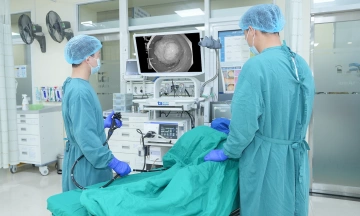
Dr. Sao Hieng (center) performing a cesarean section for a patient. *Photo: Tam Anh General Hospital*
Following the cervical cerclage, the patient received medical treatment with hormonal medication combined with prophylactic antibiotics. The pregnant woman was closely monitored for signs of abdominal pain, amniotic fluid leakage, infection, and underwent ultrasound scans to check fetal development.
The signs of threatened miscarriage improved after several days of monitoring. The fetus remained stable, with no complications recorded after the procedure. Ms. Thu was discharged, continued her pregnancy care at home, took medication as directed, and attended regular follow-up appointments.
At 21 weeks of pregnancy, she experienced pink vaginal discharge and abdominal pain. An ultrasound showed her cervix was about 29 mm long, the cerclage stitch was intact, and the fetus was developing normally, with an estimated weight of 391 g. The pregnant woman was treated with uterine relaxants combined with hormonal medication to maintain the pregnancy. At 37 weeks, doctors removed the cervical cerclage stitch. A baby boy, weighing 2,9 kg, was born naturally at 38 weeks, and both mother and baby were stable.
According to Dr. Sao Hieng, women with a history of mid-pregnancy miscarriage or preterm birth should seek counseling before pregnancy. Transvaginal ultrasound to measure cervical length between 16 and 24 weeks helps detect risks early. For cases with a short cervix or an adverse obstetric history, doctors will assess and consider cerclage on a case-by-case basis. The procedure is typically performed between 14 and 16 weeks when indicated. Some cases require emergency cerclage if the cervix has already opened.
After cerclage, pregnant women need to attend scheduled follow-up appointments and take medication as directed. If they experience intermittent abdominal pain, bleeding, abnormal vaginal discharge, or suspected amniotic fluid leakage, they should go to a medical facility for examination.
Thuy Hanh
*The patient's name has been changed.
| Readers can submit questions about obstetrics and gynecology here for doctors to answer. |