Before hospitalization, Khanh had suffered from pharyngitis and a respiratory infection for about two months. Subsequently, she experienced frequent and painful urination accompanied by blood. As her condition did not improve after 10 days of treatment, she was brought to Tam Anh General Hospital, TP HCM, for examination.
Associate Professor, Doctor Vu Huy Tru, Head of the Pediatrics Department, reported that the child's genital area was swollen, red, and itchy, with no fluid or pus accumulation. The family had no history of kidney disease or hematuria. Khanh's blood test results were normal, but a urine test revealed elevated white and red blood cells, along with protein and bacteria, indicating a urinary tract infection. An ultrasound showed a thickened bladder wall and sediment, clear signs of advanced inflammation.
After ruling out dangerous vascular causes of persistent hematuria, Associate Professor Tru diagnosed Khanh with a urinary tract infection and gross hematuria (blood visible in the urine). Untreated, the condition risks progressing to severe kidney damage and systemic infection.
The child received intravenous antibiotics combined with a topical cream for the foreskin to reduce swelling and itching. After 7 days, Khanh's painful urination subsided, and her urine color returned to a light pink, leading to her discharge from the hospital.
 |
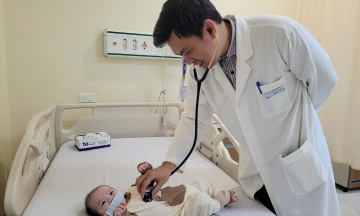
Associate Professor Tru checks Khanh's health before discharge. Photo: Tam Anh General Hospital
According to Associate Professor Tru, approximately 5-10% of children under 10 years old have experienced gross hematuria, primarily due to urinary tract infections (UTIs). This condition involves bacterial infection in the kidneys, ureters, bladder, or urethra, predominantly caused by E. coli bacteria. Common symptoms include fever, crying during urination, painful urination, frequent urination, and cloudy or foul-smelling urine. If left untreated, the infection can progress to chronic kidney failure. When a child passes blood in their urine, parents should not self-medicate but must take the child to a specialized hospital for examination and treatment.
Minh Tam
*Character's name has been changed
| Readers can submit questions about neonatal pediatrics here for doctors to answer. |