According to Doctor Nguyen Ngoc Tran, a specialist in dermatology and aesthetic dermatology at Tam Anh General Hospital, Ho Chi Minh City, post-inflammatory hyperpigmentation (PIH) is a common condition following procedures like ablative laser treatments, microneedling, chemical peels, or subcision. When skin inflammation occurs, melanocytes are stimulated to produce more melanin. As the skin heals, this excess melanin accumulates on the skin's surface, becoming more apparent after crusting. If melanin deposits in the epidermis, the dark spots are typically brown and have a better chance of recovery. If melanin falls into the dermis, the pigmentation tends to be bluish-gray and is more challenging to treat.
Doctor Tran explained that while not dangerous, hyperpigmentation can persist for several months if not managed properly. Post-scar hyperpigmentation may fade naturally after 3 to 24 months, depending on the extent of damage, individual skin type, and skincare routine. However, post-inflammatory hyperpigmentation in the dermal layer often persists and is difficult to resolve on its own, requiring early intervention to shorten treatment duration and limit residual pigmentation.
Strict sun protection plays a crucial role in controlling post-inflammatory hyperpigmentation. Patients should use sunscreen with an SPF of 30 or higher daily, reapplying every 2-3 hours when outdoors, and combining it with physical barriers like hats, face masks, and sunglasses.
Avoid inflammatory actions on the healing skin, such as picking scabs, peeling flakes, or vigorous rubbing, as these can darken pigmentation and make it harder to fade.
Skincare after healing involves maintaining hydration and restoring the skin barrier with ingredients like: ceramide, hyaluronic acid, or vitamin B5. Once the skin stabilizes, gentle brightening agents such as niacinamide, vitamin C, azelaic acid, or kojic acid can be introduced, gradually increasing frequency and starting with low concentrations to avoid irritation.
If post-inflammatory hyperpigmentation is pronounced, prolonged, or involves deep, extensive melanin deposits, patients should consult a dermatologist or aesthetic dermatologist for a suitable treatment plan. Depending on the severity, the doctor may prescribe specific topical medications like hydroquinone, retinoids, or tranexamic acid to reduce melanin production and fade pigmentation. Patients must adhere to usage instructions to minimize side effects.
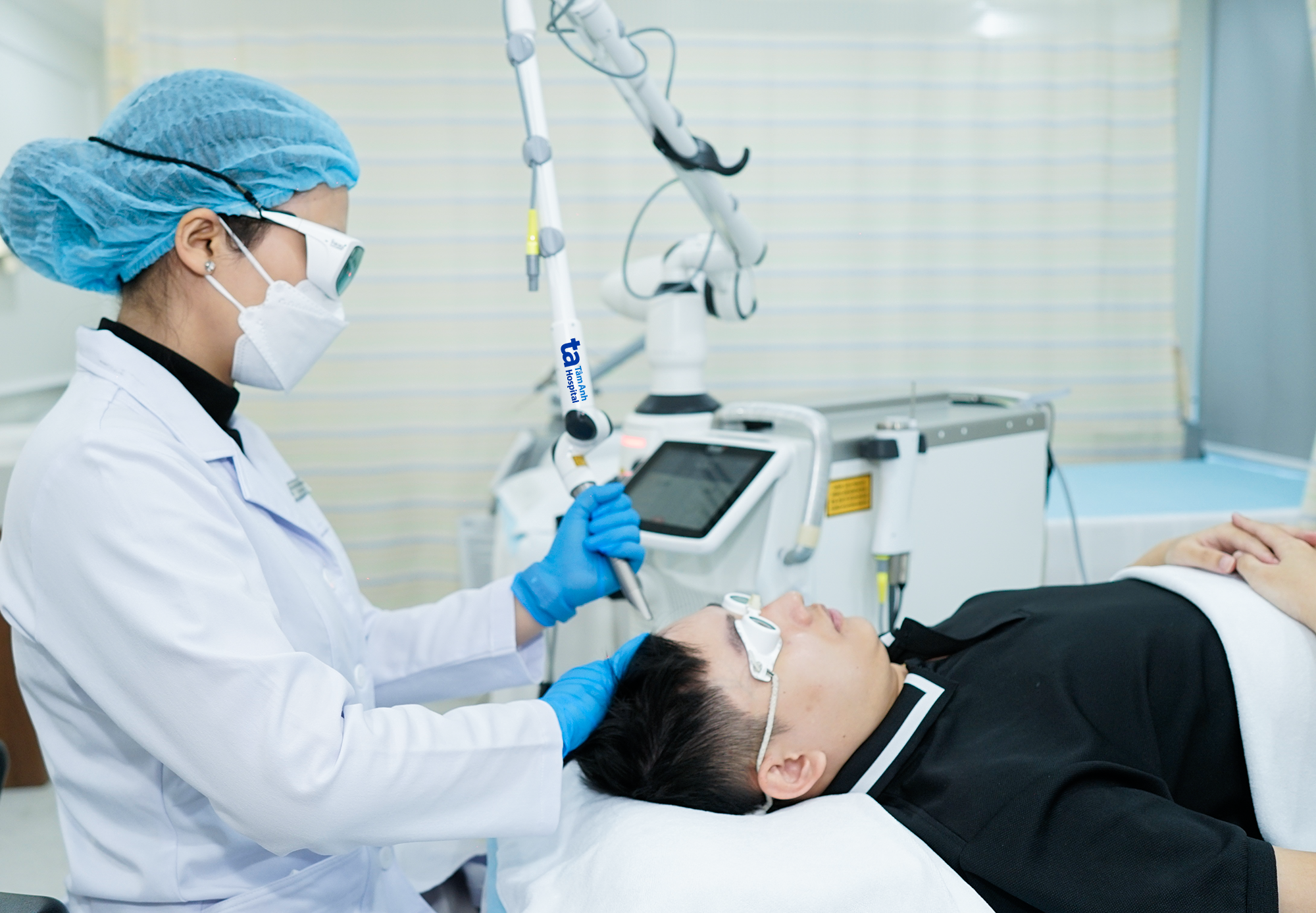 |
Doctor Tran uses a 6D laser to treat hyperpigmentation for patients. *Photo: Tam Anh General Hospital*
In some cases, chemical peels with acids like glycolic acid, salicylic acid, or TCA at appropriate concentrations may be prescribed to remove darkened surface skin and stimulate new skin regeneration. For deep or persistent post-inflammatory hyperpigmentation, pigment-specific laser technologies such as Q-switched Nd:YAG help break down melanin into small particles for gradual bodily excretion. Radiofrequency microneedling or microneedling combined with serums can be applied once the skin stabilizes, enhancing active ingredient penetration and supporting skin tissue repair.
According to Doctor Tran, no single method suits all cases of post-inflammatory hyperpigmentation. Effective treatment plans often combine home skincare and medical interventions, customized based on skin type, the extent of hyperpigmentation, and previous scar treatment methods. Preventing recurrence involves strict sun protection, allowing scabs to shed naturally, avoiding early use of exfoliating products before complete skin recovery, and adhering to post-procedure care instructions.
Minh Huong