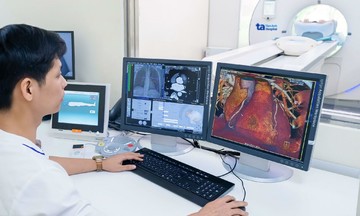
At the AI Era Health conference on 14/1, Deputy Minister Nguyen Tri Thuc stated that artificial intelligence (AI) is becoming a crucial tool in digital health transformation. This is especially true as Vietnam now has a legal framework with the Artificial Intelligence Law, passed by the National Assembly in 2025. However, Thuc emphasized that the boundary technology cannot cross is "conscience and compassion."
According to a leader from the Ministry of Health, AI can process big data, assist in interpreting diagnostic images, or suggest treatment protocols. However, the final decision and accountability must remain with humans. "The fundamental difference lies in AI lacking a heart to understand patients' suffering. Therefore, no matter how advanced technology becomes, healthcare professionals retain their central role," Thuc stated.
 |
Deputy Minister Nguyen Tri Thuc at the AI Era Health conference on 14/1. *Photo: Nguyet Thu*
Sharing this perspective, Nguyen Anh Tuan, CEO of the Boston Global Forum, believes the most suitable model for Vietnamese healthcare is for AI to serve as an "assistant." Technology can help reduce repetitive tasks, support doctors in early disease detection, and enable remote prevention. "The value of AI is not to replace doctors but to help them provide better, safer patient care. AI models should be designed to serve humans, rather than making humans dependent," Tuan analyzed.
In Ho Chi Minh City, AI has begun to integrate into medical examination and treatment processes. Tran Thi Lam, Head of the Strategy Committee for Ho Chi Minh City High-Tech Healthcare Zone, noted that artificial intelligence has participated in many medical decisions. However, she pointed out that the biggest challenge is not just the technology itself, but ensuring AI effectively assists doctors without overshadowing the human element.
Currently, several major hospitals, including Gia An 115, Cho Ray, and Ho Chi Minh City University of Medicine and Pharmacy, have implemented AI in medical imaging, robotic surgery, and patient record management. Initial results show reduced waiting times and increased diagnostic accuracy.
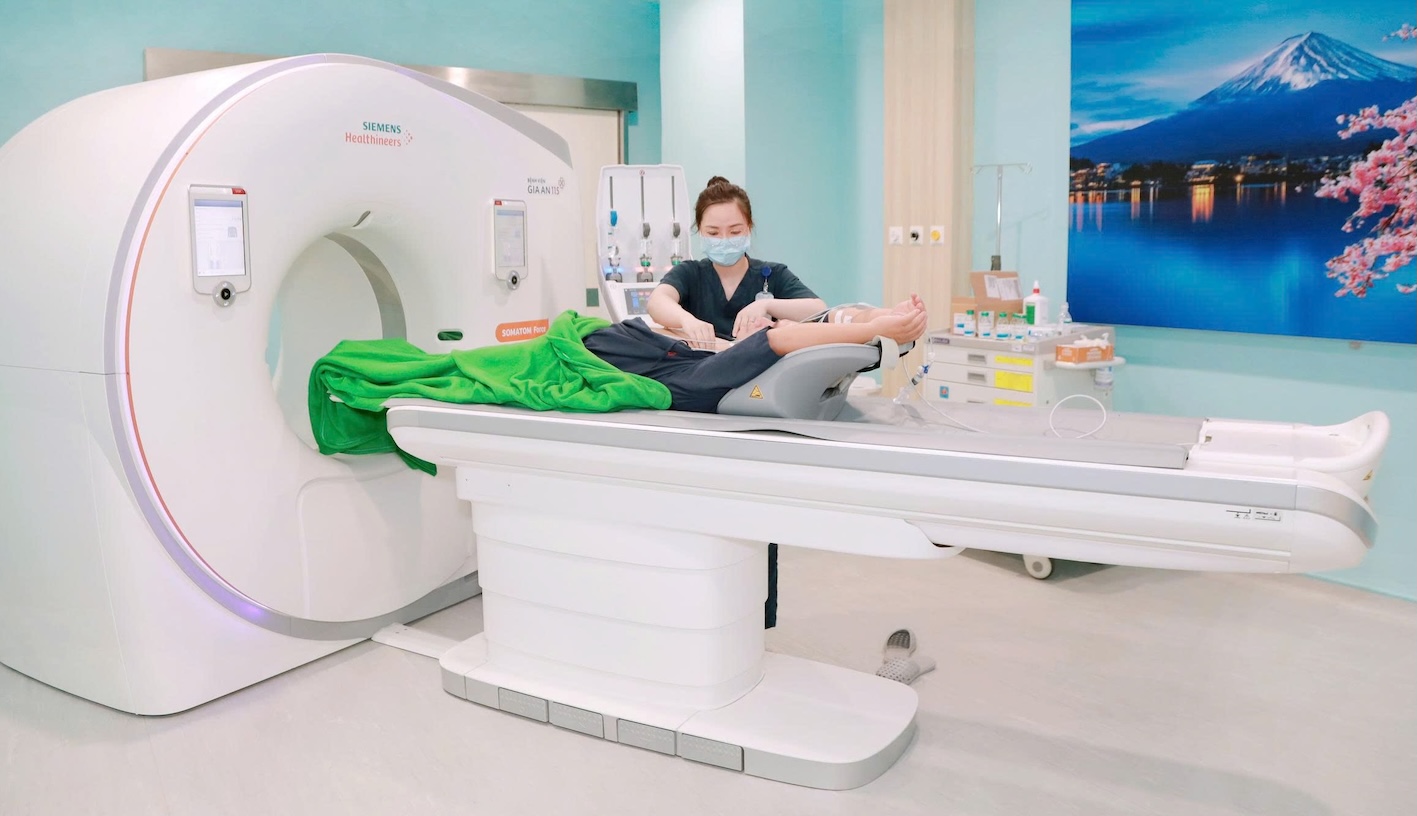 |
CT machine integrated with artificial intelligence at Gia An 115 Hospital. *Photo: Nguyet Thu*
The global medical AI market is projected to reach nearly USD 188 billion by 2030, according to Statista. This growth occurs at a time when the World Health Organization (WHO) warns of a 10 million healthcare worker shortage by the same year. Facing this pressure, the American Medical Association (AMA) and many international organizations have shifted to using the term "augmented intelligence." This positions technology as a decision-support tool rather than a replacement for doctors' clinical roles.
Legally, the European Union (EU) and the U.S. Food and Drug Administration (FDA) both apply the "human-in-the-loop" principle. The EU AI Act, effective from 2024, classifies most medical applications as "high-risk," requiring mandatory human oversight and transparency of input data to ensure accountability.
Despite concerns about a lack of emotion, a 2023 study in the JAMA Internal Medicine journal noted that AI chatbots could provide responses rated as "more empathetic" than doctors in some online consultation scenarios. Researchers explained this is not because machines have emotions, but because real-world doctors are often overwhelmed and lack sufficient time to explain thoroughly to patients. To address this, AI can help free doctors from administrative tasks, allowing them to focus on direct patient care.
The Ministry of Health is currently developing sub-law guiding documents to specify AI applications, prioritizing ethical and humanitarian challenges. Concurrently, the healthcare sector is working to synchronize data from 26 specialized databases (cardiology, oncology, immunology, etc.) to create a "clean data" foundation for AI to operate effectively. This presents a significant challenge, as data infrastructure in many hospitals remains fragmented.
Le Phuong