Cochlear implantation is a procedure that involves surgically placing an electronic device into the cochlea to restore hearing for individuals experiencing severe hearing loss or profound deafness (over 90 dB). The system comprises an external sound processor, worn behind the ear, and an internal electrode array.
This device functions by capturing environmental sounds, encoding them into electrical signals, and transmitting these signals to the cochlear electrode array. This process stimulates the auditory nerve, which then sends signals to the brain, enabling the patient to perceive sound.
Immediately after surgery, children cannot hear, understand, or speak normally. The external device is activated approximately 4 weeks post-surgery to allow the child to receive sound. At this initial stage, the sounds are unfamiliar, and the brain requires time to learn how to analyze, remember, and recognize them.
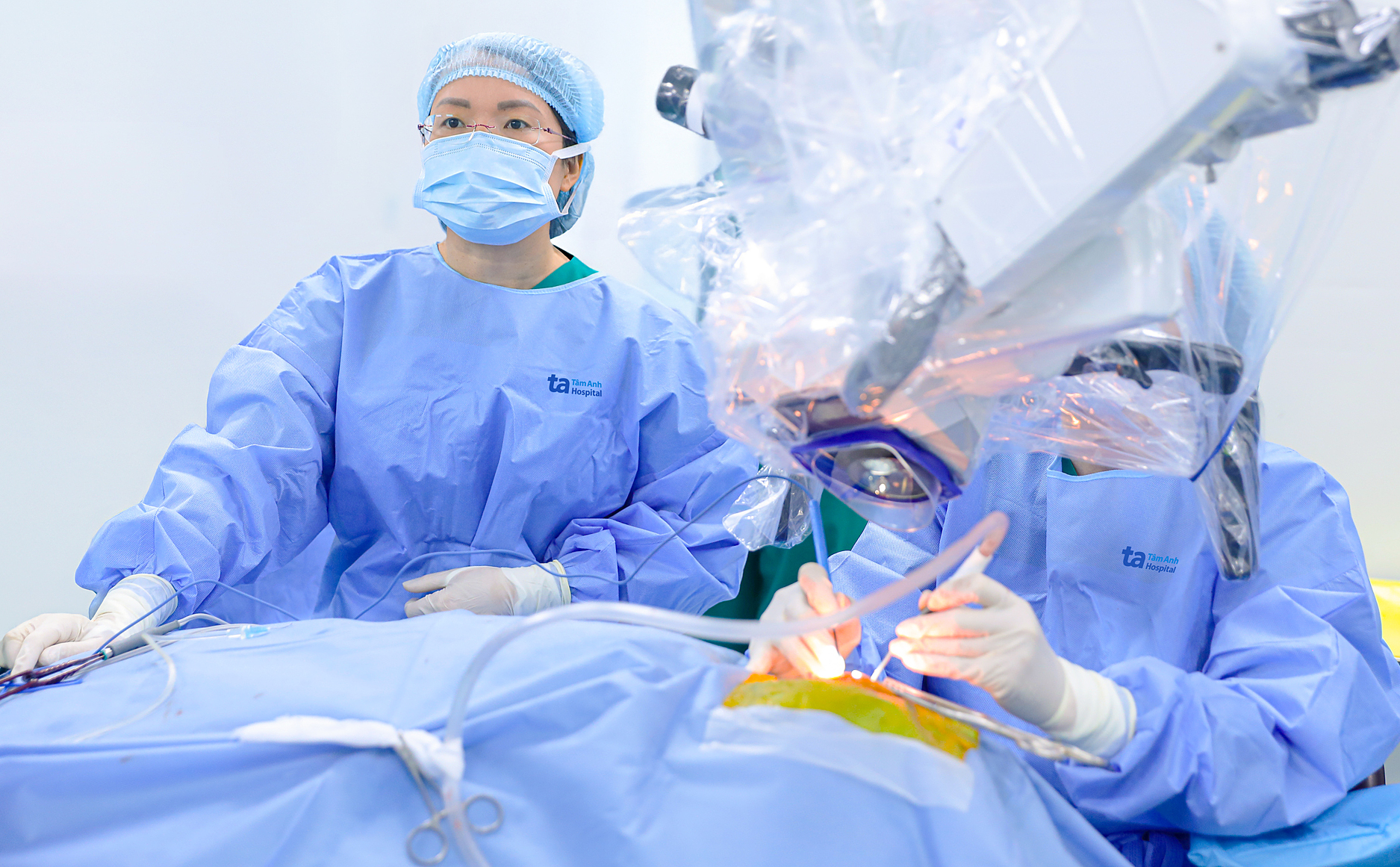 |
Dr. Hang during a cochlear implant surgery using an AI-powered surgical microscope. Photo: Tam Anh General Hospital |
Each child responds to sound differently. Some children quickly embrace and show interest in the world of sound, while others may experience discomfort upon hearing initial sounds. Therefore, close monitoring, sound intensity adjustments, audiological intervention, and consistent language therapy are crucial after cochlear implantation to restore hearing and foster communication skills.
The effectiveness of recovery hinges on several factors: the child's age at implantation, the duration of hearing loss, the extent of auditory nerve damage, their cooperation with post-operative interventions, and their communication environment.
It is advisable to choose a reputable treatment facility with experienced surgeons for your child's cochlear implant surgery. For instance, Tam Anh General Hospital, TP HCM, currently utilizes AI-integrated surgical microscopes, neuro-navigation systems, and intraoperative auditory response measurement for cochlear implant procedures in pediatric patients.
Children who receive cochlear implants during the "golden period" of one to five years old and engage in active language intervention have an excellent opportunity to develop strong listening and speaking abilities. These children can achieve fluent listening, speaking, communication, learning, and social integration within one to two years.
Dr. Tran Thi Thuy Hang
Head of Otorhinolaryngology Department
Otorhinolaryngology Center
Tam Anh General Hospital, TP HCM
| Readers can submit questions about ear, nose, and throat conditions here for a doctor's response. |