


Dr. Nguyen The Khoi, Head of Emergency Department at Tam Anh General Hospital, Ho Chi Minh City, reported that Mr. Tam's bitten finger was swollen, hot, and red due to cellulitis. Infection assessment tests revealed Mr. Tam's blood sugar level was 30,1 mmol/L, five times higher than normal. Dr. Khoi noted that Mr. Tam's type 2 diabetes contributed to slow wound healing and an increased risk of infectious complications.
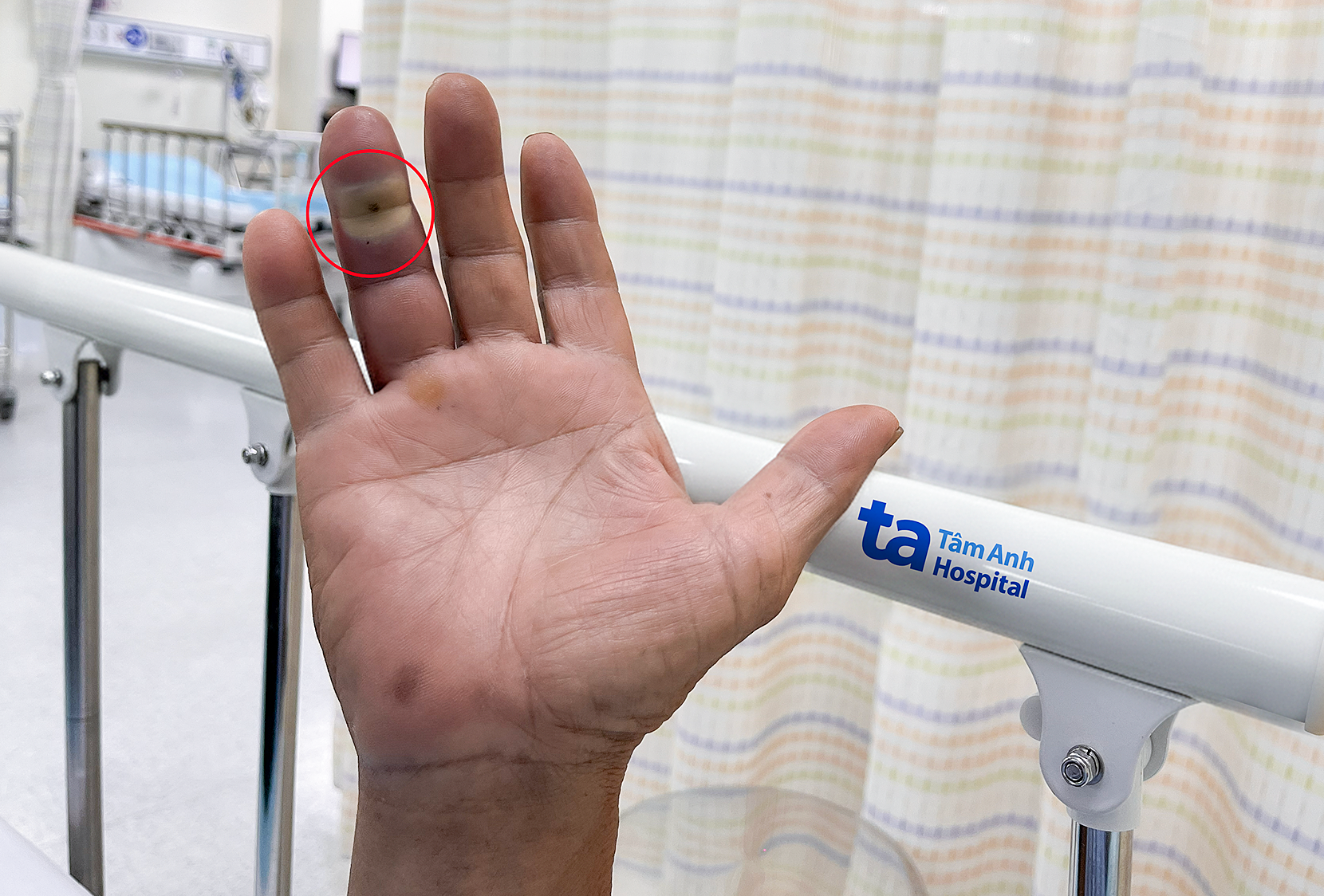 |
Pus accumulated on Mr. Tam's right ring finger more than a week after being bitten by his pet dog. *Tam Anh General Hospital*.
Dr. Khoi consulted with the Endocrinology and Diabetes department, agreeing on a treatment plan for Mr. Tam's cellulitis. This plan involved intravenous antibiotics and strict blood sugar control to prevent widespread infection, sepsis, and septic shock.
Dr. Khoi advised that for dog or cat bites, even minor wounds, immediate steps are crucial: wash thoroughly under running water, disinfect properly, and then seek medical attention for a rabies vaccine and antibiotics to prevent infection. He also cautioned against applying leaves or unverified remedies, emphasizing the need to keep the wound dry and airy.
Individuals with diabetes must control their blood sugar and maintain stable levels. Elevated blood sugar accelerates inflammation, allowing bacteria to penetrate even minor scratches, which can lead to severe complications if treatment is delayed.
Dr. Khoi recommended that adults undergo regular general health check-ups to detect chronic conditions early, such as diabetes, hypertension, and metabolic disorders. These conditions increase the risk of infection and severe complications, even from minor bodily trauma. Proactive screening leads to early diagnosis, effective disease management, timely intervention, and minimized complications.
Nhat Thanh
*Patient's name has been changed*
| Readers can submit questions about diabetes here for doctors to answer. |


