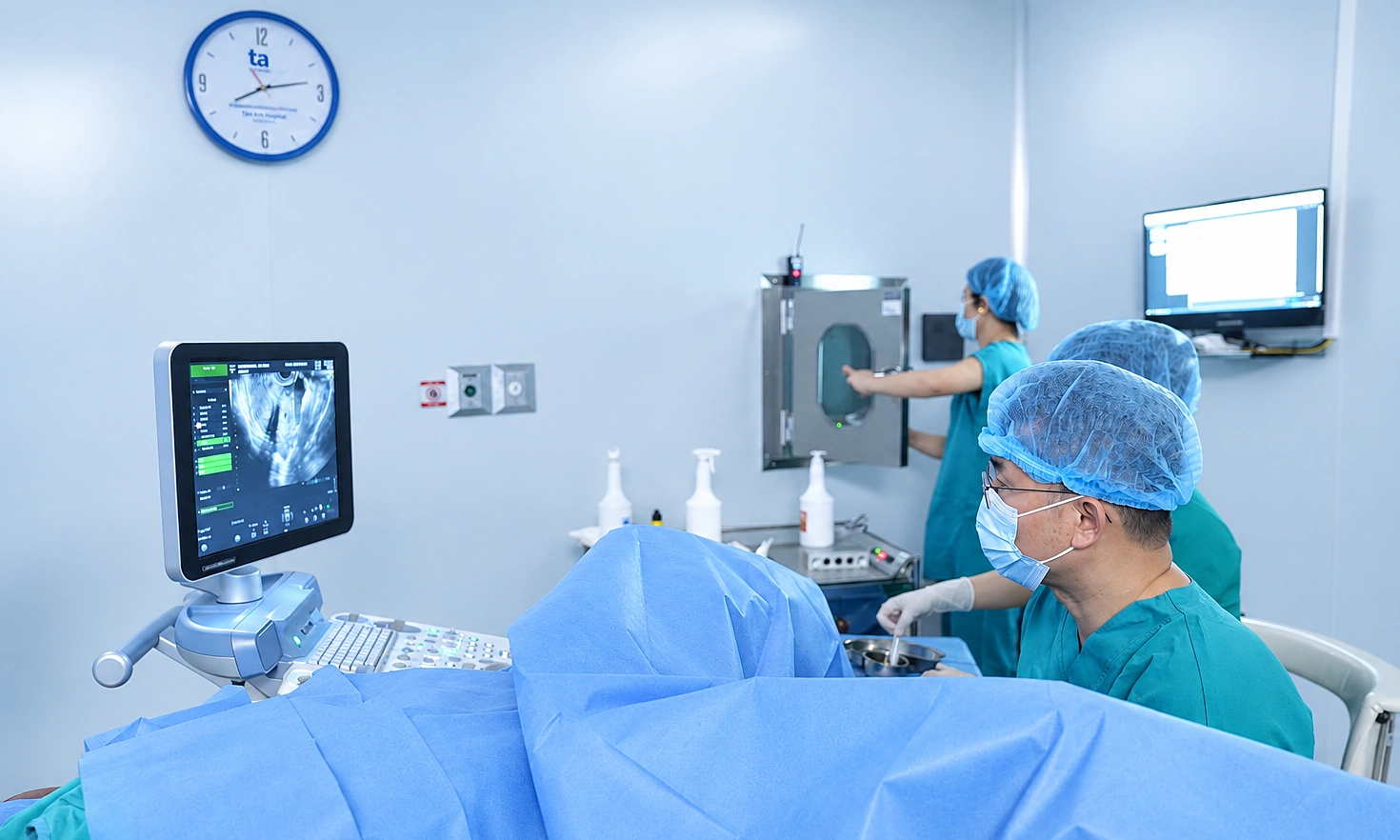
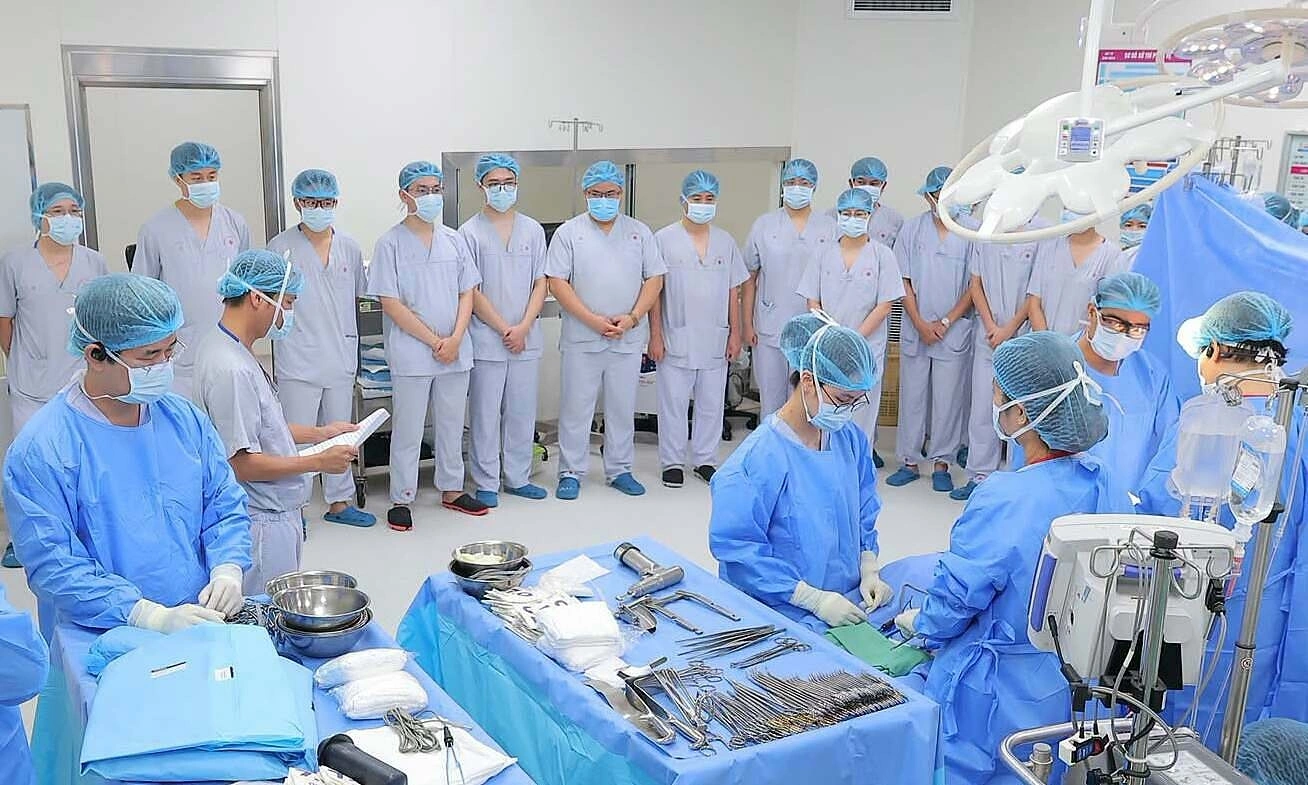
Ms. Thao suffered from deep vein thrombosis in her lower limbs, gestational diabetes, dyslipidemia, and uterine fibroids. Doctors had planned a C-section at 39 weeks, but she went into labor at 38 weeks. The fetus was predicted to be smaller than average, showing signs of oxygen deprivation and a risk of fetal distress, necessitating an emergency C-section.
Doctor Le Van Tu, from the Obstetrics and Gynecology Center at Tam Anh General Hospital Hanoi, assessed that the thrombosis condition complicated the surgery because the pregnant woman was on anticoagulant medication, with the most recent dose taken 16 hours prior.
 |
Doctor Tu (center) after performing a C-section for the patient. Photo: Tam Anh General Hospital |
Doctor Tu explained that anticoagulant medication prevents the formation and growth of blood clots. However, if the medication remains active during surgery, it increases the risk of bleeding. During a C-section, excessive bleeding can lead to uterine atony and postpartum hemorrhage. Furthermore, spinal anesthesia administered while anticoagulants are active can cause a hematoma that compresses the spinal cord.
For this patient, coagulation test results were within normal limits but were not sufficient to confirm that the anticoagulant medication had ceased its effect in the body. Waiting long enough for the medication's effects to diminish could endanger the fetus.
Instead of the usual spinal anesthesia for a C-section, the team administered general anesthesia to the patient and prepared in advance for various bleeding control measures. The surgery proceeded smoothly, and a baby girl weighing 2,7 kg was born with good vital signs. Ms. Thao resumed anticoagulant medication 24 hours after the surgery as per her treatment plan, and she was discharged after 5 days.
Deep vein thrombosis (DVT) is a condition where blood clots form in deep veins, typically in the legs or pelvis. Patients may experience swelling, pain, a heavy or tight sensation in one leg. More dangerously, a part of the blood clot can break off and travel through the bloodstream to the lungs, causing a pulmonary embolism.
According to Doctor Tu, pregnant women have a risk of thrombosis formation that is approximately 4-6 times higher than non-pregnant individuals. During pregnancy, the body undergoes physiological changes that increase blood clotting ability. Several factors further heighten this risk, including a history of venous thrombosis, being overweight, prolonged bed rest, multiple pregnancies, gestational diabetes, in vitro fertilization, or preeclampsia.
Doctor Tu advises that pregnant women using anticoagulant medication should discuss their birth plan and medication adjustment schedule with their doctor in advance. Patients should not discontinue the medication on their own, as sudden cessation of treatment can increase the risk of thrombosis formation.
Upon experiencing signs of labor, pregnant women must go to a medical facility and clearly inform staff about the type of anticoagulant medication they are currently using. This information is crucial for doctors to select appropriate anesthesia or analgesia methods and prepare suitable bleeding control strategies.
Thuy Hanh
| Readers can submit questions about obstetrics and gynecology here for doctors to answer. |