Hung was initially taken to an emergency hospital, then transferred to Tam Anh General Hospital, TP HCM, for specialized treatment. CT scan results showed damage to the patient's pelvis and sacrum, along with a complete urethral rupture, according to Master of Science, Doctor, Second-Degree Specialist Doctor Phan Duc Huu, from the Department of Urology, Center for Urology - Nephrology - Andrology.
Immediately upon admission, doctors performed a suprapubic cystostomy for Hung, inserting a urinary drainage tube. This procedure helps decompress the urinary tract, prevents urine from entering the injured pelvic area, and reduces infection risk.
About eight weeks later, once the pelvic injury stabilized, Dr. Huu performed a second surgery to reconstruct Hung's urethra. At this stage, the injured area had developed extensive fibrous tissue, which was tightly adhered. The team carefully dissected the scar tissue surrounding the urethra to locate and free the two severed ends.
Upon access, Dr. Huu observed that the two urethral ends were not aligned but displaced, with one end pointing forward and the other backward, also shifted vertically, about 3 cm apart. The doctor meticulously freed the adhered tissue, brought the two urethral ends into correct alignment and direction, then sutured them securely, and inserted a urinary catheter.
Hung was discharged one week after surgery. Three weeks later, he could urinate independently, his urinary system function was stable, and the urethral catheter was removed.
 |
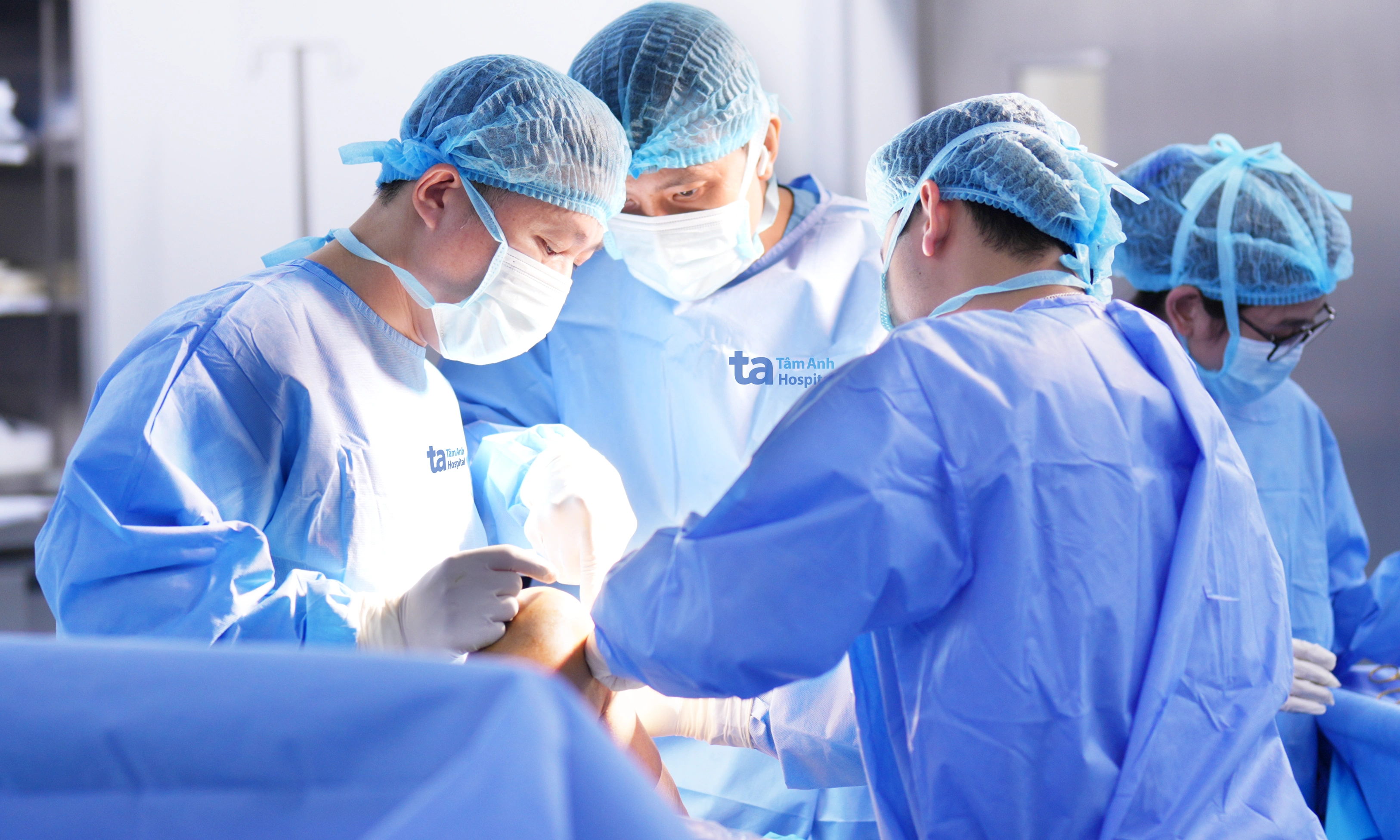
Dr. Huu (right) performing urethral reconstruction surgery on the patient. *Photo: Tam Anh General Hospital*
According to Dr. Huu, urethral injuries often occur when the pelvis sustains a strong impact, especially in cases of pelvic fractures. With a complete urethral rupture like Hung's, urine cannot flow from the bladder outwards. Patients are at risk of urinary retention, infection, abscess, or necrosis in the perineal area. Associated pelvic injuries can also cause severe bleeding, posing a life threat.
Dr. Huu advises that individuals involved in traffic accidents or suffering pelvic injuries, especially if they experience inability to urinate, pain or swelling in the lower abdomen or perineum, or blood at the urethral opening, should seek medical attention at a facility equipped for trauma and urological emergencies as soon as possible.
Dinh Lam
* Patient's name has been changed
| Readers can submit questions about urological diseases here for doctors to answer |