Dry eyes typically cause sensations of burning, grittiness, fatigue, and blurred vision. Headaches, on the other hand, can emerge after prolonged periods of focus or screen use. These two conditions sometimes appear together and may be interrelated.
Eye irritation and strain are primary links between dry eyes and headaches. Dry eyes occur when the eyes do not produce enough tears or when tears evaporate too quickly, leaving the ocular surface unprotected and inadequately lubricated. Individuals may experience dryness, burning, a foreign body sensation, redness, or fluctuating blurry vision.
When the eyes experience discomfort for an extended period, the muscles around them must work harder to maintain clear vision. People also tend to squint or strain to focus when reading or working on a computer. These factors can lead to eye strain and subsequently, headaches.
Eye strain can be accompanied by headaches, neck and shoulder pain, and difficulty concentrating. Prolonged focus during reading or using computers and phones, coupled with reduced blinking, can exacerbate this condition.
 |
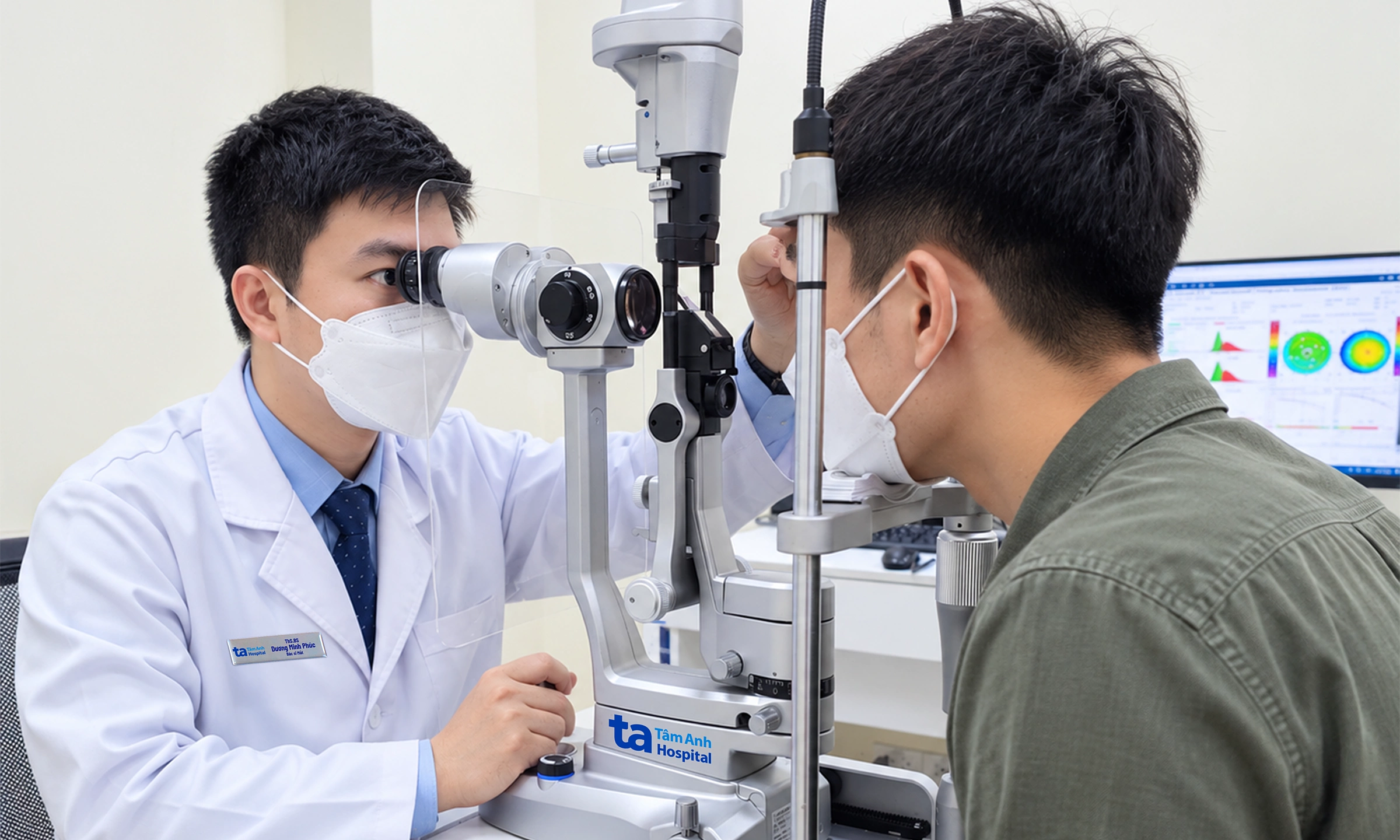
Dry eyes can cause fatigue, irritation, light sensitivity, and contribute to headaches. *AI generated image.* |
Prolonged screen use exacerbates both dry eyes and headaches. When vision is unstable due to dry eyes, individuals may need to squint or focus more intently to clearly see text and objects. This situation is common during long hours spent in front of a screen.
Continuous screen viewing often reduces the frequency of blinking, which can lead to the tear film on the eye's surface breaking down more easily and dry eye symptoms becoming more pronounced. Concurrently, eye strain from using digital devices can be associated with headaches. Therefore, in some cases, people may experience headaches after many hours of reading documents or looking at screens, alongside sensations of dryness, burning, or eye fatigue.
Light sensitivity, a common symptom of dry eyes, can intensify headaches. Dry eyes can make the eyes sensitive to light, also known as photophobia. This is a frequent symptom when the eye surface is irritated. Bright light from screens, lamps, or the external environment can cause pain or increased squinting for those experiencing eye discomfort. In some individuals, particularly those prone to migraines, light can be a factor that triggers or worsens a headache.
Both dry eyes and migraines are conditions related to the sensitivity of the nervous system and discomfort with light. However, this connection does not mean that dry eyes are a direct cause of migraines.
The simultaneous occurrence of dry eyes and headaches does not imply direct causation. When using computers or phones for extended periods, reduced blinking can lead to dry, tired eyes. Separately, continuous focus, inappropriate lighting, or tension in the neck and shoulder muscles can also contribute to headaches. Both dry eyes and headaches can occur in individuals with digital eye strain syndrome.
Therefore, if symptoms recur, individuals should adjust their screen time and usage habits, and address the dry eye condition rather than relying solely on painkillers.
People who frequently experience dry or tired eyes should take regular breaks, blink often, adjust their screen settings appropriately, and avoid direct airflow from fans or air conditioners into their eyes. The 20-20-20 rule can be applied: after every 20 minutes of screen time, look at an object approximately 6 m away for at least 20 seconds.
Artificial tears can help alleviate symptoms. However, if dry eyes are prolonged, progressively worsen, affect daily activities, or are accompanied by pain, redness, or changes in vision, an eye examination is recommended. If headaches are frequent or severe, even after dry eye symptoms have improved, other underlying causes need to be evaluated.
Bao Bao (Compiled)
| Readers can submit ophthalmology questions here for doctors to answer |