Upon discovering fetal abnormalities, Ms. Huong visited Tam Anh General Hospital TP HCM for examination. Ultrasound results at over 33-34 weeks revealed the fetus had mild atrioventricular valve regurgitation, a membranous ventricular septal defect measuring about 2 mm, a slightly small aortic isthmus, and a dilated ductus arteriosus.
Doctor Nguyen Ba My Nhi, Head of the Obstetrics and Gynecology Center, stated that these congenital heart abnormalities were mild and did not significantly affect fetal circulation, but could become more pronounced after birth.
At 38 weeks and 4 days, the pregnancy was suitable for a natural birth. However, due to the mother's history of two previous cesarean sections, the medical team scheduled a C-section for when the pregnancy reached 39 weeks or when labor signs appeared.
Doctor My Nhi, along with the neonatal and cardiology teams, assessed the infant's respiratory and circulatory risks after birth, preparing all necessary resuscitation equipment in the operating room.
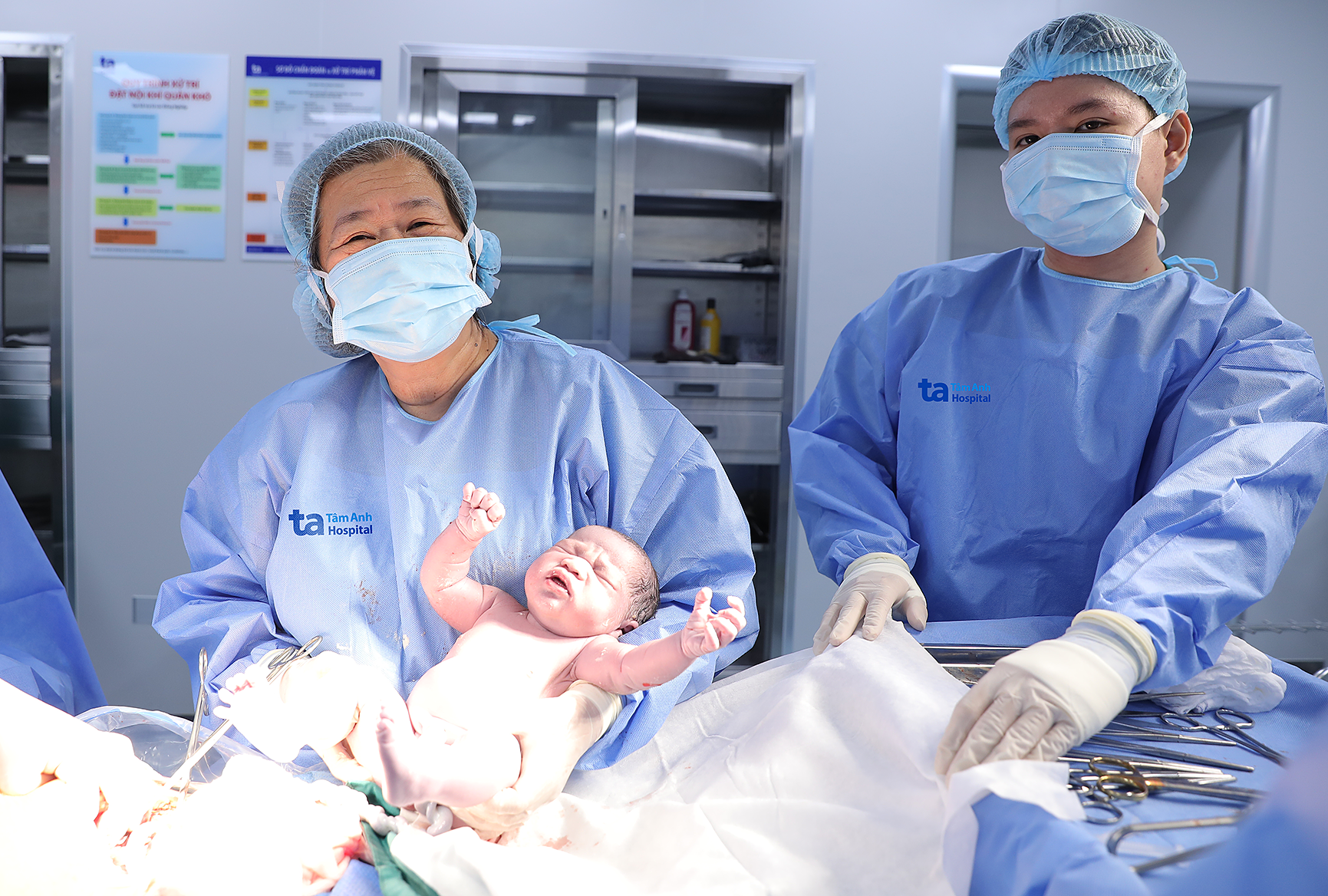 |
Doctor My Nhi (left) and the medical team performing Ms. Huong's third cesarean section. *Photo: Tam Anh General Hospital*
Doctor Pham Thuc Minh Thuy from the Congenital Heart Disease Department, Cardiology Center, reported that the baby's SpO₂ levels were within normal limits. The infant had a small ventricular septal defect, a patent ductus arteriosus, and mild atrioventricular valve regurgitation. These current abnormalities did not affect heart function, so immediate treatment was not required.
According to Doctor Thuy, newborn screening using SpO₂ measurements combined with echocardiography aids in early detection and accurate assessment of congenital heart abnormalities in children. In this particular case, the baby's aortic isthmus developed favorably after birth, reaching normal size with no pressure gradient observed. The infant was scheduled for regular follow-up appointments for close monitoring.
 |
Ms. Huong and her healthy baby after her third cesarean section at Tam Anh General Hospital TP HCM. *Photo: Nguyet Nhi*
To proactively prevent the risk of congenital heart defects in children, Doctor Thuy recommends that women ensure good health from the moment they plan to conceive. Additionally, mothers should list all medications they are currently taking and consult a doctor before pregnancy. Individuals with conditions such as diabetes or hypertension need to develop strict blood sugar and blood pressure control plans. In cases with a family history of congenital heart disease, early genetic screening and counseling are advisable.
Doctors also note that upon detecting fetal heart abnormalities, pregnant women and their families should consult a congenital heart specialist for thorough advice on the severity of the condition, its potential progression, and appropriate post-birth treatment options.
Women should get vaccinated against rubella and measles before planning pregnancy to reduce the risk of affecting the fetus. During pregnancy, alcohol, tobacco, and unprescribed medications should be avoided.
Minh Tam
| Readers can submit questions about obstetrics and gynecology here for doctors to answer |