A 29-year-old pregnant woman had no abnormalities noted during her first three months of local check-ups. However, during a 23-week anomaly scan at Tam Anh General Clinic District 7, Master, Doctor Nguyen Thi Lien Phuong, from the Fetal Medicine Unit, observed a cystic mass containing a solid structure and septa on the fetus's right hand, connected to the muscle tissue of the thumb.
Doctor Phuong noted this could be polydactyly or associated with genetic disorders, such as: Down syndrome, Fanconi anemia, or Carpenter syndrome. Some cases are linked to tumors, including: vascular malformations (lymphangioma), germ cell tumors (teratoma), or neuroblastomas. These tumors grow rapidly and large, potentially affecting finger development and movement, or causing complications for the fetus like anemia or hydrops fetalis.
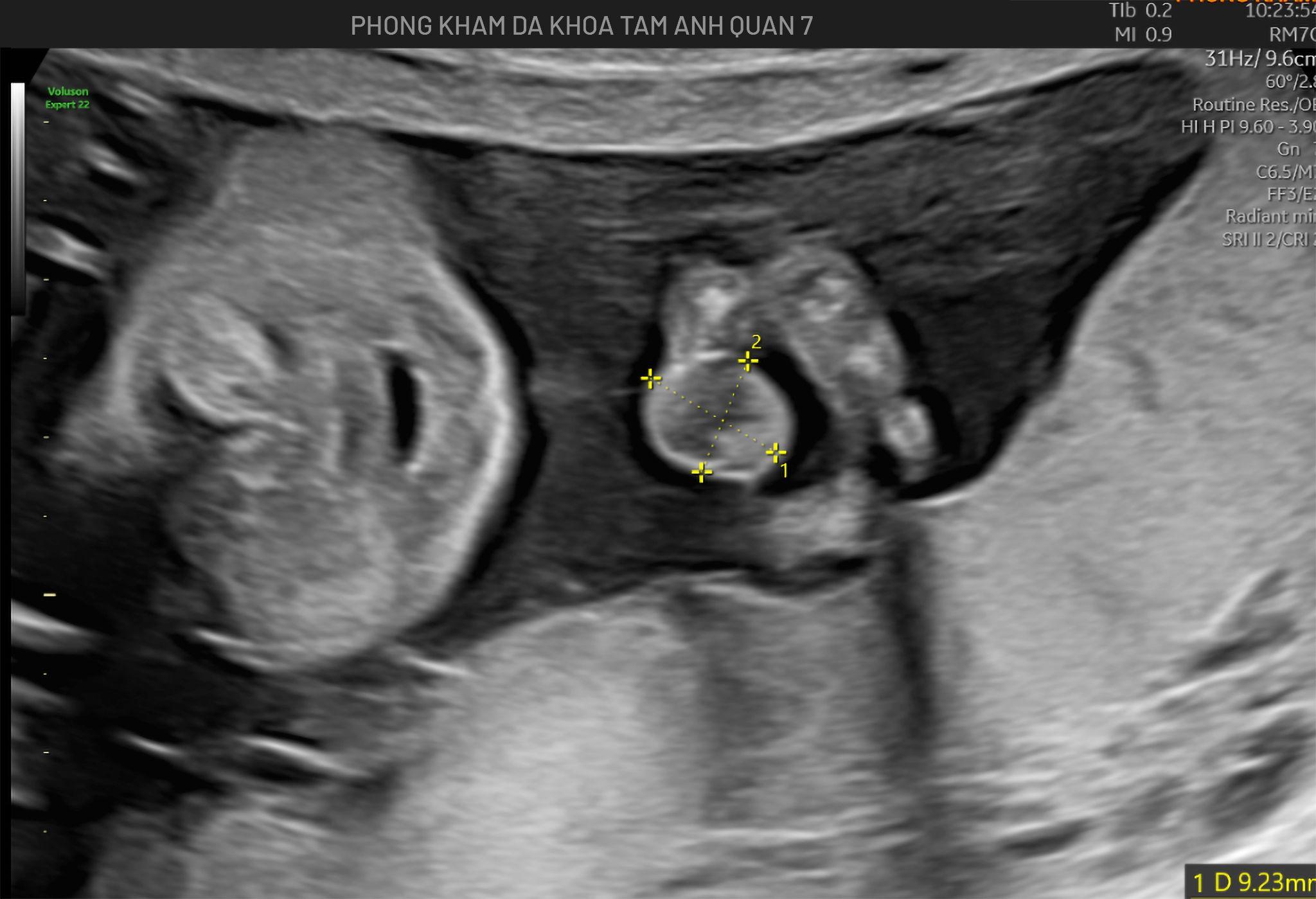 |
The fetus's hand with six fingers; the sixth finger is marked with yellow dots. *Photo: Tam Anh General Clinic District 7*
Doctors closely monitored the growth rate, composition, and vascular distribution of the abnormal mass. Through subsequent ultrasounds, Doctor Phuong determined this abnormality was not a tumor, but rather a preaxial polydactyly (an extra finger growing near the thumb) with an internal bone structure, without other associated defects.
At 39 weeks, the baby girl was born weighing approximately 3,3 kg with six fingers on her right hand. She had one main thumb and one accessory thumb, with all other health indicators stable. The thumb plays a crucial role in the hand's grasping and motor functions. Therefore, the baby requires follow-up for surgical removal of the extra finger at an appropriate time to preserve finger function, ensure aesthetics, and prevent psychological impact on the child.
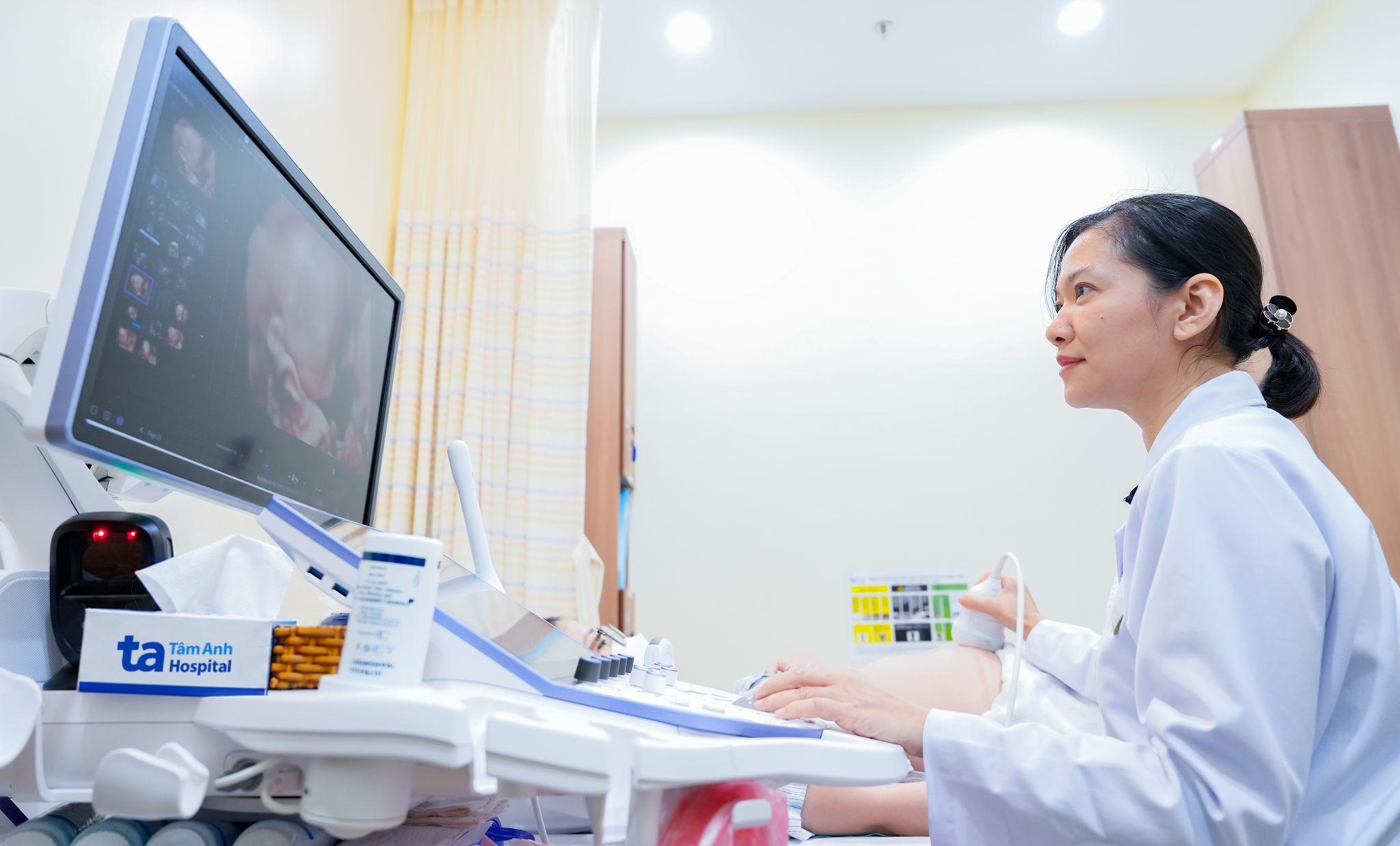 |
Doctor Phuong performing an ultrasound for a pregnant woman. *Illustration: Tam Anh General Clinic District 7*
Polydactyly is one of the common limb defects in children. Depending on the specific type of polydactyly, extra digits can develop completely, appearing similar to normal fingers. However, these extra digits are often less developed than typical fingers or toes and may only connect to the body by skin or nerves.
Polydactyly can be detected via prenatal ultrasound or after birth. This defect can appear in isolation or as part of a genetic disorder syndrome, requiring in-depth evaluation to rule out other medical conditions. Children have a higher risk of polydactyly if there is a family history of genetic disorders, especially if a direct relative has had congenital extra fingers or toes.
Treatment for polydactyly depends on the specific type of defect the child has. Specialist Doctor II Nguyen Do Trong, from the Department of Pediatric Surgery at Tam Anh General Hospital TP HCM, stated that children with extra fingers or toes located at the thumb or middle digits should undergo early intervention, around three months old. In cases of fused digits, poorly developed accessory digits, or those affecting or deforming the main digit, surgery is needed before one year old.
Ngoc Chau
| Readers can submit questions about obstetrics and gynecology here for doctors to answer |