Hemothorax is an abnormal accumulation of blood in the pleural space, altering respiratory structure and function. According to Dr. Dang Thanh Do, Head of the Respiratory Department at Tam Anh General Hospital Hanoi, common causes include lung parenchymal tears, ruptured intercostal vessels, or internal mammary arteries. The condition can lead to numerous complications if not treated and intervened promptly.
Acute respiratory failure
The most common and dangerous complication is acute respiratory failure. When a large amount of blood accumulates in the pleural space, the lung is compressed and cannot expand normally. Consequently, gas exchange capacity rapidly declines. Patients experience shortness of breath, rapid shallow breathing, cyanosis, and a significant drop in blood oxygen levels. Without timely emergency care, patients will develop acute respiratory failure.
Hemorrhagic shock
If hemothorax results from a ruptured large blood vessel or severe trauma, a significant amount of blood is lost into the pleural space. This acute blood loss causes a drop in blood pressure and reduced blood supply to organs, leading to hemorrhagic shock. This is an acute complication requiring immediate emergency treatment.
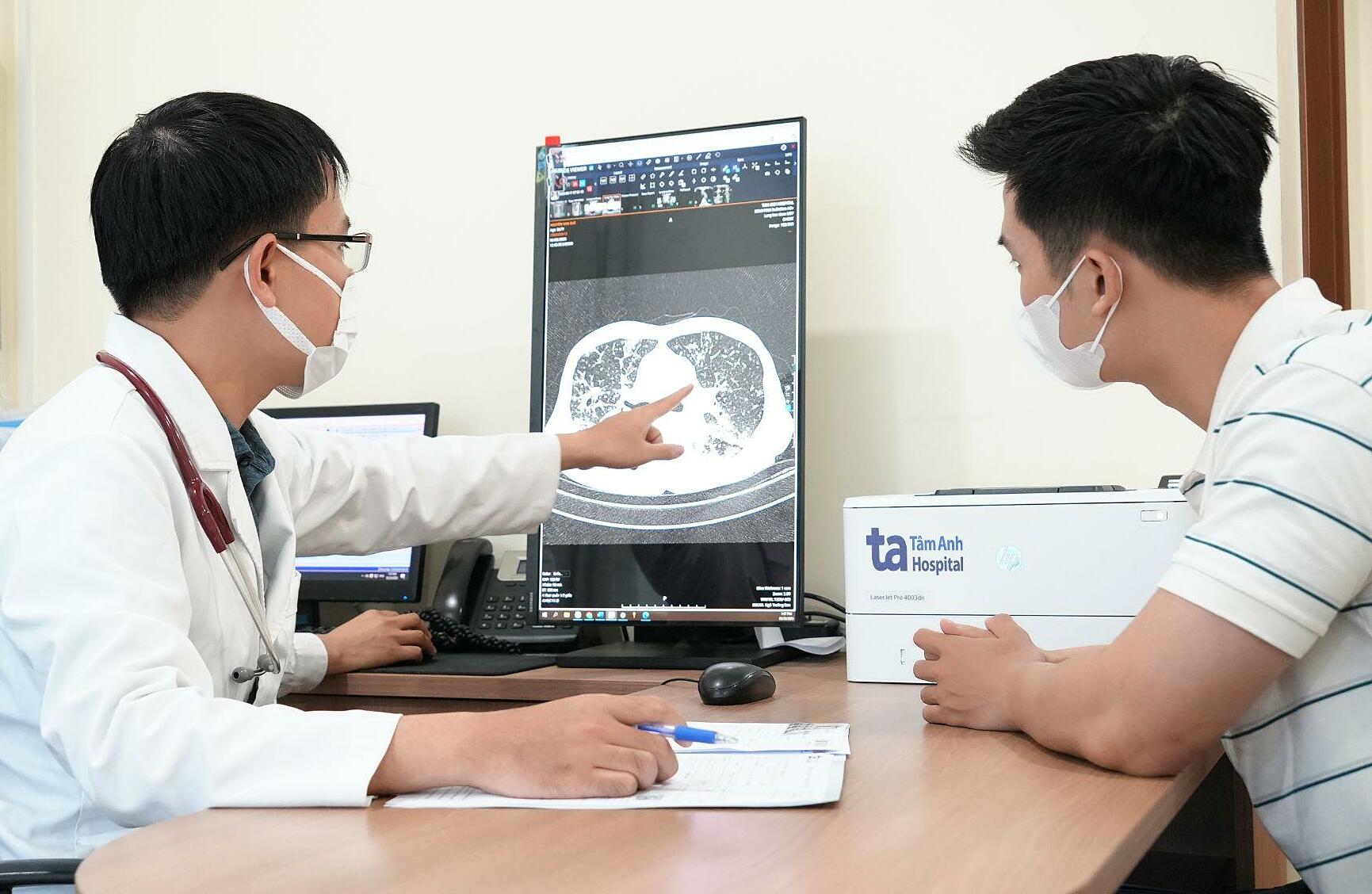 |
Dr. Thanh Do examining a patient. Illustration: Tam Anh General Hospital. |
Dr. Thanh Do examining a patient. Illustration: Tam Anh General Hospital.
Pleural empyema
If hemothorax is not completely drained, the risk of pleural space infection increases. Residual blood provides a favorable environment for bacterial growth, which over time can lead to pleural empyema. Patients often experience prolonged high fever, chest pain, fatigue, weight loss, and inflammation, making treatment more complex.
Clotted hemothorax
Clotted hemothorax occurs when blood is not drained promptly or completely, causing residual blood to clot and form masses adhering to the pleura. Over time, these undrainable blood clots reduce treatment effectiveness and sometimes necessitate surgical removal.
Pleural fibrosis and thickening
A late consequence of hemothorax is pleural fibrosis and thickening. When blood or pus persists in the pleural space, chronic inflammatory reactions occur, causing the pleural layers to thicken and adhere to each other. Consequently, lung capacity decreases, and the lung loses the necessary elasticity for respiration. Patients frequently experience shortness of breath, breathlessness during exertion, prolonged fatigue, and a reduced quality of life.
Dr. Thanh Do warns that hemothorax is a dangerous condition, especially for individuals with a history of chest trauma, thoracic surgery, or chronic lung diseases. Early examination and accurate diagnosis help reduce the risk of complications and protect lung function.
Thu Giang
| Readers can submit questions about respiratory health here for doctors to answer. |