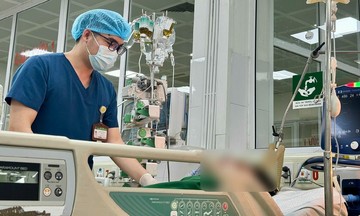
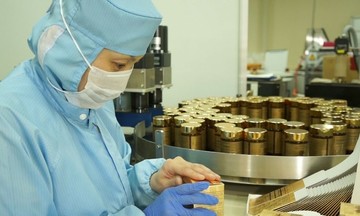
The 17-year-old patient had blood type O, while her mother, the liver donor, had blood type B. ABO incompatible blood types are typically contraindicated in organ transplantation due to the high risk of rejection. To overcome this "barrier", doctors at Military Central Hospital 108 applied advanced immune regulation measures, reducing the amount of anti-antigen antibodies in the recipient's serum to a safe level.
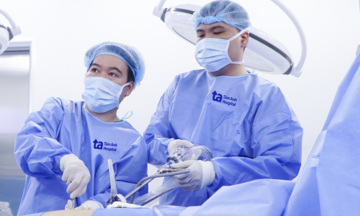
Having mastered the technique, the team performed laparoscopic surgery to remove a liver lobe from the mother for transplantation into her daughter without causing an excessive immune response. To date, the hospital has successfully implemented ABO-incompatible liver transplantation for both adults and children.
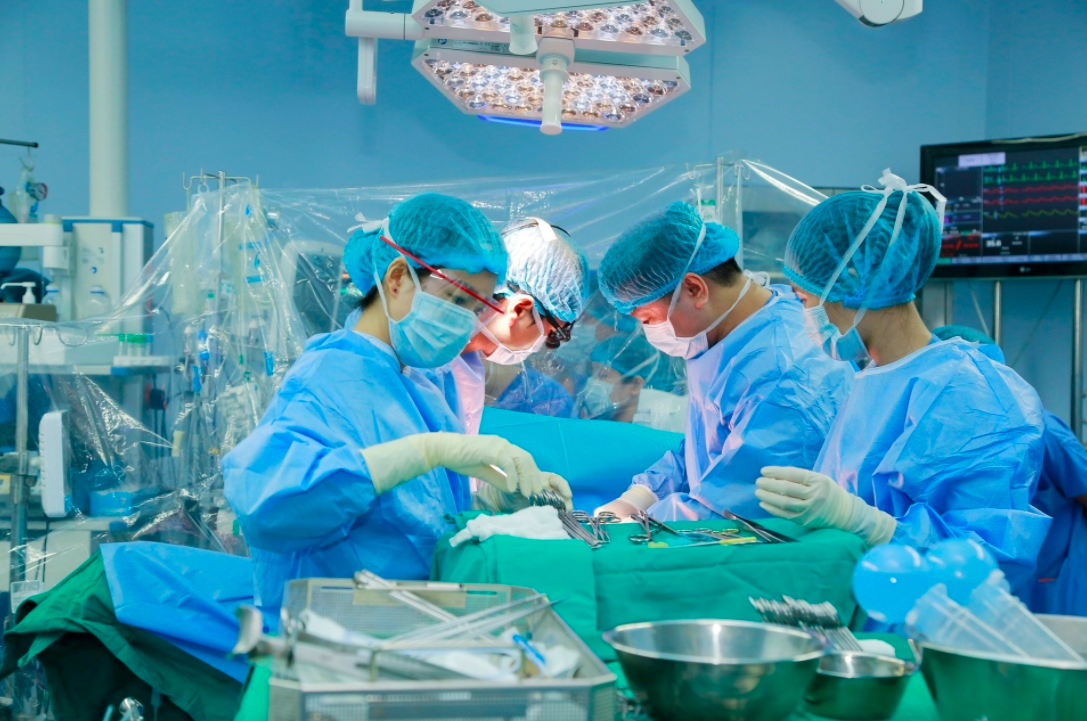 |
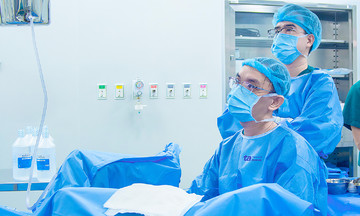
Doctors at Hospital 108 perform an emergency liver transplant. *Photo: Hospital provided* |
This breakthrough surgery was one of the highlights announced at Hospital 108's 10-year organ transplantation anniversary ceremony on 25/2. According to Professor Doctor Le Huu Song, Director of the Hospital, since the first kidney transplant a decade ago, the hospital has successfully performed 1,305 organ and tissue transplants.
Specifically, the hospital has performed 668 kidney transplants, 319 liver transplants, 8 heart transplants, 4 lung transplants, one pancreas transplant, along with numerous bone marrow, limb, and stem cell transplants. Liver transplantation, in particular, has been a key area, helping the hospital become a leading center in Southeast Asia. The unit has marked its achievements with several firsts in Vietnam, such as: recipient-assisted laparoscopic surgery; laparoscopic retrieval of liver lobes from living donors; and simultaneous transplantation of liver from a brain-dead donor to two patients.
Professor Song noted that behind thousands of surgeries lies the silent dedication of doctors and medical staff. "Many sleepless nights, working under life-and-death pressure, racing against time to reclaim patients' lives. Each successful transplant is a rebirth," he said.
Beyond its focus on advanced specialized care, Hospital 108 has supported training and technology transfer for kidney, liver, and lung transplantation to 10 central and local hospitals. Many recipient units can now independently perform routine organ transplants, easing the burden on higher-level hospitals and reducing costs for patients in remote areas.
In the future, the hospital is preparing to implement organ transplantation from donation after circulatory death (DCD), apply robotic surgery for organ retrieval and transplantation, and promote multi-organ transplantation to optimize the currently scarce donated organ supply.
Le Nga