The retina, one of the body's tissues with the highest oxygen demand, is nourished by a dense network of microvessels. According to Doctor Bui Viet Hung, Head of the Vitreoretinal Department at the High-Tech Eye Center, Tam Anh General Hospital, cardiovascular conditions like hypertension and atherosclerosis affect the structure and flow of this vascular system, leading to decreased blood supply to the retina.
In individuals with hypertension, blood vessel walls tend to thicken, narrow, and become less elastic. This reduces the amount of blood and oxygen delivered to the photoreceptor cells. Prolonged hypertension can result in hypertensive retinopathy.
Patients typically do not notice abnormal symptoms in the early stages. As the damage progresses, they may experience retinal hemorrhage, retinal edema, or decreased vision. If blood pressure is not well-controlled, these lesions may become irreversible, increasing the risk of vision loss.
Atherosclerosis, another common vascular disease, can directly impact the eyes. Atherosclerotic plaques narrow the vessel lumen, impeding blood circulation and potentially forming blockages. When this occurs in the retina, patients may suffer from retinal vein occlusion or retinal artery occlusion, typically manifesting as sudden, unilateral blurry vision. In many instances, this condition is likened to an "eye stroke" due to its rapid progression and severe consequences if not treated promptly.
 |
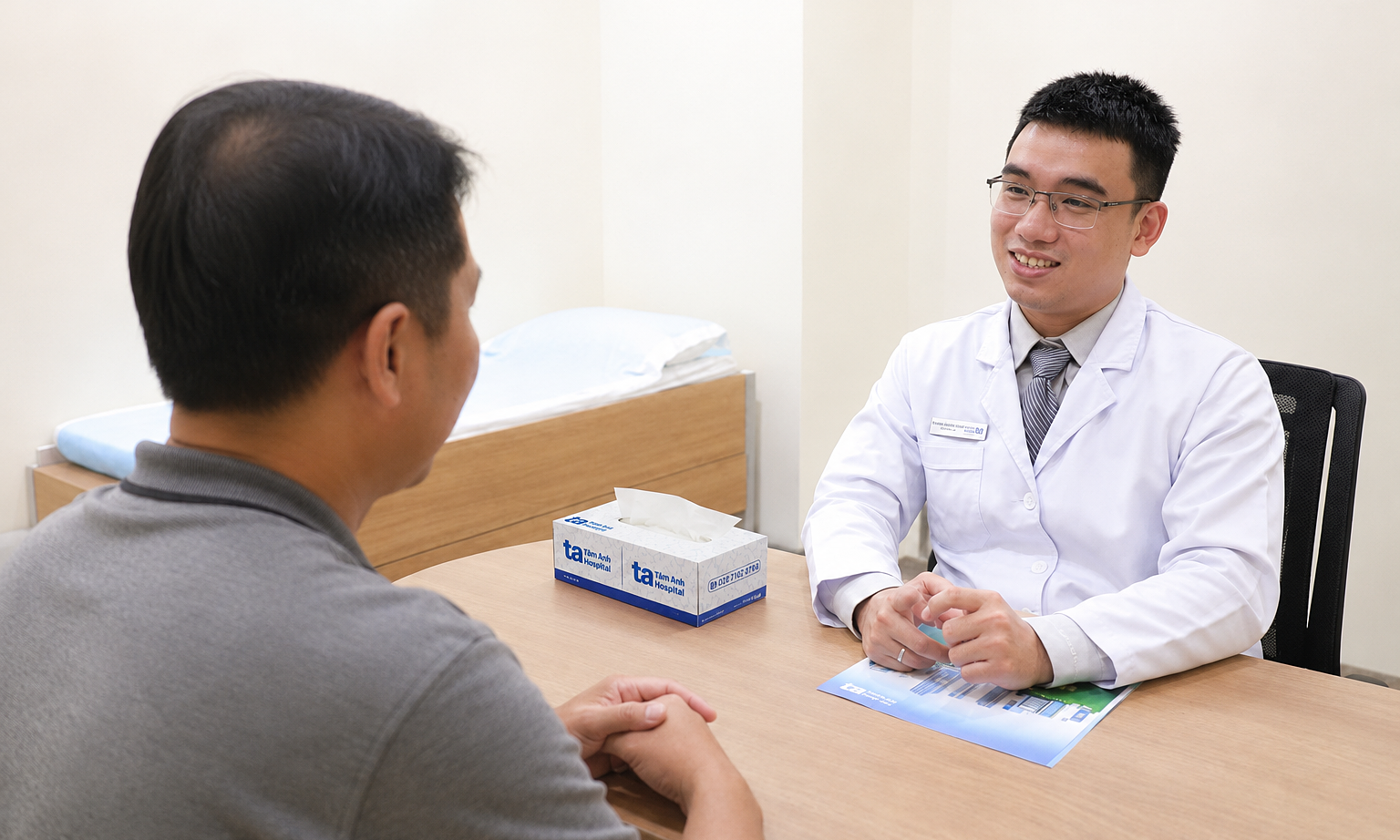
Doctor Hung examines a patient's eyes. Photo: Tam Anh General Hospital |
Furthermore, hemodynamic disorders, such as reduced blood flow or blood pressure fluctuations, also impair the optic nerve's nourishment. This mechanism leads to non-arteritic anterior ischemic optic neuropathy (NAION), a type of damage that can cause sudden vision impairment, often occurring after waking up. Most cases find full vision recovery difficult.
The eyes are among the first organs to reflect the condition of the body's systemic vascular system. Through a fundus examination, doctors can directly observe the microvascular network, detect abnormalities, and help assess the control level of cardiovascular disease.
According to Doctor Hung, many cardiovascular patients do not routinely undergo eye examinations. Most only seek an examination when symptoms such as blurry vision, distorted vision, flashes of light, or "floaters" appear in their field of vision. By this time, the damage has often progressed, making treatment more challenging and limiting the potential for vision recovery.
Individuals with cardiovascular disease, particularly hypertension, atherosclerosis, or dyslipidemia, should have regular eye check-ups even if they are asymptomatic. Doctors will review medical history, assess vision, and perform a fundus examination to detect early signs of retinal damage. In some cases, specialized techniques like optical coherence tomography or fluorescein angiography may be prescribed.
Early detection is a critical factor determining the effectiveness of treating eye damage caused by cardiovascular disease. If interventions like intravitreal injection, laser treatment, or vitrectomy are performed promptly, many cases can preserve vision. Conversely, delayed examination can lead to irreversible damage progression, increasing the risk of vision impairment or loss.
Khue Lam
| Readers can send ophthalmology questions here for doctors to answer |