The bladder, a spherical and hollow organ, expands to store urine. When the volume reaches approximately 400-600 ml, bladder receptors signal the brain to urinate. Dr. Dinh Quang Huy, from the Department of Urology and Andrology at Tam Anh General Hospital, notes that most people urinate every 3-4 hours, depending on fluid intake and bladder capacity. Holding urine is not a sign of resilience but a behavior that harms health. While occasional urine retention is generally harmless, if it becomes a habit, repeatedly overriding the bladder's natural signals, it can lead to various serious conditions.
 |
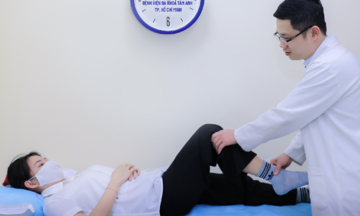
Dr. Huy examines a patient. Illustration: Tam Anh General Hospital |
**Bladder weakness**
Prolonged urine retention overstretches the bladder beyond its normal capacity, weakening its smooth muscle layer over time. This reduces the efficiency of urine expulsion, potentially causing urinary retention or incontinence. Chronic overstretching can also weaken communication between the bladder and the nervous system, leading to an underactive bladder (one that cannot contract strongly enough to expel all urine) or chronic urinary retention. These conditions often require interventions like catheterization or surgery.
**Bladder stones**
Minerals like calcium and oxalate can accumulate in stagnant urine, crystallizing to form bladder stones. If left untreated, these stones can obstruct the bladder outlet. Their rough surfaces can also damage the bladder lining, causing symptoms like blood in the urine. Large stones occupying the bladder space can lead to severe urination disorders, including complete urinary retention.
**Urinary tract infections**
Stagnant urine creates a favorable environment for bacterial growth. Regularly holding urine, even in healthy individuals, increases the risk of urinary tract infections.
**Bladder rupture**
The most severe complication, though rare, is bladder rupture, which can be life-threatening. When the bladder is full from prolonged urine retention, internal pressure rises. A strong mechanical impact to the lower abdomen can tear the thinned, stretched bladder wall, causing urine to leak. Patients experience severe pain in the lower abdomen (below the navel), abdominal distension, blood in the urine, or urinary retention, requiring emergency surgery.
To protect bladder health, Dr. Huy advises urinating every 3-4 hours or whenever the urge arises. If temporary urine retention is unavoidable, changing posture and taking deep breaths can reduce pressure in the lower abdomen, but this should not be a regular practice. Individuals should also maintain adequate daily fluid intake, adjusting reasonably based on restroom accessibility, practice good intimate hygiene, and undergo regular urinary health check-ups.
By Thu Giang
| Readers can submit questions about urinary diseases here for a doctor's response. |