Doctor Nguyen Van On, from the Orthopedic Trauma Unit at Tam Anh General Clinic District 7, addresses Thuy Hong's question. Regular exercise is a supportive treatment for nearly all health conditions, including hip osteoarthritis. This condition arises when the joint cartilage erodes, leading to persistent pain and significantly impacting daily life. For individuals with hip osteoarthritis, running offers several benefits: it can reduce pain, prevent joint stiffness, strengthen surrounding muscles, improve overall mobility, protect the hip joint during activity, prevent further damage, and alleviate stress.
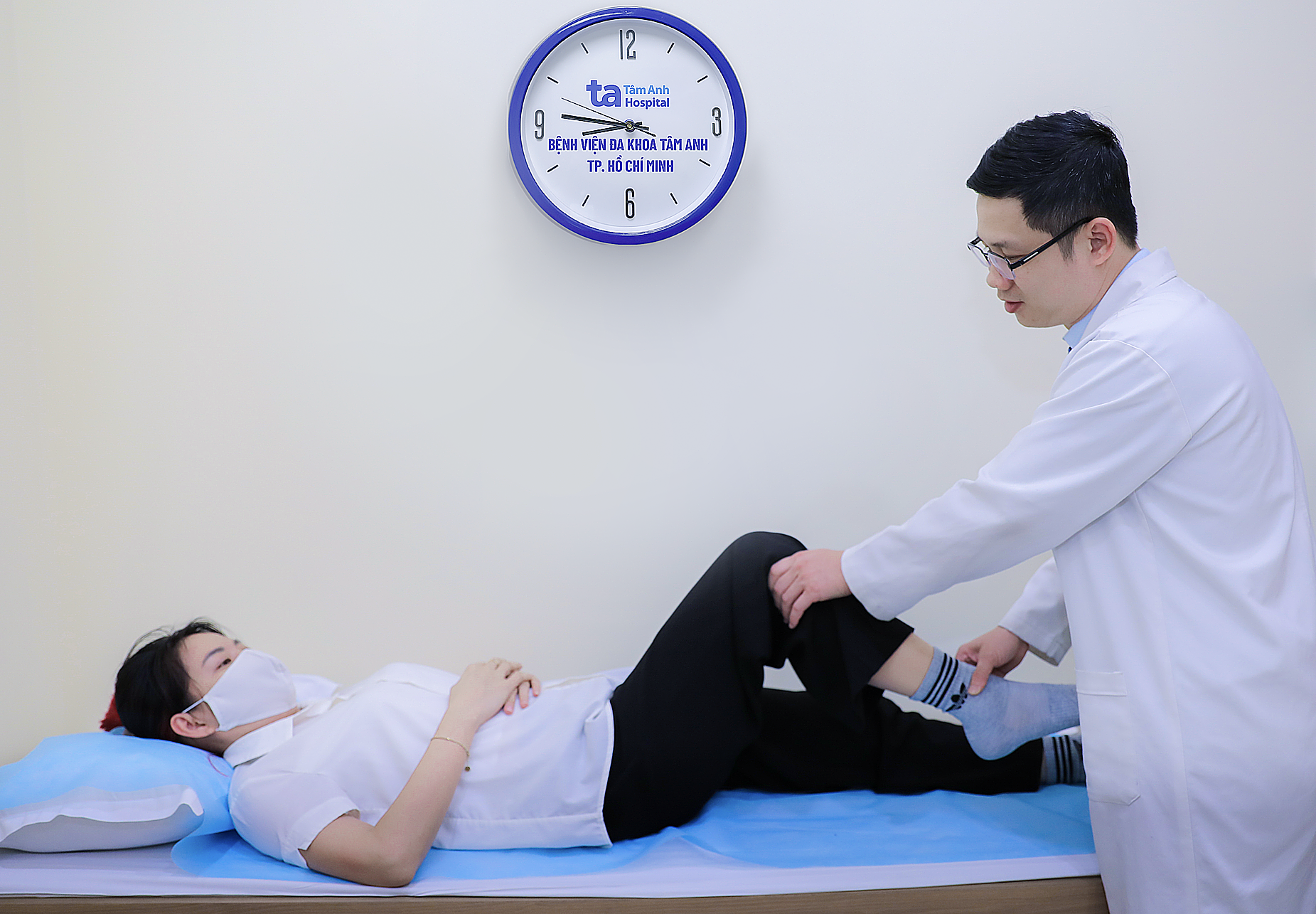 |
Doctor On examines a patient's hip joint. Illustrative photo: Tam Anh General Clinic District 7 |
To fully realize these benefits, it is crucial to exercise correctly to avoid accelerating or worsening the osteoarthritis. When running, consider the following guidelines:
Warm up thoroughly for about 5-10 minutes before exercising. This ensures muscles are adequately warmed and adapted to the exercise intensity, greatly minimizing the risk of injury.
Maintain correct running posture: Keep your stride moderate, run at a slow pace, and maintain steady breathing. Before stopping completely, gradually reduce your speed, transition to a slow walk, relax your body, and then take a rest.
Run at an appropriate intensity: Aim for three to five days per week, with each session lasting no more than 30 minutes. If you experience pain or fatigue while running, pause until you have fully recovered. Once accustomed to the exercise intensity and remaining pain-free, you can gradually increase your running duration and distance beyond your initial routine.
Consult a doctor before starting any running regimen. This ensures your exercise plan is suitable for your specific health condition, helping to prevent injuries caused by incorrect technique or overexertion.
Osteoarthritis is an inherent part of the natural aging process, meaning it cannot be entirely prevented or cured. Treatment approaches, combined with a scientific lifestyle, focus on reducing pain, maintaining hip joint mobility, and preventing the disease from progressing. In severe cases, individuals may lose mobility and require artificial joint replacement.
Individuals with hip osteoarthritis or those at risk—such as elderly individuals, those with a history of hip injuries, or arthritis—should seek medical attention immediately if they experience unusual symptoms. These include groin pain that may radiate to the buttocks or thigh, or pain that worsens with movement. Some patients may also experience joint stiffness, particularly in the morning after waking, clicking or grinding sounds during joint movement, or difficulty performing simple actions like walking, bending, or entering a car.
Doctor Nguyen Van On
Orthopedic Trauma Unit
Tam Anh General Clinic District 7
| Readers can submit questions about musculoskeletal conditions here for a doctor's response. |