


Artificial tears are solutions that moisturize, lubricate the eye surface, and reduce irritation and stinging. These symptoms often result from extensive computer or phone use, or being in air-conditioned environments. However, continuous application of artificial tears more than 4-6 times daily, without a doctor's advice, can lead to many adverse effects for the eyes.
When applied too frequently, the eyes' natural ability to produce tears may decline. As a result, dry eyes may not improve and could even worsen upon cessation of use.
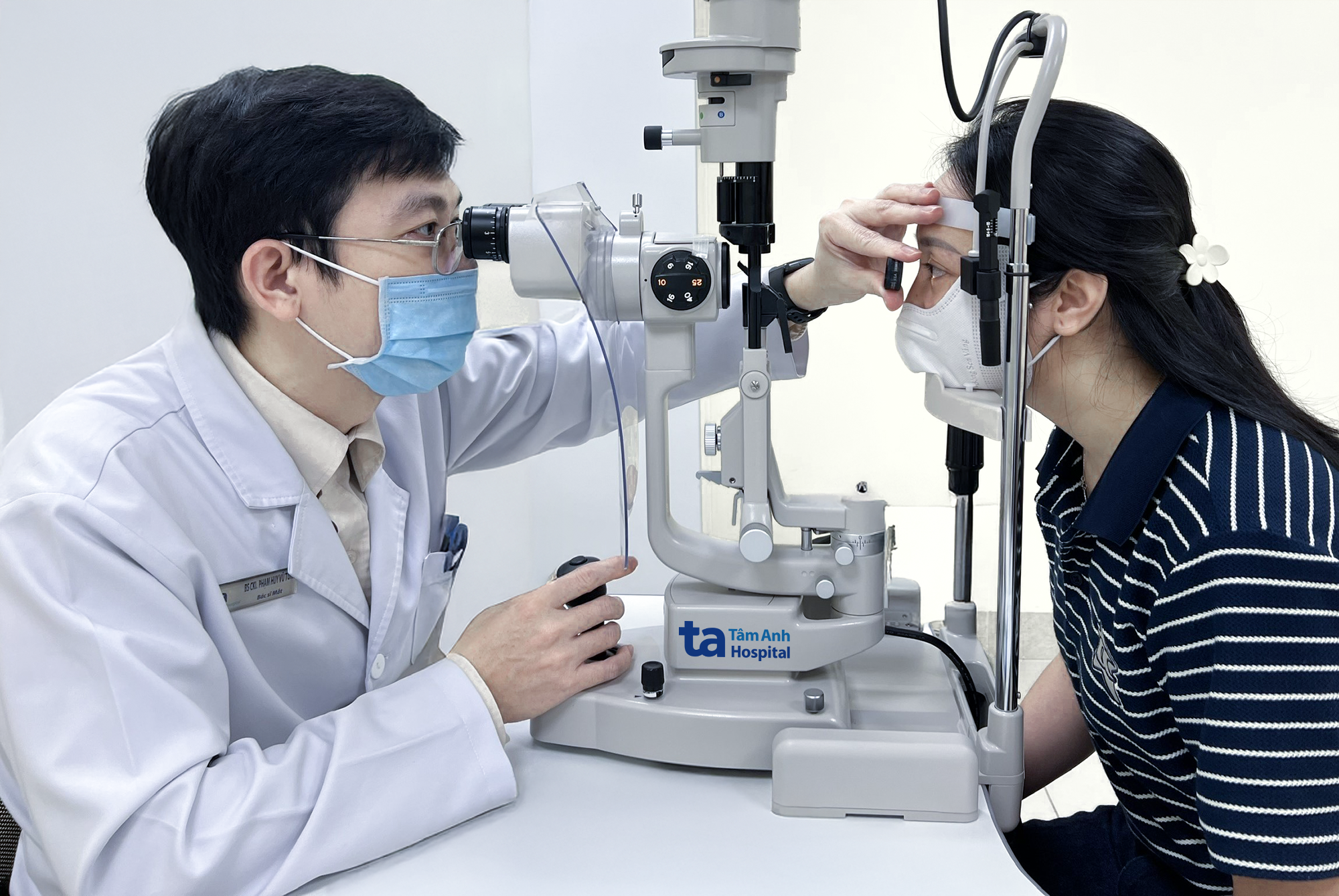 |
Dr. Tung examines a woman's eyes. Illustration: Tam Anh General Hospital
Improper storage or using artificial tears past their expiration date after opening also poses a risk of bacterial contamination. For instance, if the bottle tip touches eyelids, eyelashes with dirt, mascara, or dirty hands, the solution can become contaminated. If then applied to the eyes, bacteria can easily enter, causing conjunctivitis or, more severely, keratitis. Before using artificial tears, you must wash your hands thoroughly, avoid touching the bottle tip to the eye, and use a product within its valid period.
Some artificial tears contain preservatives, so they should be applied the correct number of times as prescribed by a doctor. This prevents them from being counterproductive and causing dry eyes. It is currently unclear whether you are using artificial tears with preservatives or not. Nevertheless, you should reduce the frequency of drops to 4-6 times daily, with each application 3-4 hours apart. This allows the eyes to balance tear production and naturally produce tears. You should visit reputable ophthalmology departments for accurate examination, diagnosis, and timely treatment, preventing the dry and irritated condition from worsening.
Dr. Pham Huy Vu Tung
Deputy Head of Ophthalmology Department, High-Tech Eye Center
Tam Anh General Hospital TP HCM
| Readers can send questions about eye diseases here for doctors to answer. |


