On 14/3, during a scientific conference on advancements in knee replacement, Master, Doctor Nguyen Tan Lam, Head of the Orthopedic Trauma Department at Hoan My Saigon Hospital, shared the case of a 32-year-old patient. The patient sought treatment for severe knee pain, and doctors were surprised to find his knee joints severely degenerated, resembling those of individuals in their 60s or 70s. Despite not engaging in sports or heavy labor, the man lived in an apartment building without an elevator, requiring him to ascend and descend two flights of stairs multiple times daily for years.
Doctor Lam explained that prolonged sitting, common in office jobs, weakens thigh muscles, diminishing their ability to protect the knee joints. This, combined with frequent stair climbing, subjects the joints to immense pressure, accelerating cartilage wear. To postpone the need for a total knee replacement at a young age, the patient underwent joint debridement surgery and received platelet-rich plasma (PRP) injections.
Doctors are cautioning that knee osteoarthritis is increasingly affecting younger individuals. While previously more common in those over 40 due to aging, many people in their 30s are now exhibiting signs of degeneration. Key contributing factors include sedentary lifestyles, being overweight, or engaging in unsuitable exercise. For every additional kilogram of body weight, the pressure on the knee joint can increase by approximately 5 times when climbing stairs. Furthermore, improper sports techniques or excessive physical activity can also accelerate knee joint damage.
"While many believe walking is beneficial for all, for obese individuals or those already experiencing knee osteoarthritis, extensive walking or stair climbing can actually hasten cartilage erosion," the doctor explained.
Instead, individuals should opt for low-impact activities such as cycling or swimming. These exercises help strengthen thigh muscles, protect the knee joints, and minimize the load on the knees. It is also advisable to limit squatting or sitting cross-legged.
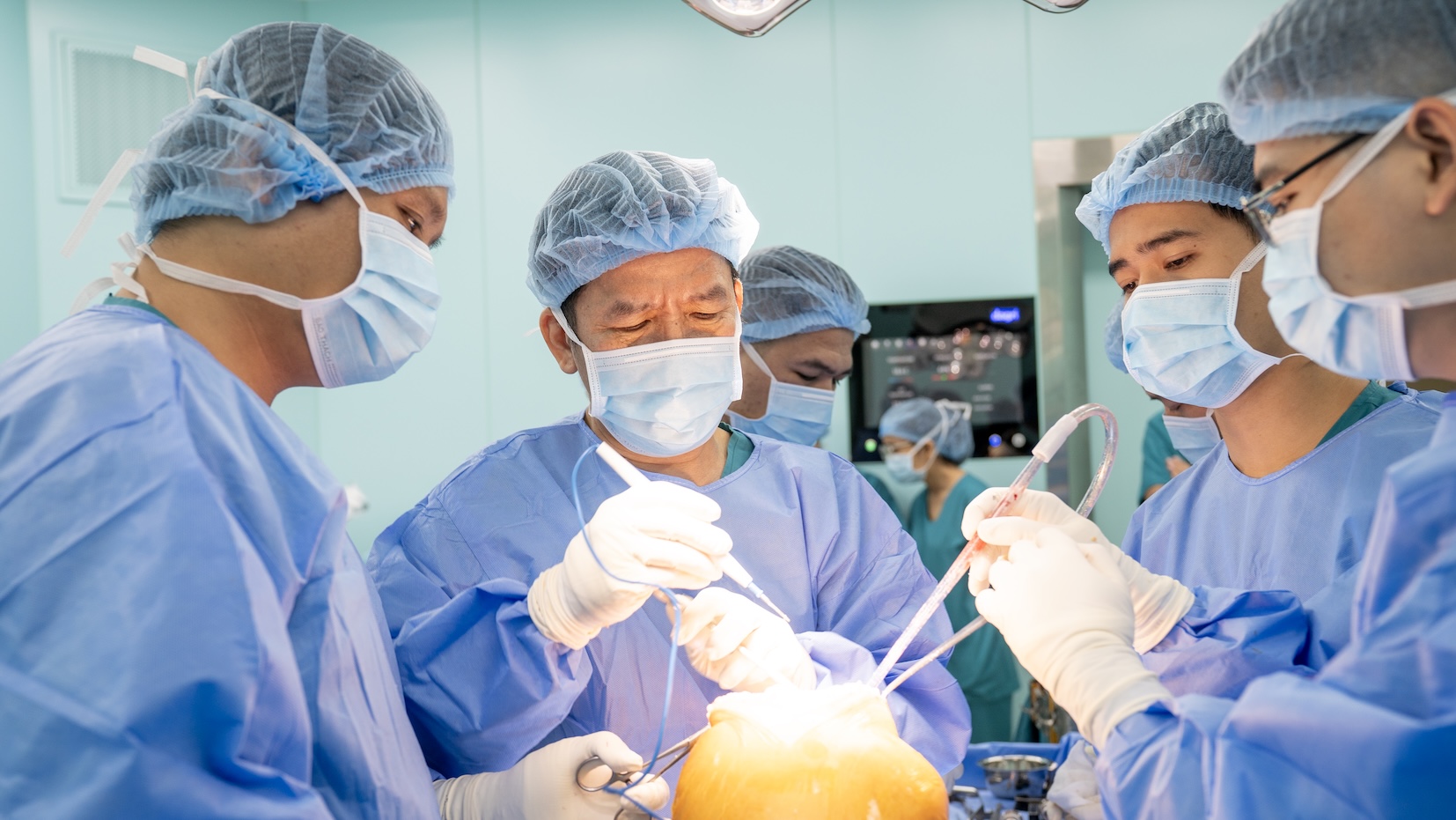 |
Doctors at Hoan My Saigon Hospital perform knee surgery on a patient. *Photo: Hoan My Saigon Hospital*
Currently, there is no treatment that can fully restore knee joints. In the early stages, patients are advised to modify their lifestyle, engage in physical therapy, and use pain relievers or cartilage-supporting medications. If pain persists, doctors might recommend injections of lubricants or platelet-rich plasma (PRP) to prolong joint function.
For severely damaged knee joints, artificial joint replacement surgery remains the final option. According to Doctor of Grade 2 Tran Ngoc Thao, Medical Director of Hoan My Saigon Hospital, modern knee replacement techniques are continuously advancing. There is a growing trend towards incorporating robotics to enhance precision, facilitating faster patient recovery and more natural movement. Doctor Thao recommends that patients undergo surgery promptly once it is indicated to achieve optimal recovery outcomes.
Le Phuong