Doctor Dong Thu Trang, from Hanoi Obstetrics and Gynecology Hospital, reports that disagreements over family planning are increasingly common. According to the 2020 Survey on Population Change and Family Planning, Vietnam recorded over 120,000 female sterilization cases, 12 times higher than male sterilizations. However, despite these figures, many women silently endure the pressure of unwanted pregnancies due to their husbands' lack of medical understanding.
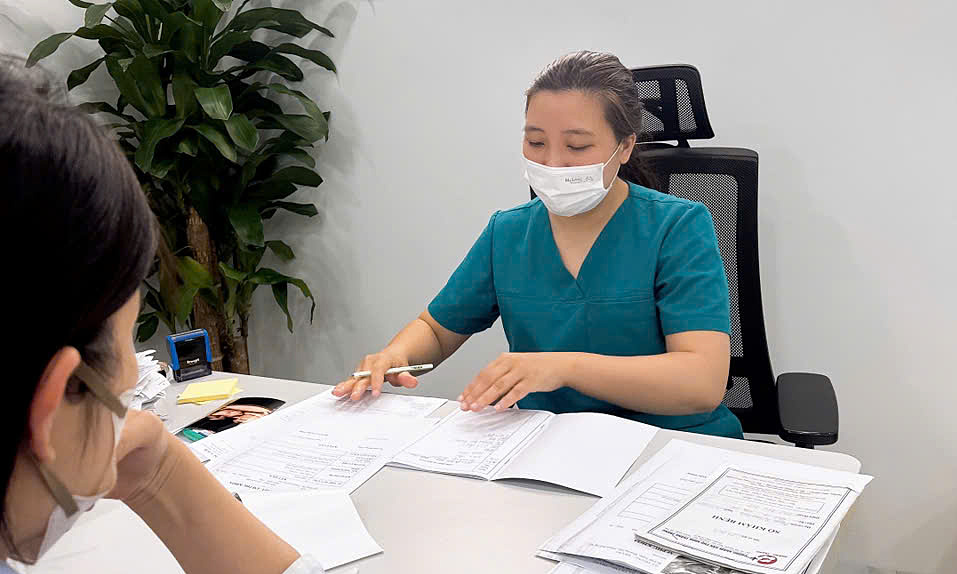 |
Doctor Trang examines and consults with a woman. Photo: Doctor provided |
Lan, 38, manages the care of her four young children. Each month, her primary concern is a delayed period, not financial pressure. Her husband, Tung, 40, rejects condoms due to perceived discomfort and prohibits birth control pills, citing fears of side effects like skin pigmentation. When Lan proposed tubal ligation, Tung immediately dismissed the idea, claiming it would lead to a loss of her femininity, making her irritable and "dry." This severe opposition from her husband caused Lan considerable stress, weight loss, and persistent insomnia.
Driven by her anxiety, Lan secretly sought help at Hanoi Obstetrics and Gynecology Hospital. Doctor Trang assessed that Lan's health was significantly compromised due to three previous C-sections. The doctor explained that tubal ligation is a laparoscopic procedure, akin to major surgery, and is ideally performed during a C-section. Considering Lan's delicate health, Doctor Trang recommended male sterilization as a safer option for the wife.
Hoa experienced similar marital discord after suggesting tubal ligation following the birth of her third child. Her husband deemed the procedure unnatural, believing children are "a divine gift." He argued that if medical interventions could reduce male virility, they would similarly impact women. This fundamental disagreement strained their family life, leading to her husband's frequent absence from family dinners.
Doctor Trang clarifies that tubal ligation solely acts as a physical barrier to prevent sperm from reaching the egg, having no impact on ovarian function or estrogen production. Women undergoing this procedure continue to have regular menstrual cycles, retain their femininity, and experience no adverse effects on their sex lives. The method boasts up to 99% contraceptive effectiveness, making it ideal for those with pre-existing conditions such as heart failure, hypertension, or a history of multiple C-sections. However, it does not protect against sexually transmitted infections.
Experts attribute male opposition largely to East Asian cultural biases, which often prioritize bodily integrity. Some husbands view their wives' reproductive capacity as a contingency for future risks. Additionally, men's lack of direct experience with childbirth pain can lead to a lack of empathy for their wives' burdens.
The government recently enacted Decree 76, which amends and supplements Decree 125 concerning administrative penalties in gender equality. This new decree stipulates that authorities will fine individuals from 3 to 12 million VND for coercing or prohibiting their partners from using contraception or sterilization due to gender bias. Lawmakers introduced this measure to directly combat mental abuse in marriages related to family planning, aiming to dismantle prejudiced beliefs and reduce the unfair pressures frequently placed on women.
Doctors advise couples to engage in thorough discussions before finalizing family planning decisions. Although tubal ligations can be reversed if a woman changes her mind, the success rate is only 80-90%, with a significant risk of re-blockage, often leading to the need for in vitro fertilization. Post-procedure, women require approximately five days of rest and should avoid lifting heavy objects for the first week. Patients must seek immediate medical attention if they experience severe pain or abnormal bleeding.
Thuy An