


On 22/1, a representative from Medlatec General Hospital stated that a 16-year-old patient presented with nodular lesions primarily concentrated on the neck, with scattered lesions also on the forearms and shins. Previously, after an examination, the patient was diagnosed with atopic dermatitis and received treatment with oral and topical medications. While the itching and lesions improved, they did not fully resolve.
During this visit, laboratory test results and diagnosis confirmed the patient had a dog tapeworm infection. The patient received outpatient treatment advice, along with instructions for skin care and scheduled follow-up appointments. After one month of treatment, follow-up examinations showed normal lab indices, and the nodular lesions on the neck had cleared, with itching resolved, leaving only old scar-like lesions.
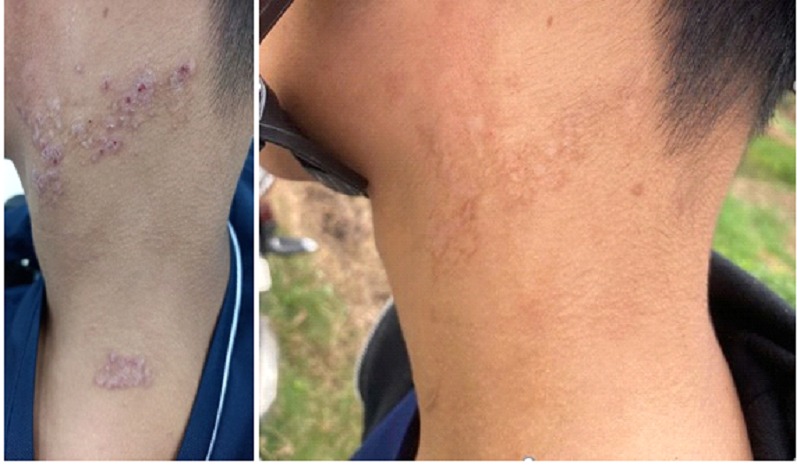 |
Images of lesions before and after treatment. Photo: Hospital provided |
BSCKI. Luong Thi Nga, from the General Internal Medicine Department, explained that tapeworm species belonging to the Echinococcus genus cause dog tapeworm disease. In humans, dog tapeworm disease manifests in two main forms of lesions: the cystic form and the alveolar form.
Individuals contract the disease by ingesting dog tapeworm eggs through contaminated food or raw vegetables, or by direct contact with infected dogs, foxes, or weasels without proper handwashing.
The clinical presentation of Echinococcus dog tapeworm infection depends on the specific tapeworm species involved. The disease progresses slowly and may remain asymptomatic for extended periods. Tapeworm cysts commonly parasitize the liver, which is the most frequent site, as well as the lungs and other organs such as the kidneys, spleen, heart, nervous tissue, or bones.
These cysts grow slowly, initially causing few symptoms. However, as they enlarge, they can cause pain, organ compression, liver and lung dysfunction, and even be life-threatening. If a cyst ruptures, patients risk anaphylactic shock, severe infection, elevated eosinophils and IgE levels, leading to dangerous complications. Some cases of the disease can persist for many years, recur, or require complex surgical intervention, significantly impacting quality of life.
Dog tapeworm is a preventable parasitic disease if people understand its transmission routes and proactively implement daily hygiene and safety measures. Evidence indicates that most cases are linked to close contact with dogs, consuming raw vegetables, or eating unhygienic food.
To prevent dog tapeworm disease, individuals should diligently follow these measures: Limit direct contact with dogs, especially stray dogs; wash hands thoroughly with soap after contact with pets. Avoid eating raw vegetables or food that has not been thoroughly washed or cooked. Incinerate or bury deeply the offal of deceased intermediate hosts. Regularly deworm dogs and ensure proper management of household pets.
Le Nga


