Initially, the young man from Binh Tay ward casually felt a lump the size of his thumb, assuming it was a common inflammatory reaction. An examination at Ho Chi Minh City Oncology Hospital, including an ear, nose, and throat endoscopy, revealed a lesion in his nasopharynx. A biopsy confirmed Minh had stage 2 nasopharyngeal cancer. The diagnosis came as a shock to the patient, as his initial check-up had been normal, with no obvious pain or discomfort.
"I was devastated and very confused; I never thought cancer would affect someone my age", Minh said, as he prepared to request leave for a chemoradiotherapy regimen lasting over a month.
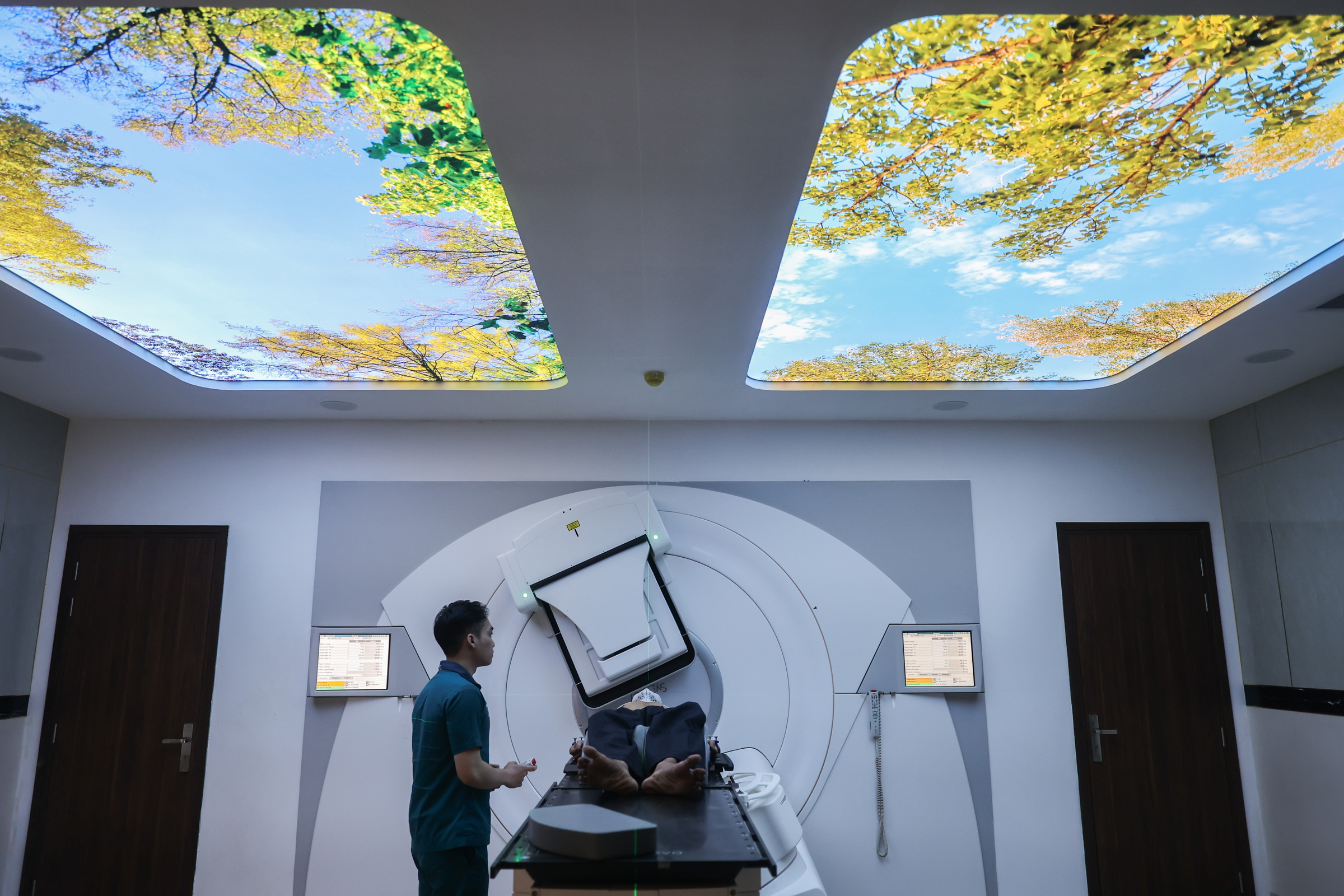 |
Radiotherapy for cancer patients at Ho Chi Minh City Oncology Hospital. Photo: Quynh Tran
Doctor Lam Duc Hoang, Head of the Head and Neck Radiation Therapy Department at Ho Chi Minh City Oncology Hospital, noted that cases like Minh's are no longer rare. Data from leading institutions such as Ho Chi Minh City Oncology Hospital, Hanoi Oncology Hospital, and Cho Ray Hospital show a significant increase in nasopharyngeal cancer patients aged 20-30, and even teenagers as young as 16. This trend challenges the previous understanding that the disease primarily affects middle-aged individuals (40 and older).
Doctor Hoang explained that this "rejuvenation" is closely linked to the Epstein-Barr virus (EBV), the primary cause of the disease, which is prevalent in the community. In young individuals, prolonged work stress, late nights, and insomnia weaken the immune system, allowing the virus to reactivate. Additionally, environmental factors like smoke, dust, and exhaust fumes, along with dietary habits such as consuming high-salt foods, smoked meats, and charred grilled dishes, also accelerate the development of cancer cells. Notably, in endemic regions like Southern China and Southeast Asia, the average age of onset is approximately 10 years lower than in other parts of the world.
The main challenge in treatment is early diagnosis, as initial symptoms are often subtle and easily mistaken for benign conditions. The Head and Neck Radiation Therapy Department once treated a 40-year-old male patient who suffered from persistent headaches and nasal congestion, receiving ineffective sinusitis treatment at multiple clinics. Only upon hospital admission, when he presented with symptoms such as breathing through his mouth, blurred vision, and drooping eyelids, did doctors identify a late-stage nasopharyngeal tumor.
According to experts, early warning signs include: one-sided nasal congestion, subtle nosebleeds, tinnitus, hearing loss, dull headaches, or painless neck lumps. Complacency, mistakenly attributing symptoms to a common cold or sinusitis, often causes many young people to miss the critical window for intervention, reducing treatment effectiveness.
Despite being a malignant disease, nasopharyngeal cancer has a favorable prognosis if detected early, with a 5-year survival rate of 90-95%. The primary treatment method is currently radiotherapy combined with chemotherapy. Younger patients generally have stronger bodies, respond better to medication, and recover faster than older individuals.
Doctors advise people to visit ear, nose, and throat (ENT) or oncology specialists for an endoscopy if they experience unusual symptoms persisting for over two weeks. For prevention, the community should maintain a healthy lifestyle, exercise regularly to boost immunity, limit exposure to smoke and dust, and reduce consumption of pickled foods. Individuals with a family history of the disease should proactively undergo regular screenings to detect early signs of cancer at the onset stage.
Le Phuong