Dr. Le Phuc Lien, Head of the Female Urology Unit at the Urology - Nephrology - Andrology Center, Tam Anh General Hospital, diagnosed Thuan with vesicoureteral reflux disease. This condition caused severe hydronephrosis in both of the teenager's kidneys, urinary tract infections, and dilated ureters; fortunately, kidney failure had not yet occurred. This is a congenital defect resulting from an abnormal anti-reflux valve mechanism where the ureter connects to the bladder, or an abnormally small bladder. Consequently, urine flows backward from the bladder into the ureters and sometimes to the kidneys, leading to urinary tract infections, renal scarring, and kidney damage if left untreated.
Associate Professor Dr. Vu Le Chuyen, Director of the Urology - Nephrology - Andrology Center, determined that the optimal treatment plan involved robot-assisted laparoscopic surgery using Da Vinci Xi to re-implant the ureter into the bladder and perform bladder augmentation using a segment of the intestine. This approach ensures patients experience less pain after surgery, avoid long incisions typical of open or traditional laparoscopic methods, and recover faster.
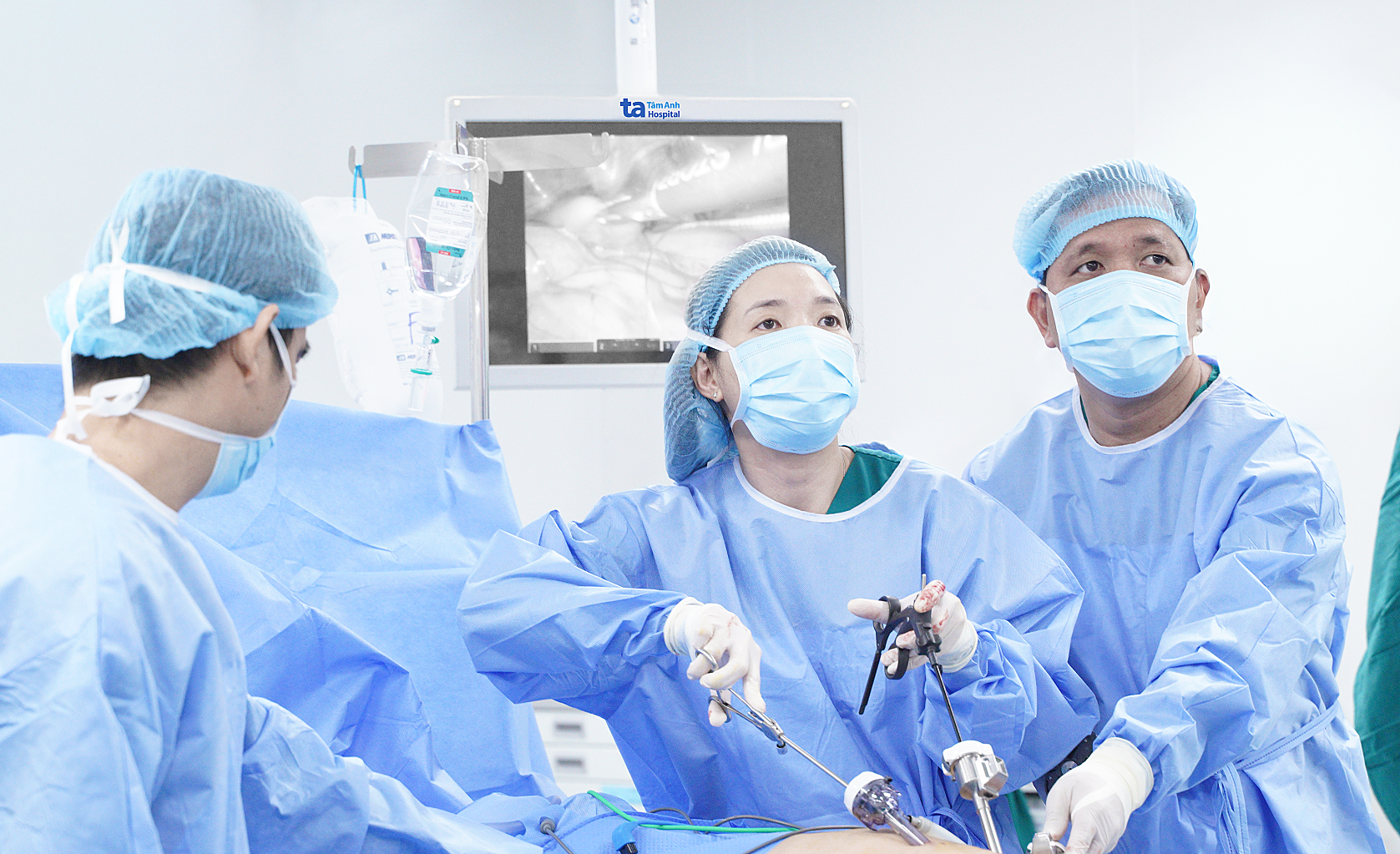 |
Dr. Lien (center) and Master of Science Dr. Nguyen Truong Hoan perform surgery on Thuan. Photo: Tam Anh General Hospital |
The 6 cm distance between the robot's arms is suitable for young patients like Thuan. Surgeons can easily access the site for ureter re-implantation into the bladder within a confined space, then use a 10 cm segment of intestine to reconstruct the bladder for the patient. According to Dr. Lien, reconstruction using intestine helps patients restore normal bladder function, allowing for adequate urine flow and preventing recurrent urinary tract infections.
One day after surgery, Thuan recovered well, exhibiting good health and normal bowel movements, and began walking independently in his room. He was discharged five days later. Doctors advise patients to attend scheduled follow-up appointments to assess kidney function and recovery.
In young children, vesicoureteral reflux causes symptoms such as unexplained fever, loss of appetite, irritability, diarrhea, vomiting, and difficulty gaining weight. In older children, the condition leads to recurrent urinary tract infections, painful urination, frequent urination, dysuria, fever, back pain, and lower abdominal pain. The disease often progresses silently, leading to many cases being diagnosed at a late stage when kidney damage is irreversible.
Dr. Lien recommends parents closely monitor their children's health. If a child experiences recurrent urinary tract infections, urinary incontinence, or if the pregnancy previously noted amniotic fluid abnormalities, the child should undergo an examination of the renal-urinary system after birth to detect any abnormalities early. For mild cases, doctors may recommend regular monitoring, as some children can outgrow the reflux. Severe cases or those with complications require consideration for surgery to preserve kidney function and prevent progressive damage.
Ha Thanh
*Patient's name has been changed