Doctor Nguyen An Nghia, Deputy Head of the Department of Infectious Diseases and Neurology at Children's Hospital 1, stated at a scientific conference organized by the University of Medicine and Pharmacy, TP HCM, in collaboration with Pfizer Vietnam on 12/5, that invasive meningococcal disease progresses rapidly, potentially causing death within 24-48 hours if left untreated. The fatality rate can exceed 50% in cases without early diagnosis.
Even with early detection and proper treatment, approximately 5-10% of patients still die. Among survivors, over 10% experience severe sequelae such as hearing loss, cognitive impairment, epilepsy, or disability due to limb necrosis.
According to Ministry of Health statistics, the country recorded 24 cases of meningococcal disease in the first three months of the year, including 4 deaths. Children under 15 years old accounted for 46% of total cases. The number of cases increased by nearly 50% compared to the same period last year.
Doctor An Nghia noted that invasive meningococcal disease can affect all ages but is most prevalent in children under one year old, adolescents, the elderly, and immunocompromised individuals. In Vietnam, cases are concentrated among children under 5 and adolescents, with children under one year old representing the largest proportion. The risk of contracting the disease is also higher for those living in crowded environments such as schools, dormitories, or military barracks.
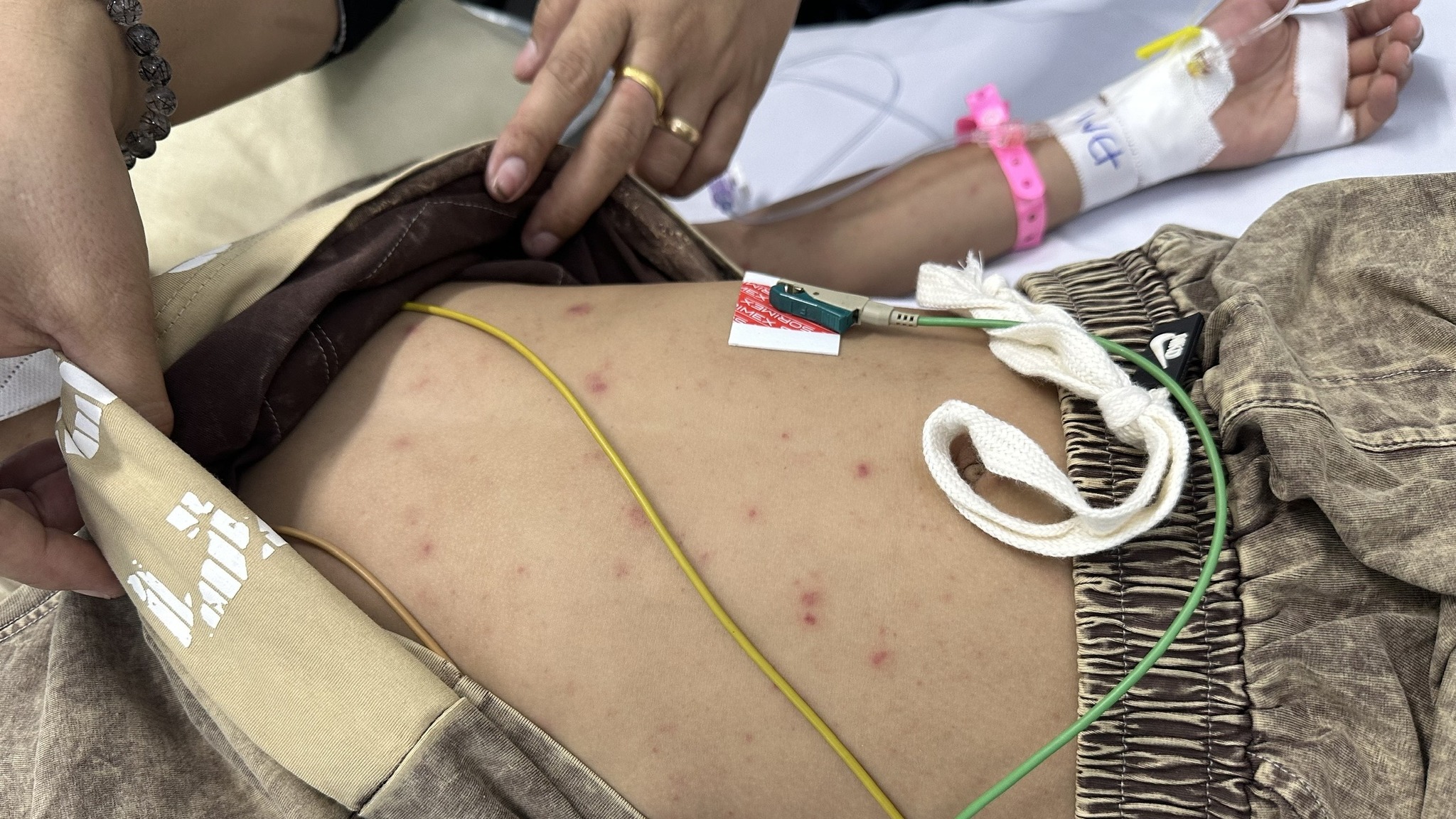 |
A child patient with meningococcal disease. *Photo: Hospital provided* |
Associate Professor Doctor Cao Huu Nghia, Head of the Department of Biomedical Sciences at Pasteur Institute TP HCM, explained that meningococcal bacteria have 12 serogroups, with approximately 95% of global cases caused by five groups: A, B, C, W, and Y. However, the circulation of these serogroups can vary over time and geographical region.
Citing data from Australia between 2008 and 2018, Mr. Nghia noted that serogroup B was dominant until 2015, while serogroup W began to increase significantly from 2014. By 2017, the number of cases caused by serogroups B and W was similar.
"The epidemiology of meningococcal disease is not fixed; it changes over time, by region, age group, and circulating serogroup, requiring a broader prevention strategy", Mr. Nghia stated.
According to the World Health Organization, the roadmap for meningitis control by 2030 aims to reduce preventable bacterial meningitis cases by 50% and deaths by 70%, while also reducing disability and improving the quality of life for patients after contracting meningitis.
Experts acknowledge that due to its danger, rapid fatality, and risk of severe sequelae, invasive meningococcal disease requires proactive early prevention. The Vietnam Preventive Medicine Association recommends proactive vaccination for high-risk groups, especially young children, adolescents, the elderly, individuals with underlying conditions, and those living or working in crowded environments.
Le Phuong