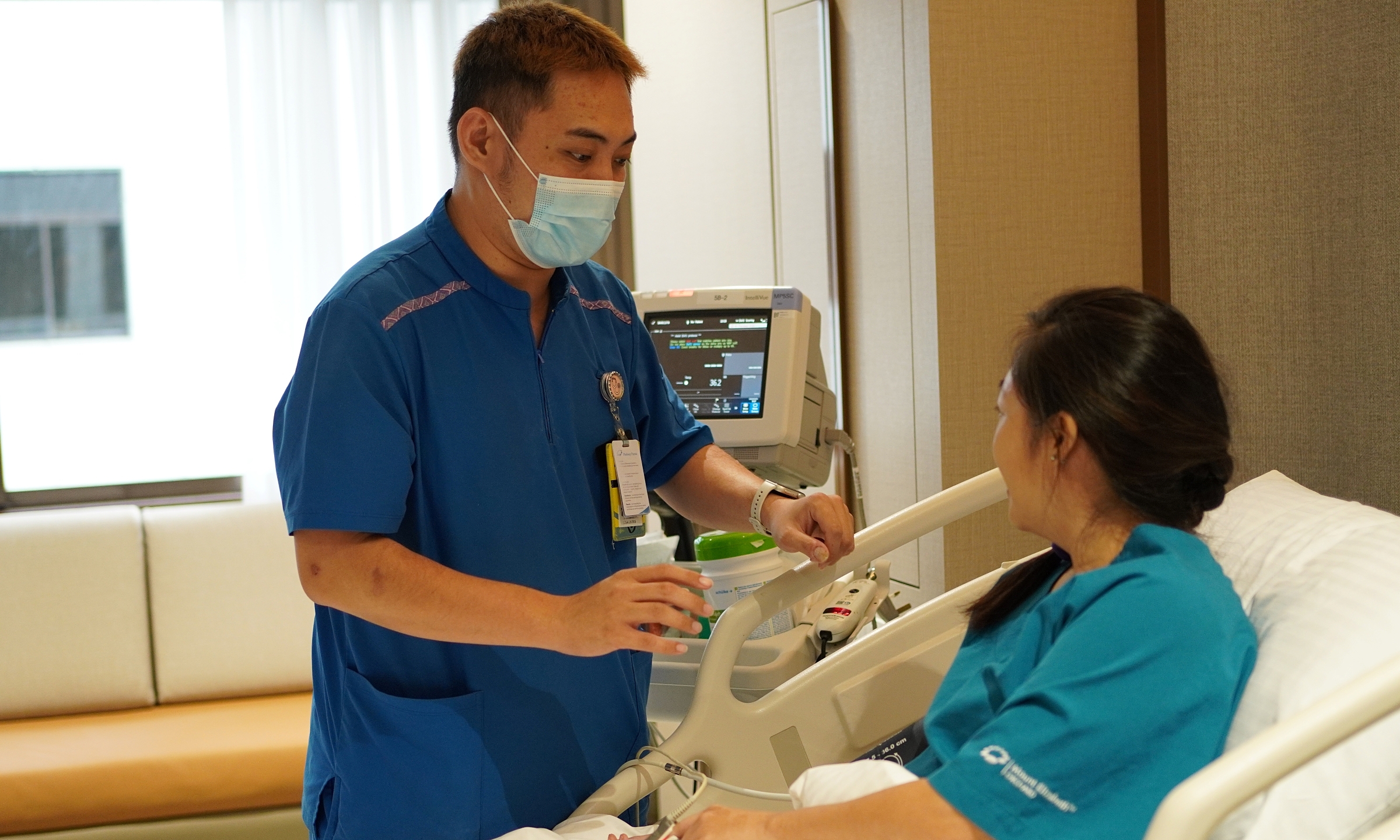
Hai, a 40-year-old man, had been managing chronic hepatitis B for 20 years with prescribed medication and quarterly check-ups. Recently, he experienced a 7 kg weight loss over two months and persistent fatigue, prompting him to seek medical attention at Benh vien Da khoa Tam Anh TP HCM. An MRI scan revealed a nearly 3 cm lesion in liver segment 4. The tumor displayed typical signs of hepatocellular carcinoma, showing strong enhancement in the arterial phase and rapid washout in the venous phase.
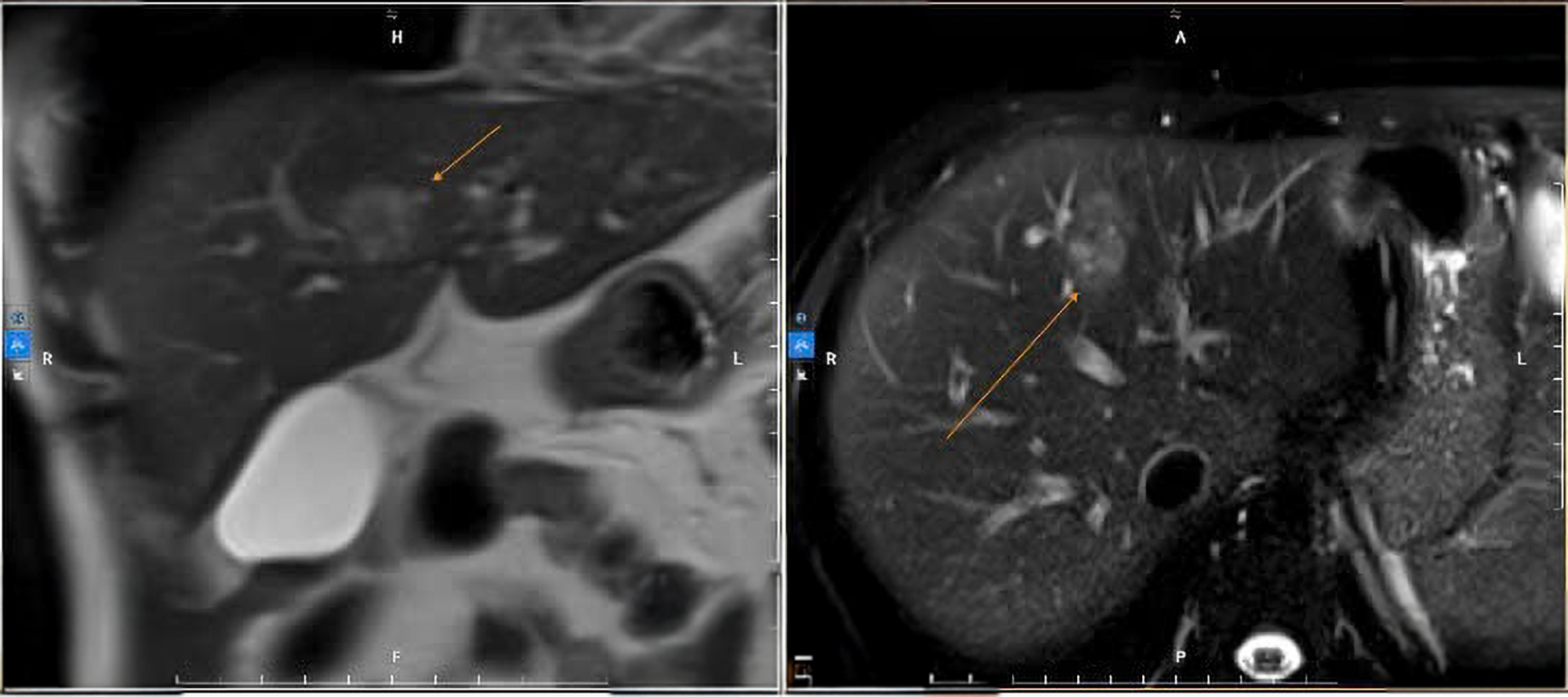 |
MRI image showing an abnormal tumor in the liver parenchyma (yellow arrow). Photo: Benh vien Da khoa Tam Anh |
Doctor Pham Cong Khanh, Head of the Liver - Biliary - Pancreatic Department at the Center for Endoscopy and Endoscopic Digestive Surgery, ordered a liver biopsy to confirm the tumor's nature. Pathology results identified stage two hepatocellular carcinoma (HCC). Given that the tumor was localized within the liver, with no invasion of large blood vessels or metastasis, Hai underwent laparoscopic surgery to resect liver segments 2, 3, and 4. To achieve clear margins and prevent any residual cancer cells, the surgical team ligated major blood vessel branches at the base of the left liver lobe and removed additional adjacent liver tissue.
To prevent damage to small blood vessels, which could lead to extensive bleeding, and to minimize the risk of complications, the surgical team utilized a 3D/4K endoscopic system integrated with ICG fluorescence technology. This technology allowed them to visualize blood vessel structures and precisely identify the tumor boundaries and the specific liver regions requiring resection.
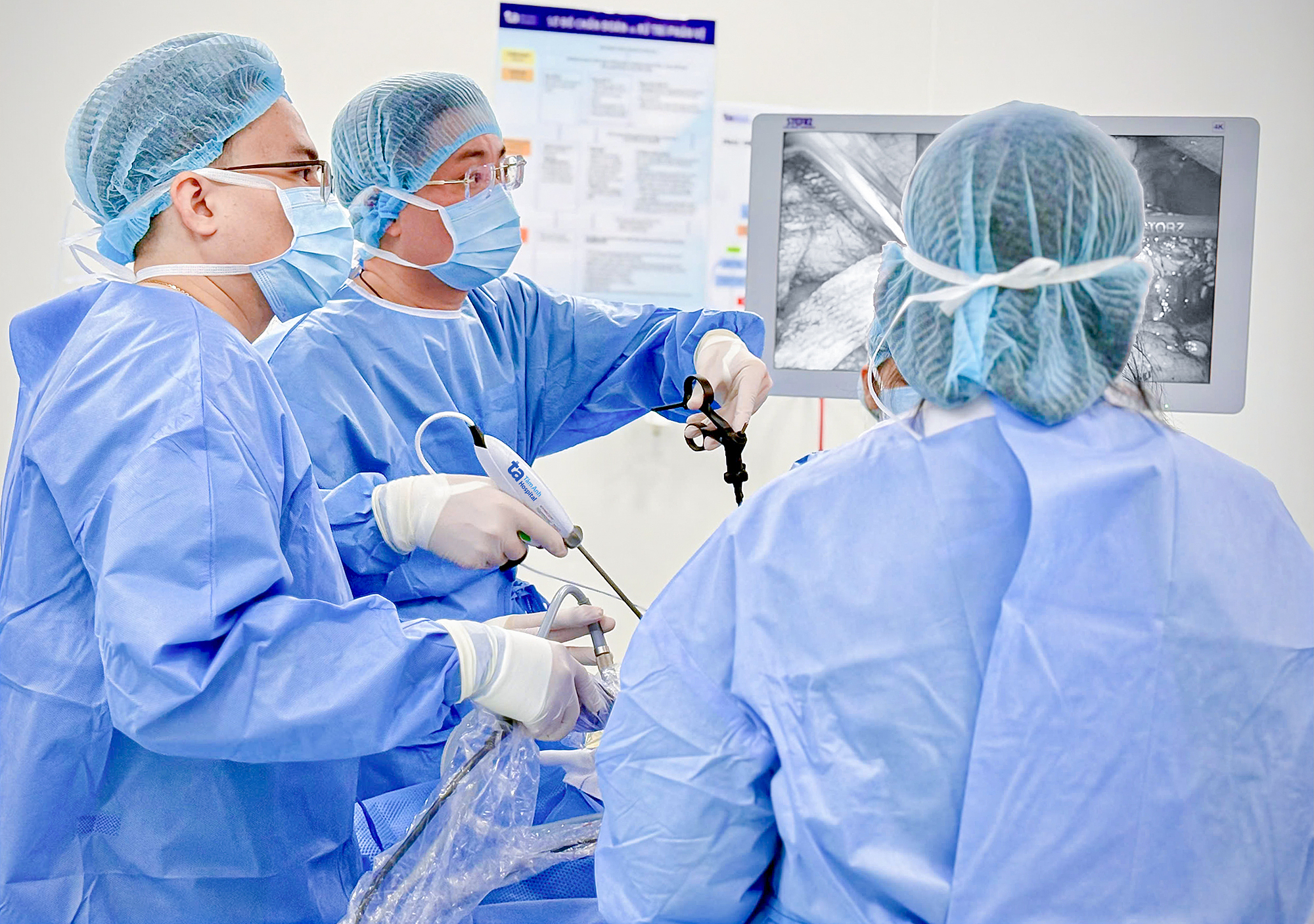 |
Doctor Khanh (second from left) performs laparoscopic liver resection for Hai. Photo: Benh vien Da khoa Tam Anh |
The 4-hour procedure successfully removed the entire tumor without intraoperative complications. Post-surgery, Hai recovered well, able to consume light meals and walk. His liver function remained stable, with no signs of liver failure.
Pathology confirmed hepatocellular carcinoma with clear resection margins, showing no vascular or neural invasion. Hai currently does not require additional treatments like chemotherapy or radiation, but regular follow-up is essential.
According to Doctor Khanh, patients need to continue regular antiviral treatment for hepatitis B to control viral replication, protect the remaining liver, and reduce the risk of cancer recurrence. The liver is the only organ in the body with a strong regenerative capacity. After removing the diseased portion, the remaining liver will regenerate to compensate for lost function. However, this process is only effective when the underlying liver is healthy and risk factors, such as hepatitis viruses, are well-controlled.
Liver cancer is common and often progresses silently with few early symptoms, leading to late diagnosis and reduced opportunities for curative treatment. Hepatitis B and C viruses are leading causes of mutations that lead to cancer formation.
Doctors advise patients with hepatitis B to adhere to treatment and undergo regular screening. Detecting tumors in early stages, when they are small and non-invasive, significantly increases the likelihood of curative treatment through surgery or other interventional methods.
Quyen Phan
| Readers can submit questions about liver disease here for doctors to answer. |