In recent times, the healthcare sector has accelerated the deployment of electronic medical records (EMR) and the use of VNeID or Citizen ID cards to replace paper insurance cards. In TP HCM, 163 of 164 hospitals, representing 99,4%, have implemented EMR. The Ministry of Health also permits up to 90 days of outpatient medication for stable patients with man tinh illnesses.
According to a representative from Mount Elizabeth Hospital Singapore, these advancements indicate that the technological foundation and legal framework are gradually being completed. However, the patient journey in many hospitals remains complex, involving: taking a number, waiting for examination, undergoing tests, receiving results, paying hospital fees, and purchasing medication. Efforts to reorganize examination and treatment processes, connect data between departments, and reduce administrative steps are ongoing.
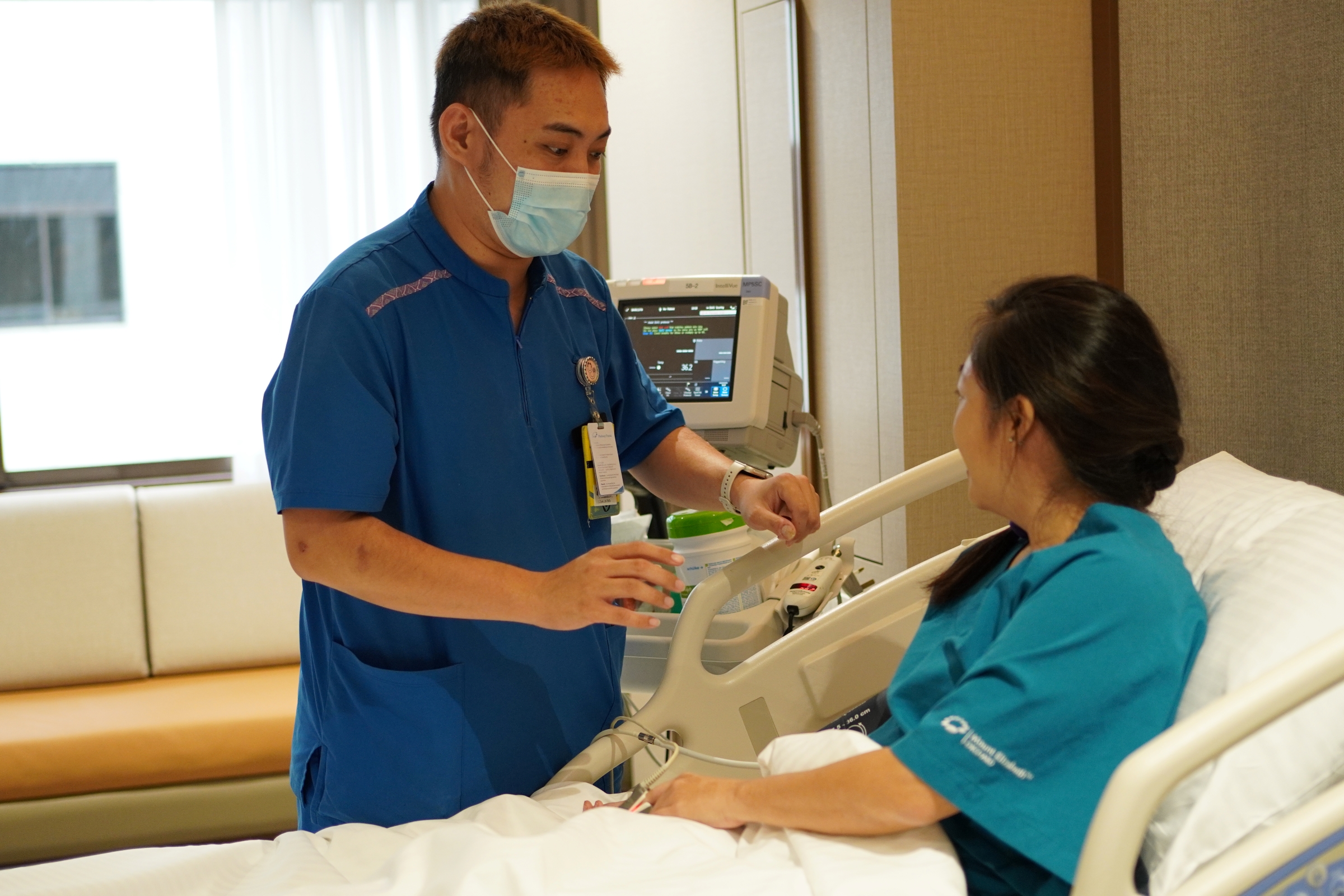 |
Patients receiving treatment at Mount Elizabeth Hospital, Singapore. Photo: Hospital provided |
Lessons from global healthcare systems highlight the need to transition from fragmented digitalization to value-based care, where technology optimizes the entire treatment journey. This ensures patients receive appropriate care and services, while hospitals reduce intermediaries and utilize resources more efficiently.
In Singapore, Mount Elizabeth Hospital launched Project Renaissance, an initiative with a total investment of 350 million Singapore dola. According to Yong Yih Ming, the hospital's director, the goal is to upgrade facilities and improve treatment outcomes by optimizing operational efficiency and investing in infrastructure and technology.
An example is the AI system at the Patient Information Center, which manages hospital beds and surgery schedules in real-time. With continuous data updates, departments can coordinate faster, reducing wait times or manual processing.
For patients, an inpatient application integrating AI, augmented reality technology, and 3D maps helps them navigate independently, look up services, and be more proactive during their hospital stay. Simple requests are processed via the digital platform, allowing nurses more time for specialized care tasks.
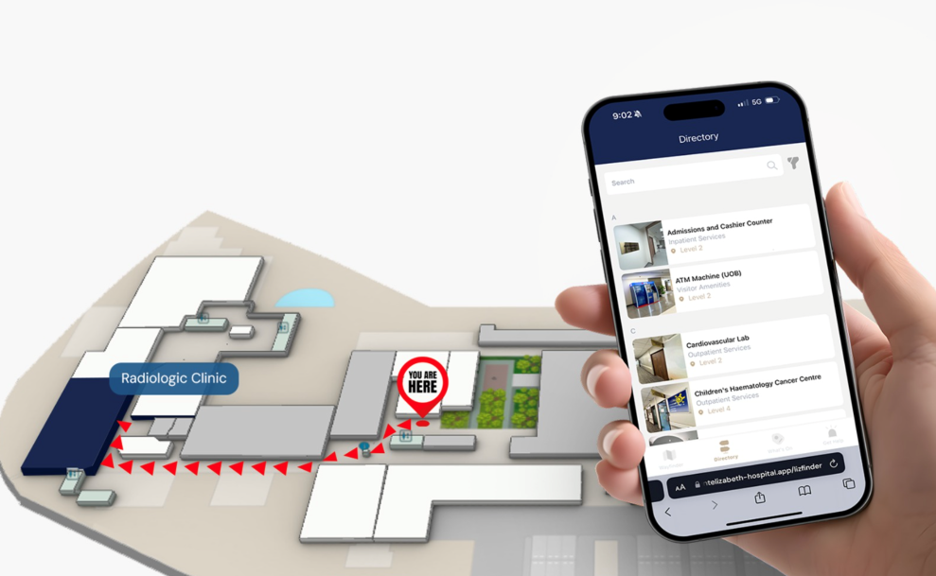 |
The interactive 3D LizFinder map helps patients navigate easily at Mount Elizabeth Hospital, Singapore. Photo: Hospital provided |
The hospital also uses automation in its pharmacy, capable of processing up to 1.500 prescriptions per hour. This demonstrates that digital transformation not only improves the patient experience at the reception desk but also impacts logistics, which directly affects waiting times and operational efficiency.
These models illustrate how technology can simplify processes, improve data interoperability, and provide more seamless patient care. When applied correctly, digital transformation can help hospitals operate more efficiently, reduce the workload on medical staff, and deliver a more convenient and reliable experience for patients.
Van Ha