According to Doctor Nguyen Tan Cuong, Head of the Urological Oncology Unit at the Urology - Nephrology - Andrology Center, Tam Anh General Hospital, Ho Chi Minh City, if left untreated, the tumor would grow, invading the renal pelvis and causing hematuria, or metastasizing to the renal vein, lungs, and bones, making treatment more challenging.
Mr. Hoang suffered from chronic hypertension, which posed a risk of declining kidney function over time. Removing one kidney would force the remaining kidney to assume full blood filtration duties, increasing the risk of end-stage renal failure. Doctor Cuong opted for robotic partial nephrectomy using the Da Vinci Xi robot to preserve healthy renal tissue and maintain the patient's blood filtration function.
Utilizing a 3D camera that magnifies 10-15 times, the surgeon clearly distinguished between the tumor and healthy kidney tissue. The robot then precisely dissected the tumor, along with a 5 mm margin of healthy tissue. This partial nephrectomy technique ensures complete tumor removal, minimizing the chance of leaving cancerous cells behind. According to Doctor Cuong, its effectiveness is comparable to a total nephrectomy (removing the entire kidney with the tumor) but reduces the risk of chronic kidney failure and cardiovascular complications for the patient in the future.
After tumor removal, the surgeon used the robot's flexible 540-degree arms to meticulously suture two layers, repairing the renal parenchyma and blood vessels in a short time. This reduced ischemia time, better protecting kidney function.
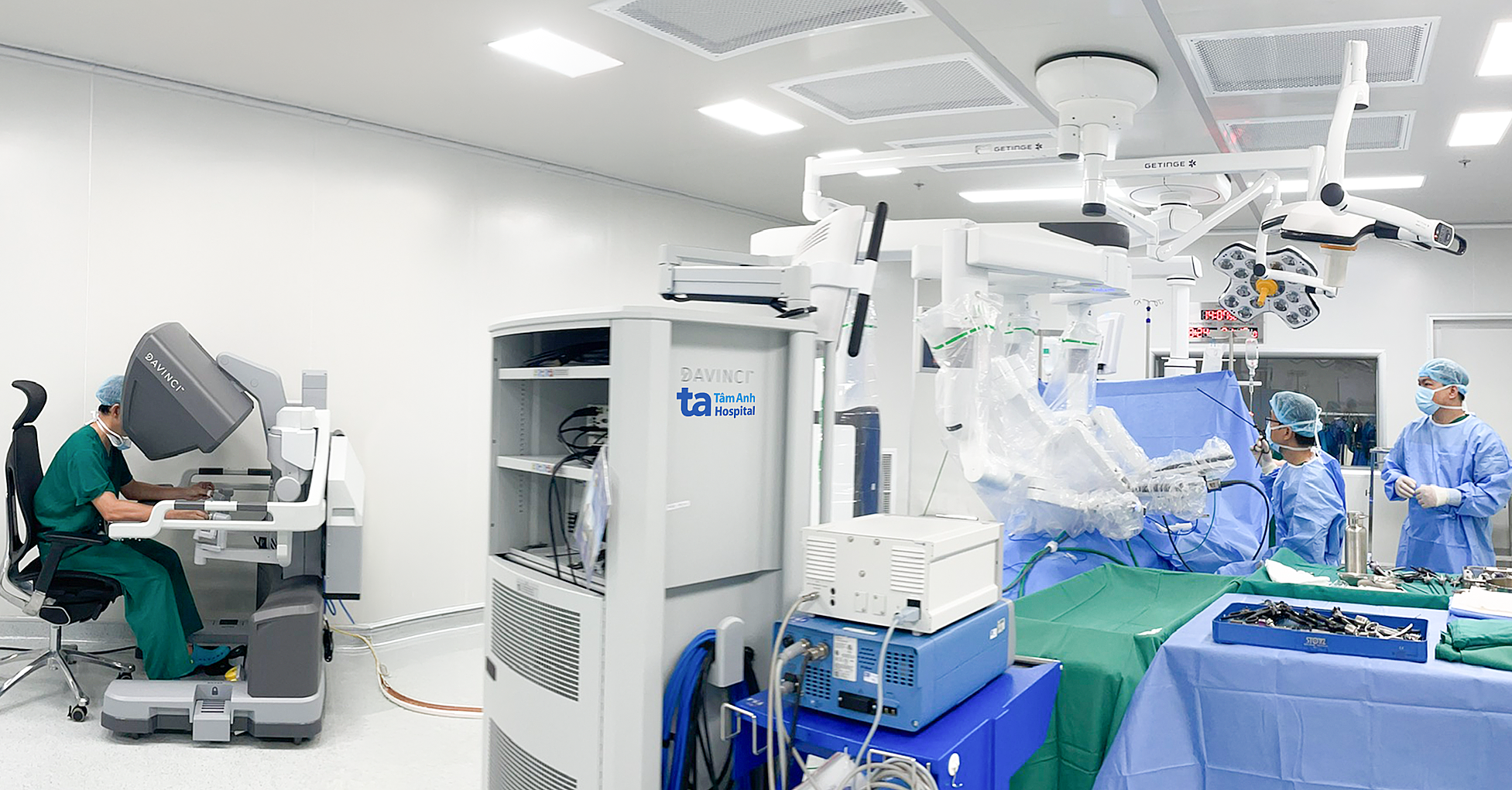 |
Doctor Cuong (seated) operates the Da Vinci Xi robot during Mr. Hoang's kidney tumor surgery. _Photo: Tam Anh General Hospital_ |
Post-surgical pathology confirmed Mr. Hoang had stage T1a renal cell carcinoma. One day after the procedure, the patient could eat, move around gently, and was discharged after three days.
According to Doctor Cuong, renal cell carcinoma often progresses slowly. Studies show that small kidney tumors grow at an average rate of 0.3-0.5 cm annually. Given Mr. Hoang's 3 cm tumor, it likely existed for several years without noticeable symptoms. Patients with stage T1a cancer who receive radical treatment have a 5-year survival rate of over 95-97%.
Patients require regular follow-up appointments to monitor kidney function and prevent recurrence. They also need to combine this with medical treatment to maintain stable blood pressure. A low-sodium diet is essential for kidney protection, along with adequate hydration and avoiding kidney-damaging medications like NSAID painkillers unless prescribed by a doctor.
Renal cell carcinoma is the most common form of kidney cancer in adults. It originates in the lining of the renal tubules – small structures within the kidney responsible for filtering blood and producing urine. The disease often progresses silently in its early stages, leading to many cases being discovered incidentally during health check-ups or treatment for other conditions.
The disease typically responds poorly to chemotherapy; therefore, treatment primarily relies on surgery if the tumor remains localized within the kidney, as in Mr. Hoang's case. For late-stage detection, doctors often prescribe targeted therapy and immunotherapy to prolong survival and improve patients' quality of life. Doctors recommend annual abdominal ultrasounds for early detection, increasing the chances of successful treatment.
Dinh Lam
*Patient's name has been changed