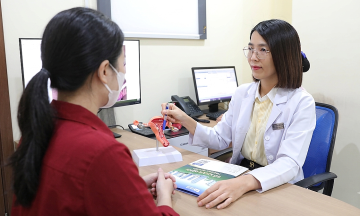
Le discovered her condition during a pre-marital check-up at Tam Anh General Hospital Hanoi. Dr. Nguyen Thanh Vinh from the Obstetrics and Gynecology Center diagnosed a complex congenital reproductive malformation: a complete vertical septum dividing the vagina, extending through the cervix, and separating the uterus into two distinct chambers. A uterine septum is a band of fibrous tissue with poor vascular supply, often asymptomatic.
Le's regular menstrual cycles made the condition difficult to detect. This common congenital reproductive malformation affects approximately 35% of women, leading to a narrowed uterine cavity and increasing risks of infertility, recurrent miscarriage, or premature birth. "A septum extending from the vagina to the uterine fundus, as in Le's case, is rare and more complex than typical presentations," Dr. Vinh stated.
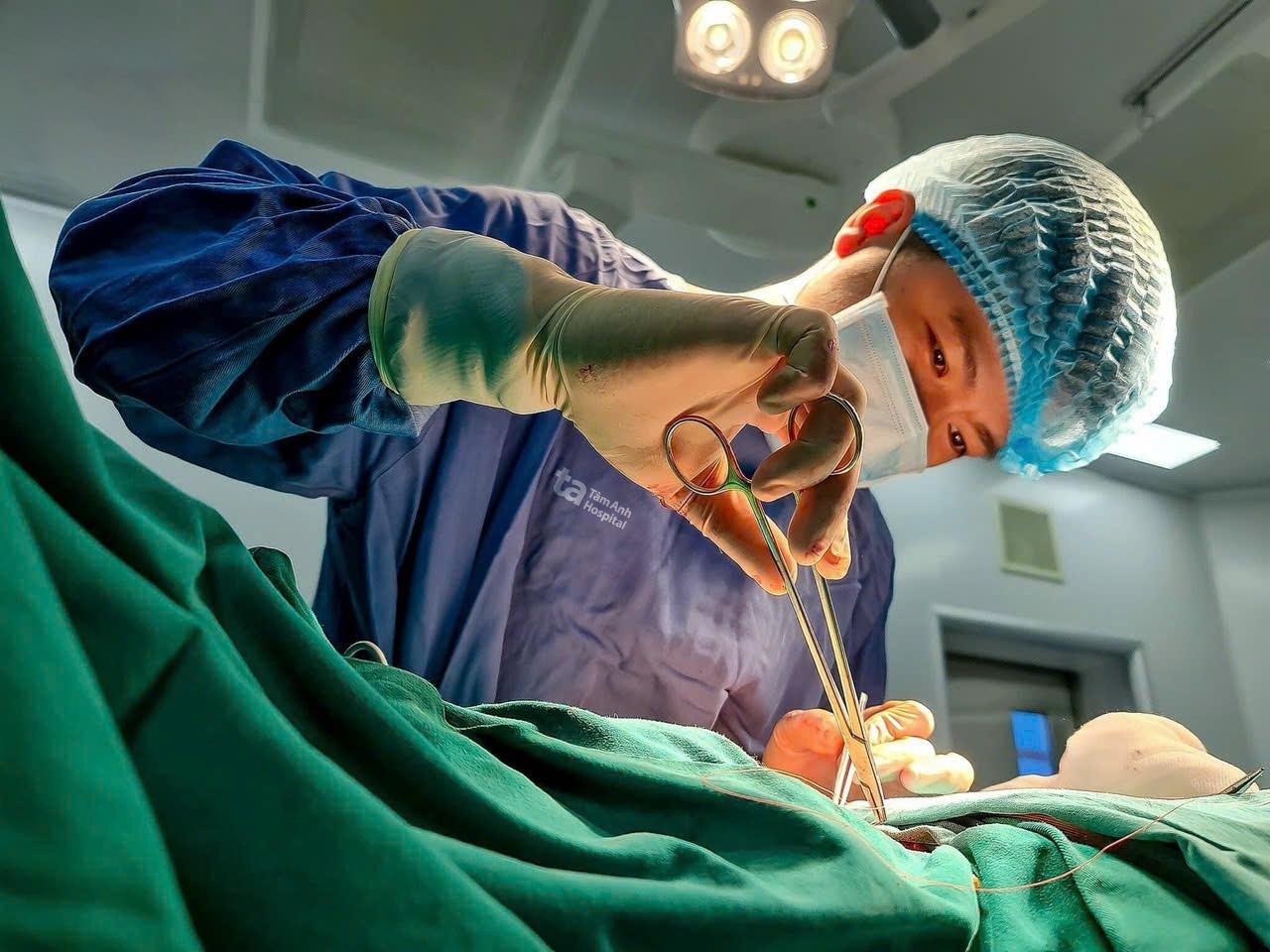 |
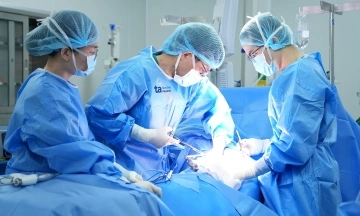
Dr. Vinh performing surgery on the patient. *Photo: Tam Anh General Hospital |
Doctors used a monopolar electrosurgical knife to remove the vertical septum in the vagina and performed hysteroscopic surgery to excise the fibrous septum within the uterine cavity. The surgical team preserved the cervical septum to minimize risks of cervical insufficiency or premature birth later.
Laparoscopic abdominal inspection involved CO2 insufflation for examination and cleaning of the abdominal cavity. Doctors confirmed uterine stability, no bleeding from adjacent organs, and no uterine perforation complications. Following the surgery, Le's uterus returned to its normal shape, and she was discharged after one day.
To promote early endometrial regeneration at the cut edges and reduce the risk of intrauterine adhesions after surgery, Le received hormonal treatment to create an artificial menstrual cycle, supporting uterine recovery.
A follow-up examination two months post-surgery confirmed no intrauterine adhesions and stable menstrual cycles. Le can now monitor for natural pregnancy in subsequent cycles.
Many women are unaware of uterine malformations, often discovering them incidentally during pre-marital check-ups, infertility investigations, or after experiencing recurrent miscarriages or premature births. Doctors advise couples planning marriage or conception to undergo proactive pre-marital check-ups to detect any reproductive organ abnormalities early.
Thuy Hanh
*Patient's name has been changed.
| Readers can submit questions about pregnancy and childbirth here for doctors to answer. |