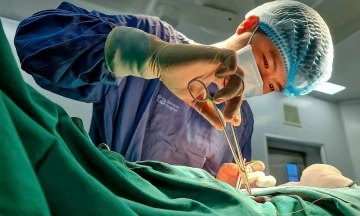
Thuy's journey to motherhood was marked by six years of infertility, a challenge stemming from ovarian endometriosis that severely diminished her ovarian reserve. Her initial in vitro fertilization (IVF) treatment at a hospital in TP HCM revealed an anti-Müllerian hormone (AMH) level of only 0,9 ng/mL, significantly below the normal range of 2-6,8 ng/mL for women under 35. Despite undergoing ten natural egg retrieval cycles, she yielded only 8 eggs, from which three day-3 embryos were cultivated. However, all subsequent embryo transfers were unsuccessful.
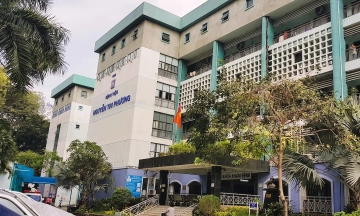
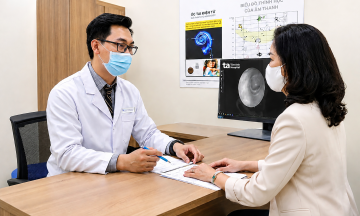
Upon seeking treatment at the Center for Reproductive Assistance, Tam Anh General Hospital TP HCM (IVF Tam Anh TP HCM), Thuy's AMH level had further declined to 0,5 ng/mL, nearly half of its previous reading. Master, Doctor Giang Huynh Nhu, Director of IVF Tam Anh TP HCM, examined Thuy and diagnosed her with diminished ovarian reserve caused by ovarian endometriosis, alongside fluid accumulation in both fallopian tubes.
Doctor Nhu explained that ovarian endometriosis occurs when uterine lining cells grow abnormally on the surface or deep within the ovaries, forming blood-filled cysts. This condition not only reduces the quantity of eggs but also directly impairs egg quality, thereby decreasing the likelihood of developing viable embryos. Over time, ovarian reserve can further diminish, significantly reducing the chances of conception.
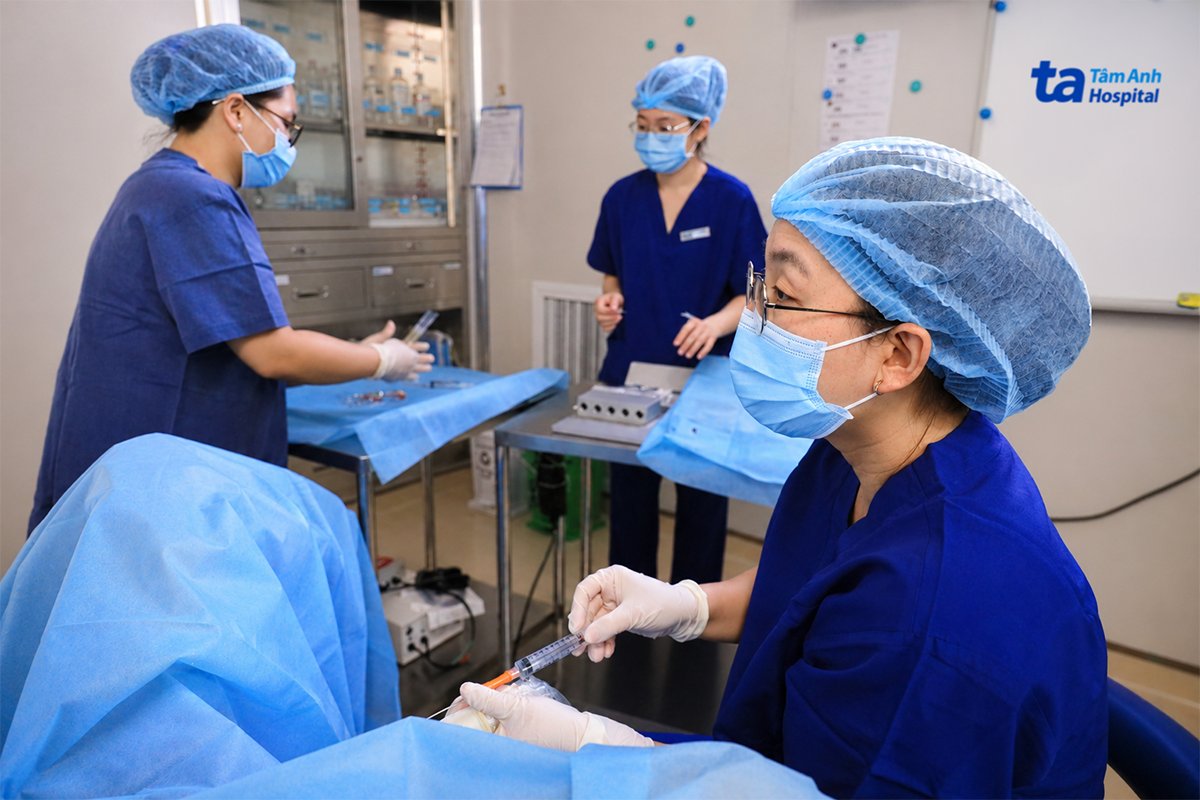 |
Doctor Huynh Nhu performs egg retrieval for Thuy. *Photo: IVF Tam Anh*
Doctor Nhu advised Thuy to proceed with immediate egg retrieval for IVF, emphasizing the need to optimize the embryo culture process to enhance implantation success. Over two cycles, Doctor Nhu successfully retrieved 8 eggs. These were fertilized using intracytoplasmic sperm injection (ICSI), resulting in three day-3 embryos. Of these, only two embryos naturally progressed to day 5 blastocysts. The blastocysts were cultured in a time-lapse system that incorporated artificial intelligence (AI) software, aiding specialists in evaluating their implantation potential. Ultimately, Thuy had one day-5 grade 3 embryo and one day-6 grade 2 embryo.
Prior to embryo transfer, Doctor Nhu administered treatment to suppress inflammation resulting from Thuy's ovarian endometriosis. Once her uterine lining achieved ideal conditions, Doctor Nhu transferred one day-5 embryo, which resulted in a successful pregnancy. The remaining embryo was cryopreserved. Thuy and her husband celebrated the birth of their first son at 37 weeks of gestation.
Two years later, the couple returned to IVF Tam Anh TP HCM for the transfer of their remaining cryopreserved embryo. Thuy successfully conceived and gave birth to their second son, weighing 2,9 kg, at the end of June.
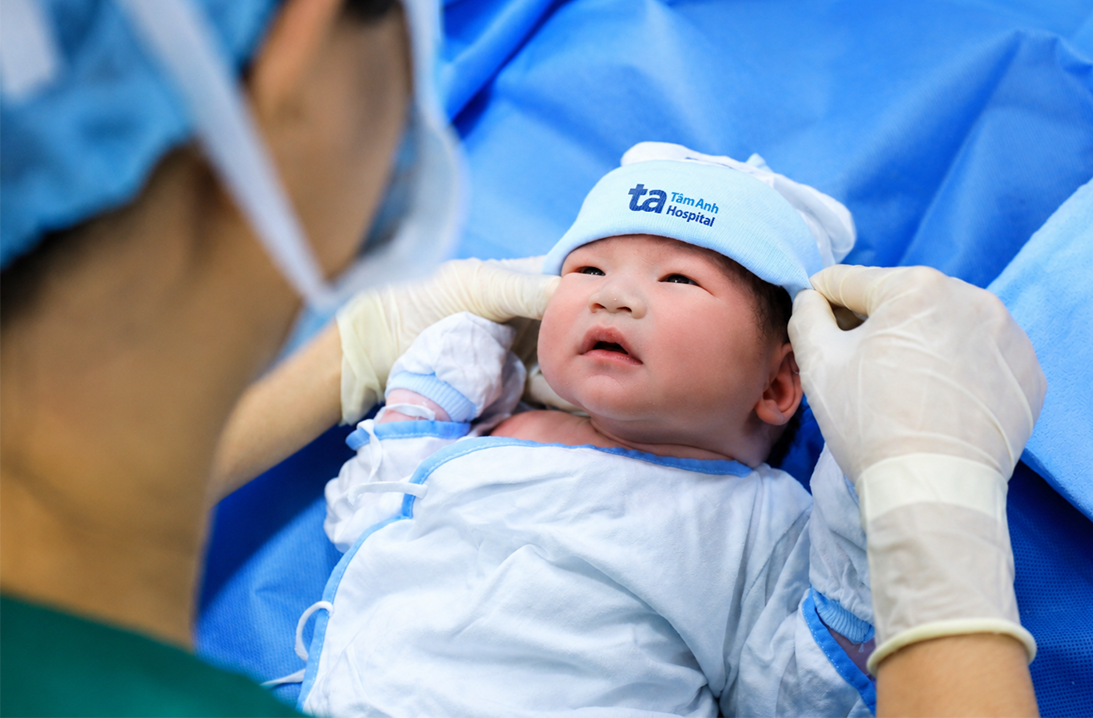 |
Thuy's second son, born at the end of June. *Photo: IVF Tam Anh*
Doctor Nhu advises that women possess a finite number of eggs, with both quantity and quality progressively declining over time, a process particularly evident after age 30 and accelerating past age 35. This decline often occurs without clear warning signs. Many women only discover diminished ovarian reserve or difficulties with natural conception when they begin family planning. Therefore, women over 35 or those with a history of gynecological conditions should undergo a comprehensive reproductive health assessment if they have not conceived after six months of regular, unprotected intercourse. Early intervention significantly increases the chances of successful treatment.
The IVF Tam Anh system employs individualized protocols, such as egg and embryo pooling, alongside AI-integrated embryo culture technology. These advancements assist numerous patients with low egg counts or diminished ovarian reserve in achieving healthy pregnancies. During the 2021-2025 period, IVF Tam Anh reported an average cumulative pregnancy rate of 82,8%. Notably, for patients with complex infertility who had experienced multiple previous failures, the cumulative pregnancy rate reached 72,3%.
Nguyet Nhi
* Patient's name has been changed