


Chi Hoa, 39, sought examination at the Center for Reproductive Assistance, Tam Anh General Hospital (IVF Tam Anh). Doctors noted diminished ovarian reserve and a 6x7 cm fibroid located on the posterior wall of her uterus.
According to doctor Luu Quang Quy, approximately 50% of women with uterine fibroids can still give birth normally. However, some cases lead to infertility, accounting for 2-3% of all infertility cases, especially when the tumor is in a submucosal position, close to the uterine cavity, as was the case for Chi Hoa. The fibroid deforms the uterine cavity and disrupts the endometrial structure, making it difficult for sperm or embryos to move. This condition also reduces the blood supply to the embryo, disrupts uterine contractions, and impedes embryo implantation, ultimately leading to infertility.
Doctors advised Chi Hoa to undergo ovarian stimulation and in vitro fertilization (IVF) to create embryos before uterine fibroid removal surgery, aiming to preserve her fertility. The process yielded one day-5 embryo and two day-6 embryos, which were cryopreserved for future use.
Chi Hoa received medication to shrink the fibroid for three months, followed by laparoscopic fibroid removal surgery. Doctors made a small incision near her navel, inserted a laparoscope with an attached camera through the incision into the abdomen, and successfully removed the fibroid. This minimally invasive method reduces the risk of blood loss and postoperative intrauterine adhesions, allowing for faster patient recovery and a shorter hospital stay.
Six months after surgery, with her uterine cavity recovered, Chi Hoa was administered medication to prepare the endometrium. Doctors transferred one day-5 embryo into her uterine cavity, and Chi Hoa became pregnant immediately. In 11/2025, she gave birth via caesarean section to a baby boy weighing 3,2 kg.
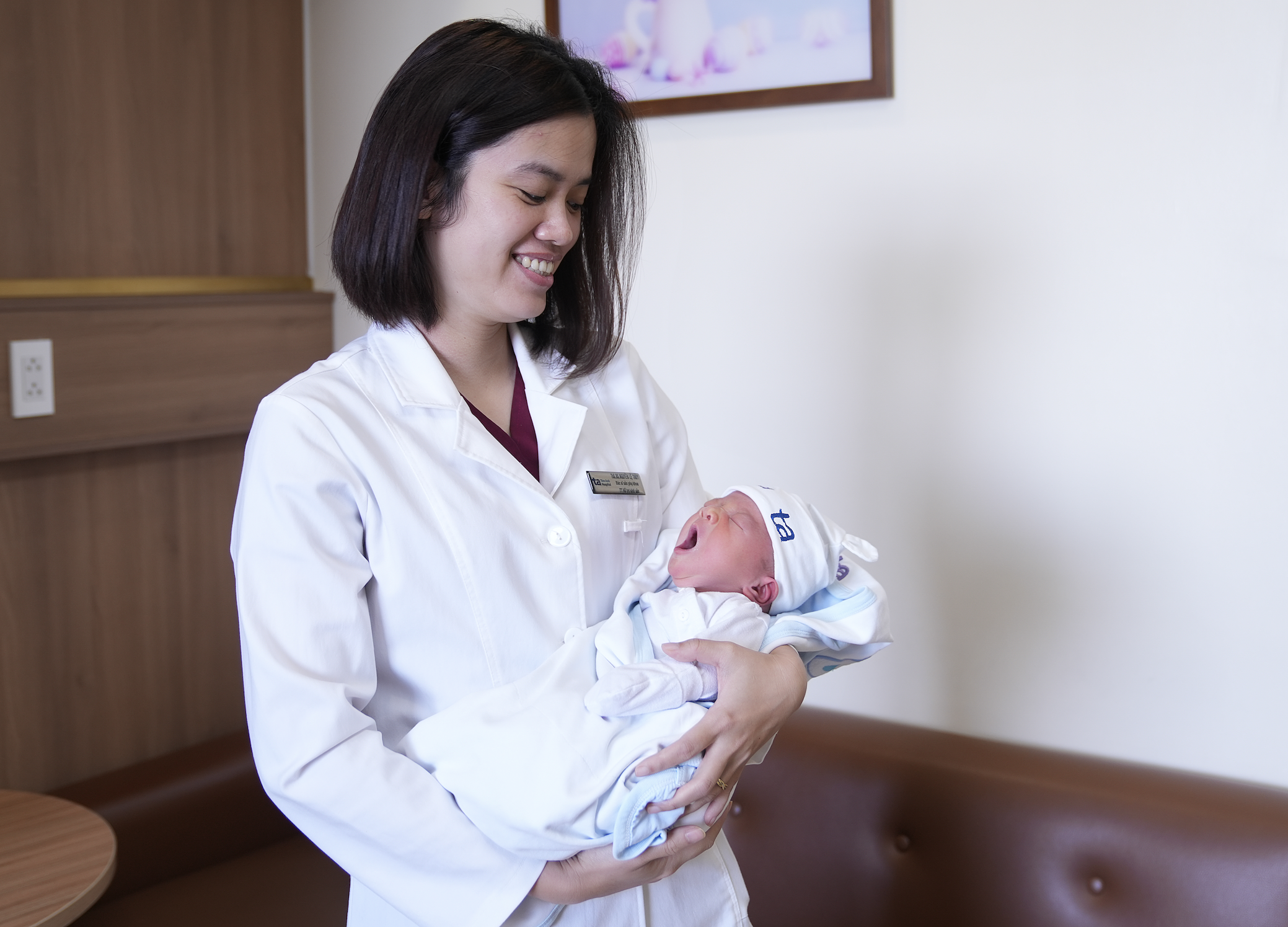 |
Doctors from IVF Tam Anh Center visited Chi Hoa and her baby before discharge. *Photo: Hospital provided* |
Uterine fibroids are benign smooth muscle tumors commonly found in women of reproductive age. Numerous studies indicate that the formation and growth of uterine fibroids are linked to increased estrogen levels. The condition often only presents symptoms when the fibroid has grown large enough to affect fertility. Common symptoms include menorrhagia, menstrual pain, lower back pain, a feeling of heaviness or pain in the pelvic area, and painful intercourse. If left unchecked, patients can suffer from severe anemia, potentially requiring emergency blood transfusions.
Beyond causing difficulty in natural conception, fibroids pose several risks during pregnancy and childbirth. Depending on the specific case, uterine fibroids may be monitored, treated medically, or surgically.
Doctor Quy advises women to maintain a healthy diet, exercise, lifestyle, and manage stress, as well as to undergo regular reproductive health check-ups. Women under 35 should have a check-up once a year, and those over 35 every six months. Individuals experiencing frequent menstrual pain, short cycles (under 27 days), or a family history of uterine conditions, whether married or single, should seek early examination.
Trinh Mai
*Patient's name has been changed


