


Master, Doctor Le Dinh Thai, head of the Examination Department at Hong Ngoc - Phuc Truong Minh General Hospital, states that many athletes mistakenly believe all dangers are behind them once they cross the finish line. Medical reality shows numerous cases of sudden death or stroke occurring within 12 to 24 hours after a race. "This is when the body enters a recovery crisis," the doctor explained.
Three main reasons contribute to this condition. The first is underlying health issues like cerebral vascular malformations, aneurysms, or hypertrophic cardiomyopathy – silent threats athletes may be unaware of.
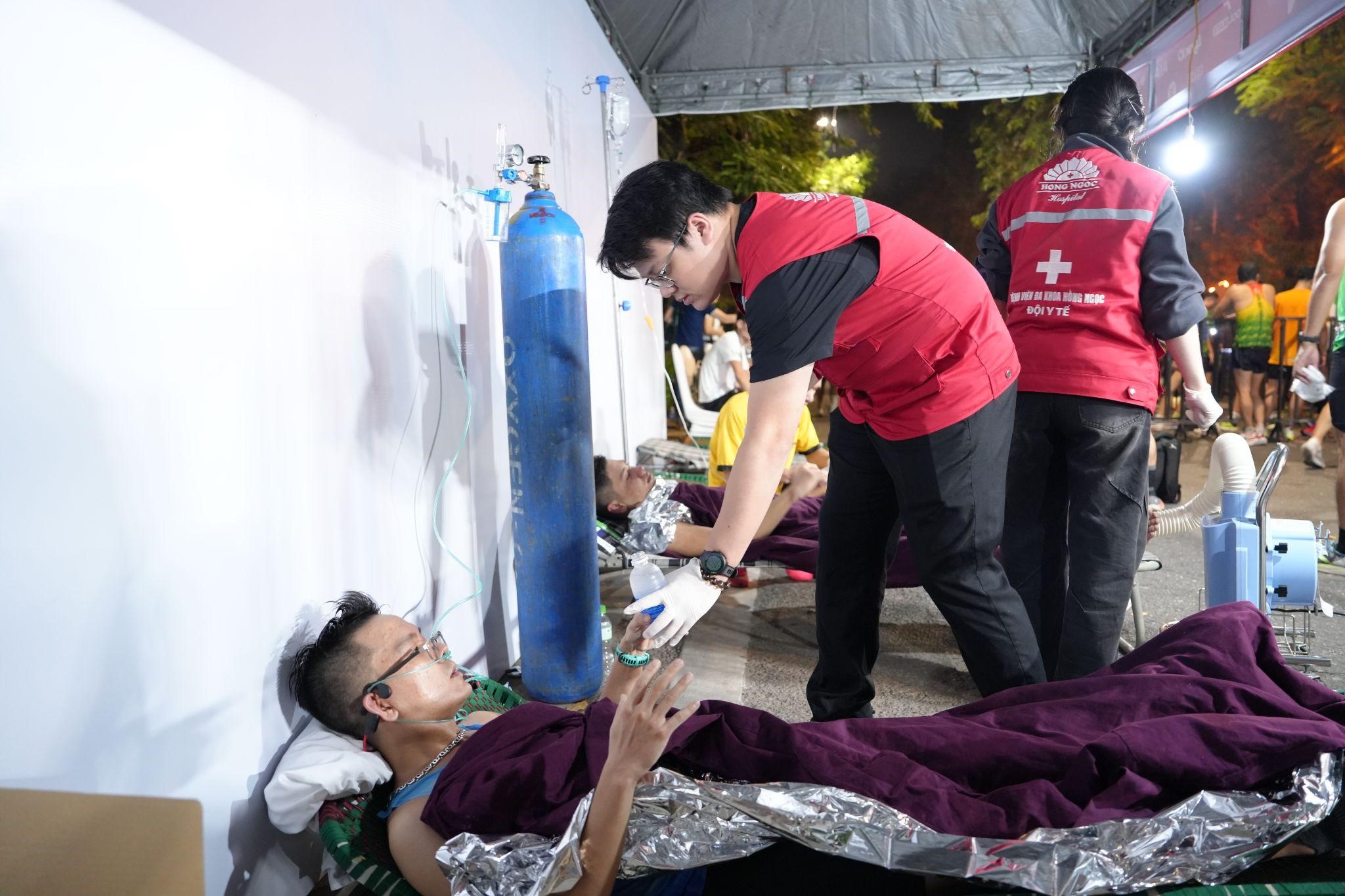 |
Dehydration and electrolyte imbalance can lead to blood clot formation. Photo: Hong Ngoc General Hospital |
The second reason is blood thickening. After long, energy-intensive runs, dehydration and electrolyte imbalance cause blood to become viscous, easily forming clots that can block cerebral blood vessels or cause myocardial infarction. Concurrently, a rapid heart rate exceeding 180 beats per minute can trigger a systemic inflammatory response due to overexertion, creating extreme pressure on vessel walls and directly activating congenital weaknesses.
On the race track, the "never give up" spirit helps athletes push their limits. However, from a health perspective, this can be a double-edged sword if we ignore our body's survival warnings.
"Many athletes struggle to complete races, overlooking alarm signals such as chest pain, shortness of breath, or dizziness. This seemingly harmless action 'drains' the body's last survival reserves, leading to stroke or cardiac arrest that can strike at any moment, even within 24 hours after the race has ended," said Doctor Le Dinh Thai.
Furthermore, errors in immediate post-finish line actions also pose risks. Stopping abruptly, squatting, or lying down immediately causes blood to pool in the legs, reducing blood flow to the heart. This can lead to cerebral hypotension and acute arrhythmias.
 |
Athletes should undergo regular health check-ups every 6 months. Photo: Hong Ngoc General Hospital |
To prevent unfortunate incidents, understanding one's "load threshold" is essential. Doctor Thai emphasized: "Being fit externally does not guarantee the safety of the internal cardiovascular system. Specialized screening is not just to find common illnesses, but to identify 'silent killers' that typically only emerge when the body is pushed to its limit."
Experts recommend that athletes undergo a crucial set of three tests: cerebral vascular MRI to detect early malformations and aneurysms; echocardiogram and stress ECG to assess the heart's endurance at high intensity; and a 24-hour Holter ECG to monitor heart rhythm for potential arrhythmias. Screening frequency should be at least once a year for recreational athletes and every 6 months for those participating in full marathons or triathlons.
 |
Athletes should undergo health screenings every 6 months to detect potential underlying conditions early. Photo: Hong Ngoc General Hospital |
According to Doctor Thai, prevention is key, and the safety of each athlete begins with the smallest changes in daily habits and training. It is crucial to avoid high-intensity activities if recently recovered from illness or experiencing prolonged insomnia. Instead of chasing performance, build a training regimen suited to individual fitness, interspersed with scientifically planned rest periods. Critically, athletes must strictly adhere to a post-race recovery protocol: maintain gentle walking for 5-10 minutes after finishing, replenish electrolytes gradually, and keep the body warm immediately.
The Dan
Undergo regular check-ups to detect potential stroke-risk cardiovascular diseases at Hong Ngoc General Hospital. For details, contact the Cardiology - Interventional Cardiology Department, Hong Ngoc General Hospital
Hotline: 0911 858 626
Hong Ngoc General Hospital - 55 Yen Ninh, Ba Dinh, Hanoi
Hong Ngoc - Phuc Truong Minh General Hospital - 8 Chau Van Liem, Tu Liem, Hanoi


