The esophagus, a muscular tube connecting the throat to the stomach, has a delicate mucous lining. While personal taste dictates beverage choices, recent medical evidence suggests that consuming coffee or tea at excessively high temperatures poses a significant health risk.
A study published in the International Journal of Cancer tracked over 977,000 adults in the UK for 14 years, recording 2,348 cases of esophageal cancer.
Analyzing the beverage consumption habits of the participants, the study revealed:
About 50% of participants consumed six or more hot beverages daily, with 15% preferring them "very hot".
Participants who preferred "hot" drinks had nearly double the risk of developing esophageal squamous cell carcinoma compared to those who preferred "warm" beverages.
This risk increased nearly three times for those who preferred "very hot" temperatures.
The group consuming six or more hot beverages daily saw a 71% increase in disease risk.
The research team affirmed that both beverage temperature and consumption frequency are key factors in preventing esophageal cancer.
Silent thermal damage accumulates over years
A meta-analysis of 59 scientific studies published in the International Journal of Cancer also concluded that hot beverages increase the risk of malignant esophageal damage. The American Cancer Society (ACS) classifies regular consumption of very hot liquids as a leading risk factor for squamous cell cancer.
Doctor Keren Papier, a nutritional epidemiologist at Oxford University and the study's lead author, explained: "Excessively hot liquids cause repeated thermal damage to the cell layer lining the esophageal mucosa, making these tissues vulnerable to carcinogens."
Doctor Cindy Pabon, a gastrointestinal oncologist at Sylvester Comprehensive Cancer Center (University of Miami Health System), concurred, stating that esophageal cancer often stems from injuries, irritations, or chronic inflammatory reactions that accumulate over time. She noted that while a warm latte on a cold day poses no harm, consistently consuming excessively hot liquids can create lasting thermal burns.
Doctor Jaffer A. Ajani, a professor of oncology at M.D. Anderson Cancer Center (University of Texas), stated that the mucosa can heal from a single burn. However, repeatedly consuming excessively hot beverages two to three times daily over many years can lead to chronic inflammation in that mucosal area. "That is when you are paving the way for cancer to attack," doctor Ajani warned.
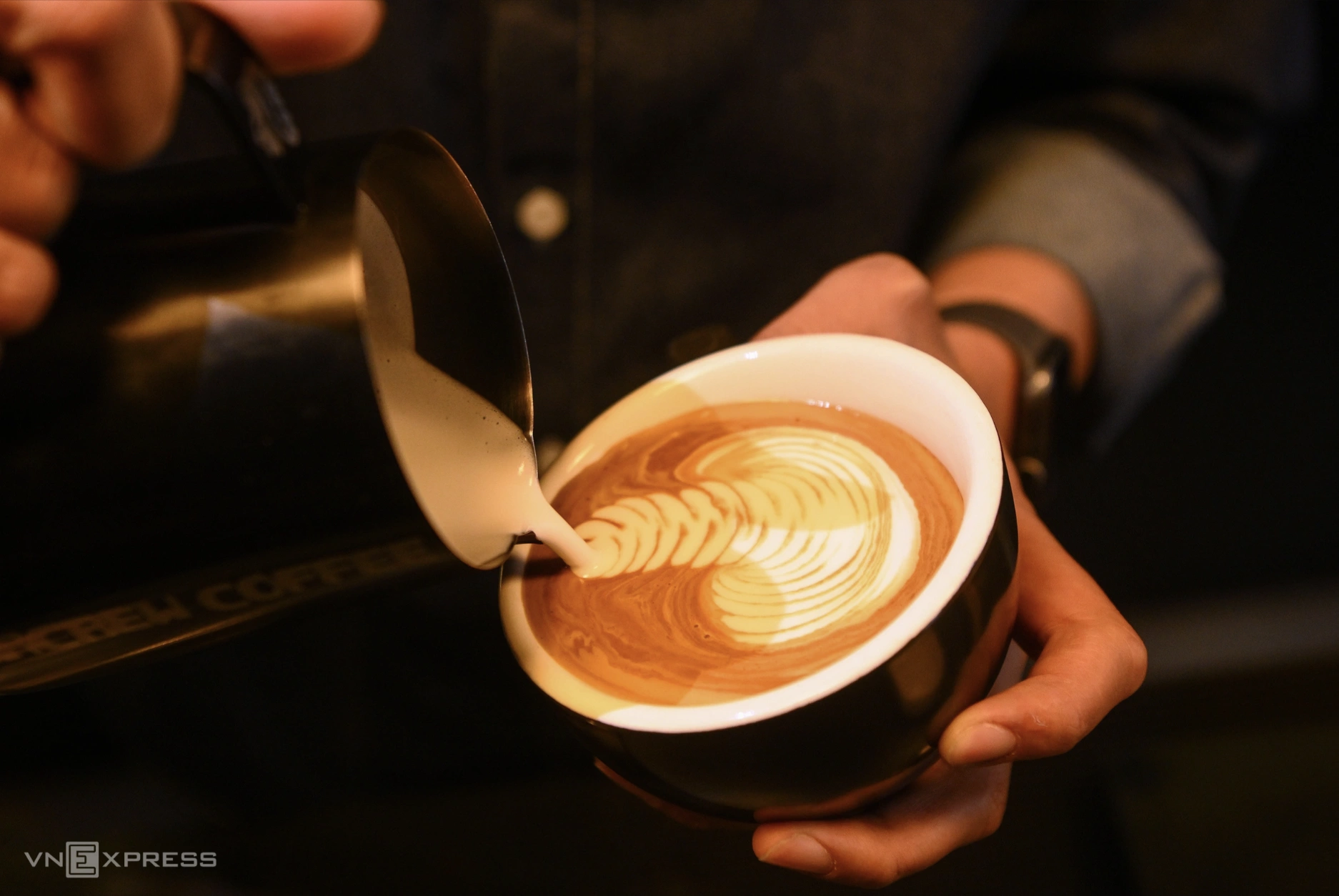 |
Many people enjoy sipping steaming hot coffee, but experts warn that repeatedly consuming beverages that are too hot can triple the risk of esophageal cancer. *Illustration: Giang Huy*. |
Is drinking iced beverages safer?
While the study did not directly compare with cold beverages, doctor Ajani suggested that cool or cold beverages pose less harm to the esophageal mucosa than boiling liquids. However, consuming excessively cold beverages, to the point of freezing cellular tissue, can also cause irritation.
"The goal is not to mandate a complete switch to iced coffee, but rather to wait for hot beverages to cool down before enjoying them," doctor Pabon advised.
Three tips to check safe temperature before drinking
The International Agency for Research on Cancer (IARC) classifies beverages above 65 degrees C (149 degrees F) as "probably carcinogenic" to humans. In daily life, a thermometer is unnecessary; you can use these tips to assess safe temperatures:
Cup temperature: If the cup is too hot to hold directly without an insulating coaster, the liquid inside is not yet safe to drink.
Mouthfeel: Any sip of liquid that causes a burning sensation on your tongue or the roof of your mouth has exceeded the safe threshold for the esophageal mucosa.
Finger test: Allow the liquid to cool naturally for a few minutes, then gently dip a clean fingertip into it. If you cannot keep your finger in for a few seconds, the beverage remains too hot.
"The solution to protect yourself is very simple: Be patient and wait for your beverage to cool down for a few minutes before taking the first sip," Doctor Keren Papier emphasized.
By My Y (Via Yahoo)