Nguyen Thi Duyen arrived at Tam Anh General Clinic, District 7, with central facial paralysis and complete weakness on her left side. Her left arm and leg muscle strength were rated 0/5, while her right side was 5/5. She scored 10 on the National Institutes of Health Stroke Scale (NIHSS), indicating a moderate stroke.
Doctor Le Trung Tuan, from the Emergency Department, noted that Duyen exhibited focal weakness, typical of an acute brain injury. The medical team immediately activated the "code stroke" protocol.
A brain MRI revealed an abnormal area in the right lentiform nucleus and corona radiata white matter, a region crucial for motor pathways from the brain to the body. The scans indicated acute brain ischemia, with no evidence of cerebral hemorrhage or intracranial vascular abnormalities.
Doctors diagnosed a new cerebral infarction, noting that Duyen was still within the critical initial hours of symptom onset. Although the brain tissue had begun to sustain damage, there was still a chance for recovery if blood flow could be restored promptly.
 |
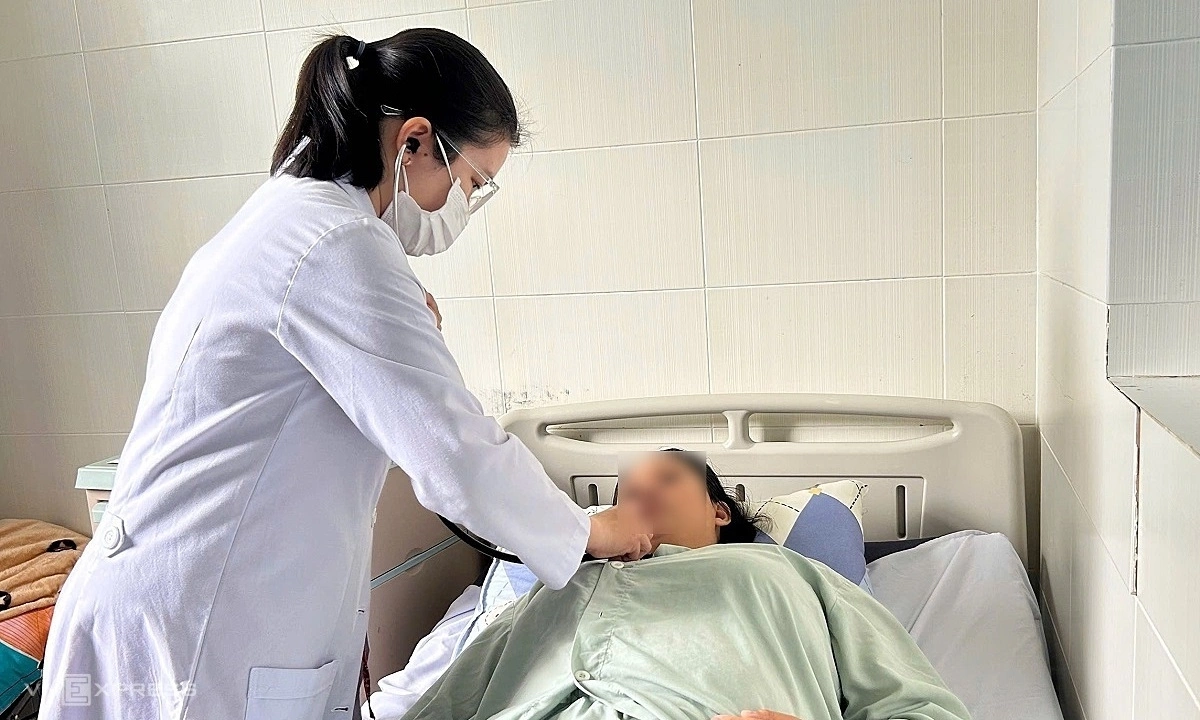
Doctor Tuan closely monitors the patient's vital signs during thrombolysis. *Photo: Tam Anh General Clinic*
Following consultation, Duyen received intravenous thrombolysis, a medication designed to dissolve blood clots and restore cerebral blood flow. Imaging showed no large vessel occlusion, eliminating the need for mechanical thrombectomy.
Within a few hours of the injection, Duyen's left arm and leg began to regain movement, with muscle strength improving to 2/5 in her left arm and 3/5 in her left leg. Her slurred speech also diminished. She continued to receive intensive monitoring in the Neurology Department at Tam Anh General Hospital, TP HCM. Concurrently, doctors initiated a rehabilitation plan to minimize long-term complications.
Doctor Tuan emphasized that thrombolysis is most effective when administered within the "golden window," typically the first 4 to 5 hours after symptom onset. He advised that anyone experiencing sudden stroke symptoms—such as facial drooping, one-sided weakness or numbness, difficulty speaking, blurred vision, or loss of balance—should be immediately taken to a hospital equipped for emergency stroke care. Waiting for symptoms to subside can critically reduce the chances for revascularization treatment and minimizing permanent disability.
By Nhu Ngoc
*Patient's name has been changed
| For questions about neurological conditions, readers can submit them here for expert medical advice. |