On 20/12, a hospital representative stated that the man was admitted two days prior with flank pain. An MSCT scan revealed two catheters in his ureteral-bladder system. The medical team endoscopically removed the foreign objects, noting the stents were intact, without fracture or stone encrustation. The patient's health is now stable, and his pain has subsided.
 |
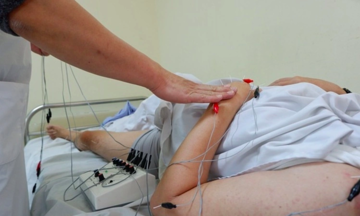
A doctor examines the patient after the removal of the two catheters. *Photo: Hospital provided* |
Over 10 years ago, he underwent surgery for bilateral ureteral compression and had catheters inserted for drainage. Doctors at the time scheduled a follow-up appointment to remove the stents once his health recovered. However, due to financial difficulties, the patient did not return to the hospital, leaving this medical device in his body until he experienced unusual pain.
Dr. Ta Huu Nghia, Deputy Head of the Surgery Department and the surgeon who performed the procedure, explained that JJ stents are essential medical devices placed in the urinary tract after treatment for kidney stones or ureteral stricture. Their maximum dwell time ranges from six months to one year, depending on the type.
Leaving stents in place beyond their recommended time poses many serious risks. Stones can encrust both ends of the stent, complicating endoscopic removal. The stent could also fracture or become obstructed, leading to infection, affecting kidney function, and potentially causing kidney failure. Doctors advise people to strictly adhere to follow-up appointments after urinary tract interventions to avoid complications.
Chuc Ly