A doctor advises caution regarding the use of groundcherry for children with fever and cough. While traditional Eastern medicine utilizes groundcherry (also known as bom bop, thu lu, or lantern plant) for its cooling and bitter properties to clear heat, promote diuresis, reduce cough, and treat feverish colds and sore throats, parents must consult a physician before administering it to children.
The groundcherry is an herbaceous plant, typically growing 50-90 cm tall, characterized by round, juicy fruits encased in a calyx resembling a lantern. In Vietnam, it often grows wild and is sometimes cultivated for use as a vegetable or in medicine.
The child's symptoms of fever, cough, and runny nose, now on the second day with a productive cough, require close monitoring and prescribed fever-reducing and cough medications. These symptoms can indicate various illnesses in young children, including common colds, flu, rsv, pneumococcal disease, meningococcal disease, measles, or hand, foot, and mouth disease. If severe signs such as rapid breathing, chest indrawing, refusal to eat, or cyanosis appear, the child must be taken to the hospital immediately.
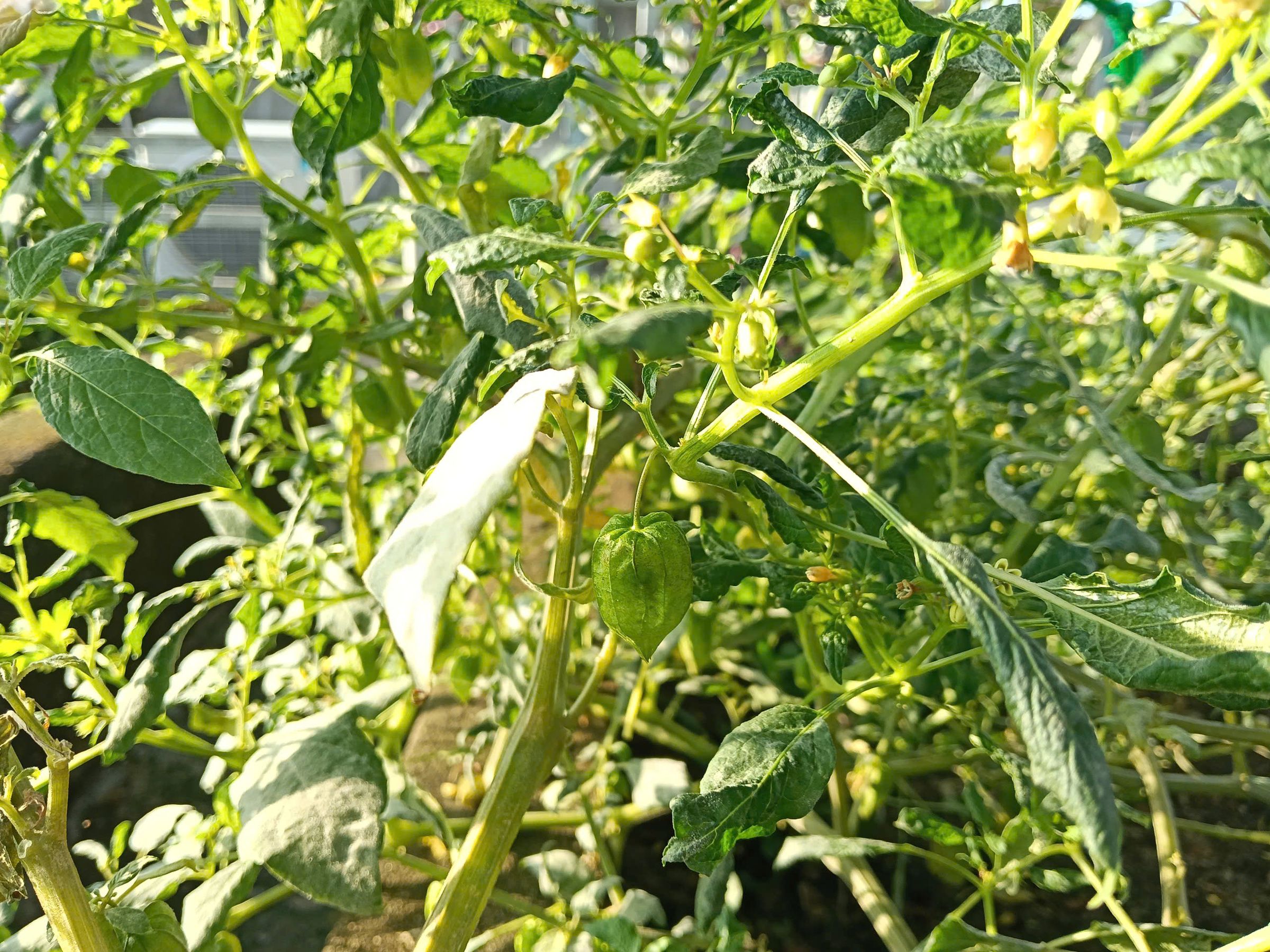 |
A household in Ho Chi Minh City grows groundcherry as a vegetable. Photo: Khanh Hoa
Cold, dry weather promotes the growth of viruses and bacteria, leading to a rise in respiratory illness cases, especially among children and the elderly. Effective prevention against some pathogens is possible through vaccination, including:
The flu vaccine offers protection against four types of influenza A strains (H3N2, H1N1) and influenza B, and is administered to children from 6 months of age. Children under 9 years old who have not been previously vaccinated require two doses given one month apart. Individuals 9 years and older need one dose, with annual boosters.
RSV vaccines are available from Pfizer and GSK. Pfizer's rsv vaccine is administered to pregnant women between weeks 24 and 36, and individuals aged 60 and above, on a one-dose schedule. GSK's vaccine is also a one-dose shot for individuals aged 60 and above, and those with underlying health conditions. Young children can receive Sanofi's Nirsevimab monoclonal antibody, which provides immediate protection, with the dose depending on weight.
There are 5 types of pneumococcal vaccine (pneumococcal 10, pneumococcal 13, pneumococcal 15, pneumococcal 20, pneumococcal 23). The earliest type can be administered from 6 weeks of age.
Meningococcal vaccine protects against 5 serogroups (A, B, C, Y, W). The earliest type can be administered from 6 weeks of age. Optimal protection requires full vaccination against all 5 serogroups.
Parents must prioritize their child's nutrition, as children often experience discomfort and loss of appetite during fever, cough, and runny nose. Without adequate essential nutrition, children will recover slowly, potentially become debilitated, and face a higher risk of severe complications. Caregivers should also maintain personal hygiene and a clean living environment to prevent cross-infection with agents that could worsen the child's illness.
Doctor Tran Huynh Tan
Medical Manager, VNVC Vaccination System
Readers can submit vaccine consultation questions for doctors to answer here.
vaccine | GSK | RSV |