Japanese encephalitis is an endemic infectious disease in Vietnam and several other Asian countries. The virus responsible for the illness circulates in the blood of livestock, primarily pigs, and wild birds. Culex mosquitoes acquire the virus by biting these animals and then transmit it to humans through their bites.
The disease can progress severely, with a fatality rate of approximately 20-30%. Among survivors, 30-50% may experience neurological or psychiatric sequelae, including paralysis, deafness, epilepsy, cognitive impairment, or require long-term care from family members.
The Jevax vaccine, produced in Vietnam to prevent japanese encephalitis, was integrated into the Expanded Program on Immunization (EPI) starting in 1997. It began as a pilot program in specific localities before expanding nationwide. The primary vaccination schedule consists of three doses: the first when a child reaches 12 months of age, the second one to two weeks after the first, and the third one year after the second.
Immunity acquired from Jevax vaccination diminishes over time. Therefore, children require a booster shot every three years to maintain protective immunity. For a 9-year-old child who completed the primary vaccination series in early childhood, a doctor's recommendation for a supplementary dose, if it aligns with the booster schedule, is appropriate.
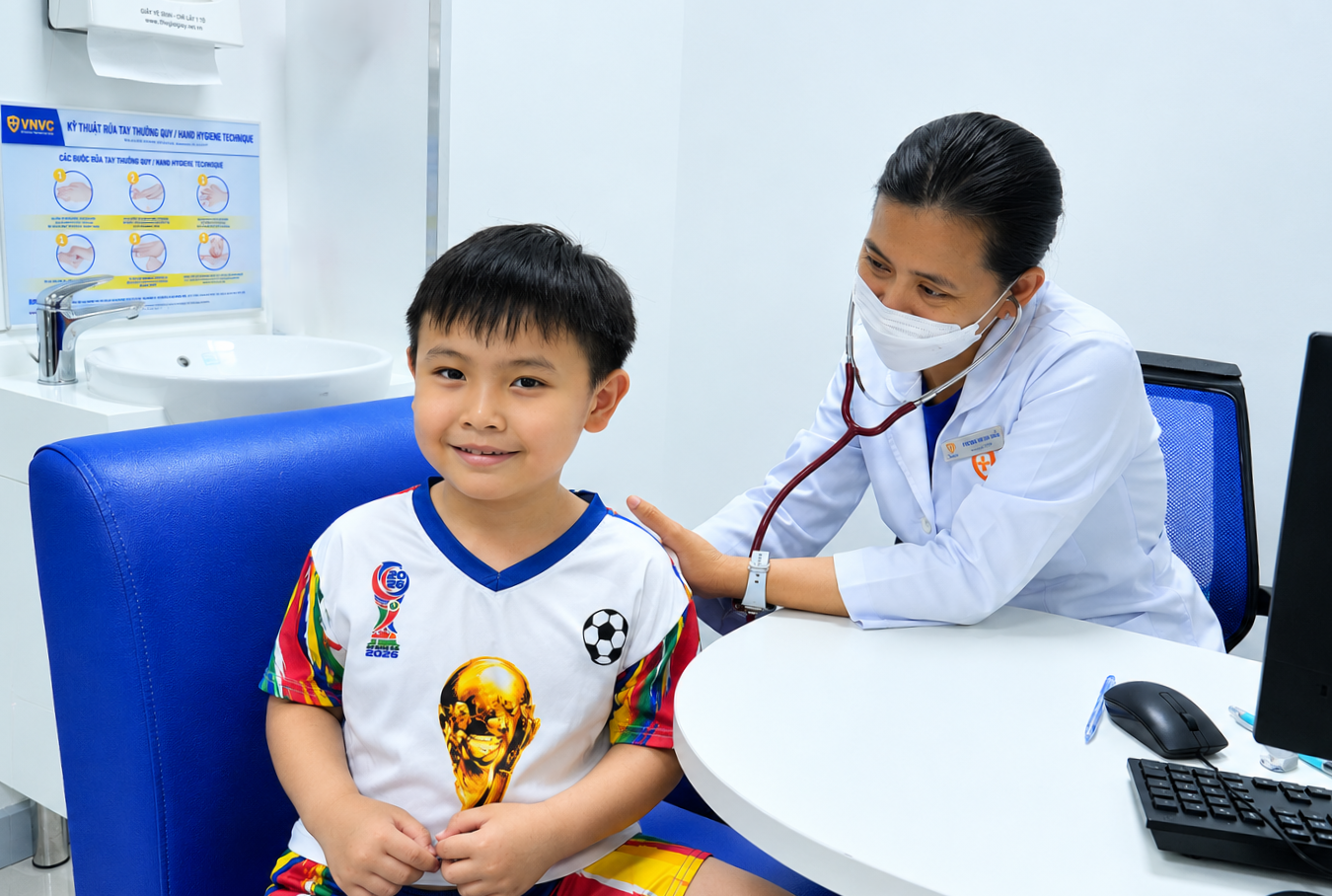 |
Children receive vaccinations for disease prevention at VNVC. *Photo: Hoang Duong* |
Many parents mistakenly believe that once children receive the initial series of japanese encephalitis vaccines, booster shots are unnecessary. Consequently, some children are hospitalized with severe conditions because their vaccination was incomplete or their immunization history is unclear.
A study conducted on 71 pediatric japanese encephalitis patients treated at the Center for Tropical Diseases, National Children's Hospital, from June 2022 to August 2023, revealed that most children who contracted the disease and developed sequelae had an incomplete or unknown vaccination history. Among 15 children who had not received sufficient doses, 10 experienced multiple sequelae after treatment.
Parents should review their child's vaccination records and monitor the booster schedule. If the immunization history is unclear, families should take their child to a vaccination facility for a doctor's consultation, rather than assuming the child is fully protected.
Beyond Jevax, available through the Expanded Program on Immunization and private services, Vietnam also offers other japanese encephalitis vaccines via private services that feature simpler immunization schedules.
The newer generation Imojev vaccine is suitable for children from 9 months of age and adults. Children aged 9 months to under 18 years receive two doses, administered one year apart; individuals 18 years and older receive one dose.
The Jeev vaccine is administered to children from 12 months of age up to adults 49 years old. Its schedule comprises two doses, given at least one month apart. Doctors advise booster vaccinations based on exposure risk, prior vaccination history, or when preparing to travel to an endemic area.
You should take your child to a vaccination facility, bringing their immunization record or information about previous doses for a doctor's assessment. If a booster is due or protective immunity is insufficient, a supplementary vaccination is essential.
Doctor Tran Thi Xuan Yen
Head Doctor, VNVC District 5 Vaccination Center