


Dr. Nguyen Anh Dung, Head of Thoracic - Vascular Surgery at Tam Anh General Hospital Ho Chi Minh City, states that the primary goal of lung cancer surgery is the complete removal of the primary tumor and any metastatic lymph nodes.
For early-stage disease, a multimodal treatment approach, combining surgery with chemotherapy and radiation therapy, is often used to achieve effective treatment. In cases of advanced or recurrent lung cancer, targeted therapy and immunotherapy also play a crucial role in disease control.
Surgery is typically indicated for non-small cell lung cancer tumors in stage I, II, or IIIA, provided there is no distant metastasis. For small cell lung cancer, doctors only operate if the tumor remains localized in the lung without signs of lymph node or distant metastasis. Contraindications for surgery include patients with poor general health, distant metastasis (stage IV), malignant pleural effusion, invasion of other chest organs, severe cardiovascular or respiratory conditions, or those unable to undergo anesthesia.
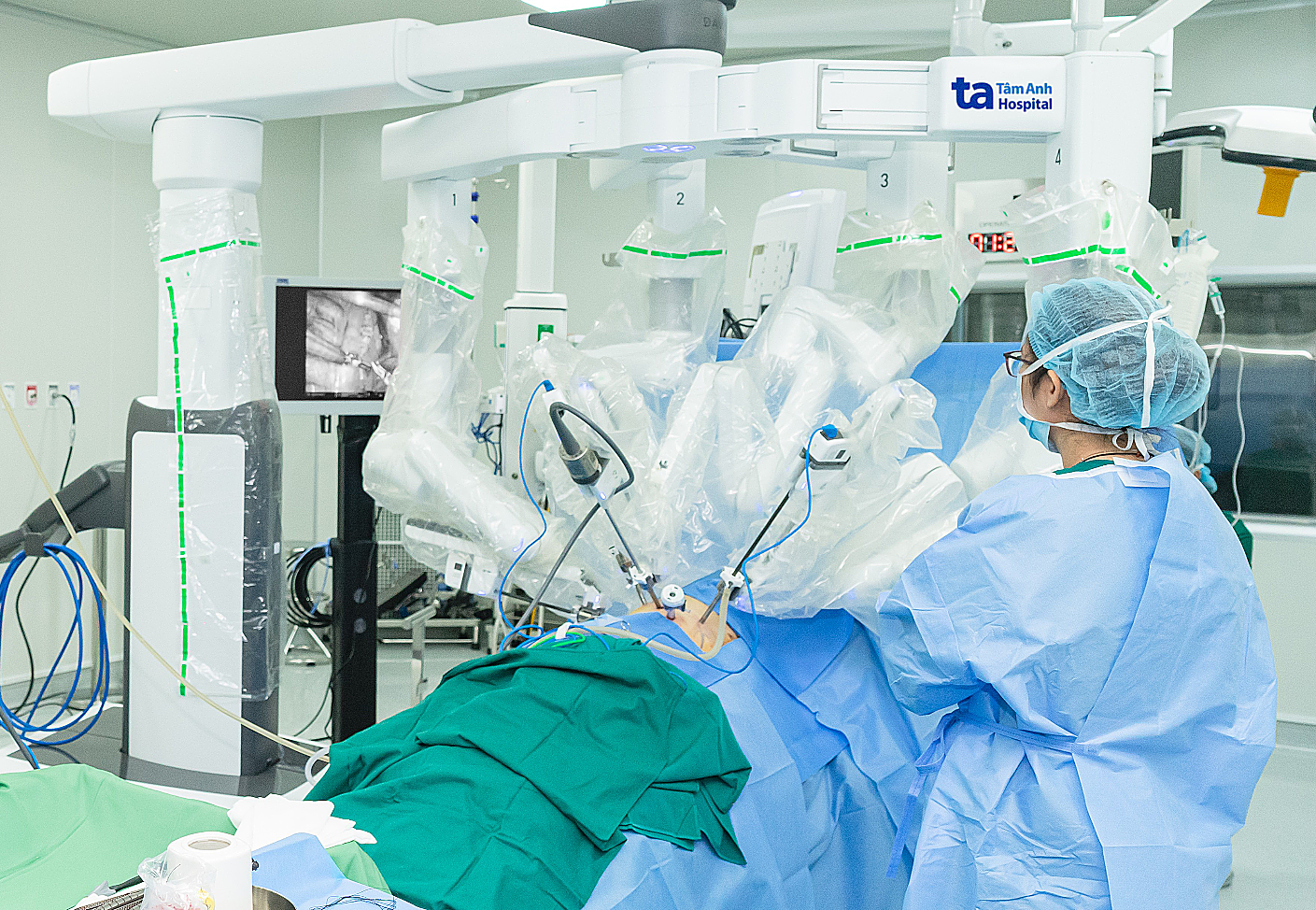 |
A doctor performs lung cancer surgery using a Da Vinci Xi robot. Illustration: Thanh Luan |
According to Dr. Dung, various surgical techniques are available for lung cancer, including conventional open surgery, minimally invasive endoscopic procedures, and robot-assisted surgery. Each method offers distinct advantages and disadvantages.
| Open Thoracotomy | Endoscopic Surgery | Robot-Assisted Surgery | |
| Advantages | - Allows surgeons direct visualization and manipulation of the surgical area | - Minimally invasive, reduced post-operative pain, small surgical scar - Decreased risk of infection and complications | - Robot arms equipped with small 3D cameras provide clear 3D images - Robot arms offer 540 degrees of rotation, providing flexibility and enabling surgeons to easily operate in deep, narrow, and hard-to-reach areas - High precision, minimal blood loss, reduced pain, fewer complications - Quick hospital discharge (1-2 days) |
| Disadvantages | - Highly invasive, long surgical scar, significant post-operative pain, increased risk of blood loss and infection - Longer hospital stay (5-7 days) | - Challenging to operate in deep, narrow surgical areas - Average hospital stay (3-5 days) | Requires modern equipment and highly specialized surgeons |
Following surgery, patients require regular follow-up appointments and close monitoring for unusual symptoms such as prolonged or worsening shortness of breath, persistent chest pain, fever, coughing up blood, or leg swelling (a sign of a blood clot). Patients should perform breathing exercises and engage in pulmonary rehabilitation. A balanced and nutritious diet, rich in protein, vitamins, and minerals, is essential to promote wound healing. Avoiding alcohol and tobacco is crucial, and gentle exercise like walking or yoga can help enhance lung function.
Patient recovery time varies depending on the type of surgery, as well as factors such as age, general health, co-existing medical conditions, and the extent of disease metastasis. With proper post-operative care, most lung cancer patients can resume their daily activities within 1-2 months after surgery.
Thu Ha


